From Excel to SQL
From Excel to SQL
What you’ll learn
Skills you’ll gain
When using Microsoft Excel to manage large amounts of data, you inevitably run into organization and performance challenges. That’s why there is a better tool for the job: SQL. In this course, you'll learn how to make the transition from managing databases in Microsoft Excel to managing databases in SQL. you'll learn how to view data, filter data, use operators, and use functions. you'll also learn how to sort and group data, how to build pivot tables in SQL, and how to combine data using Joins and Lookups. By the end of this course, you'll be well equipped to begin using SQL to manage your data.
Syllabus
Download syllabus-
1
Spreadsheets vs databases Do you know the difference between a spreadsheet and a database? 2m
-
2
What is SQL? SQL is a powerful language to help you work with databases. After watching this video, you'll be able to identify the key traits of SQL. 2m
-
1
Viewing data in SQL There are a few key things to know about viewing data in SQL. After watching this video, you'll be able to view your data. 3m
-
2
Identifying columns in SQL The columns in SQL help you organize your data. After watching this video, you'll be able to work with columns in SQL. 3m
-
3
Filtering rows in SQL Rows are easily filtered using SQL language. After watching this video, you'll be able to better filter your rows in SQL. 5m
-
4
Combining filters in SQL You can combine filters for even more powerful results in SQL. After watching this video, you'll be able to use and combine filters in SQL. 8m
-
5
Limiting results in SQL Sometimes the amount of results generated can be overwhelming. After watching this video, you'll be able to get the right amount of results. 3m
-
6
Comparison operators in SQL Comparison operators are a popular part of SQL. After watching this video, you'll be able to use comparison operators in SQL. 2m
-
7
The Like operator in SQL Like operators help you look for patterns in your data. After watching this video, you'll be able to utilize the like operator in SQL. 2m
-
1
Using SUM in SQL In Excel, SUM is the most used function. After watching this video, you'll be able to use the SUM function in SQL. 3m
-
2
AVERAGE, MIN, MAX, and COUNT in SQL AVERAGE, MIN, MAX, and COUNT are basic functions in the SQL language. After watching this video, you'll be able to use mathematical functions in SQL. 4m
-
3
Finding unique values in SQL There are a few key things to know about finding unique values in SQL. After watching this video, you'll be able to find unique values in SQL. 3m
-
4
Upper, lower, and length in SQL There are advanced ways to look into data in SQL. After watching this video, you'll be able to use upper, lower, and length in SQL. 2m
-
1
Sorting data When you're working with data, it's important to be organized. After watching this video, you'll be able to sort data effectively in SQL. 4m
-
2
Grouping data Grouping data can help you stay organized. After watching this video, you'll be able to group data effectively in SQL. 4m
-
3
Using a PivotTable in SQL Pivot tables are great ways to get insights into your data. After watching this video, you'll be able to use a pivot table in SQL. 3m
-
4
Subqueries in SQL To take your analysis even further, you should explore using subqueries. 3m
-
5
Advanced subqueries in SQL Subqueries are a powerful tool you can use to dive deeper into your data. 5m
-
1
Using joins Joins can help you better control your data in SQL. After watching this video, you'll be able to use joins in SQL. 3m
-
2
The different types of joins There are several different types of joins in SQL. 5m
-
3
Using VLookup, HLookup, XLookup in SQL Similar to Microsoft Excel, there are a set of ways to using lookups in SQL. After watching this video, you'll be able to use lookup functions in SQL. 2m
-
1
Taking your SQL skills to the next level Congratulations on completing this course! 1m
Certificate
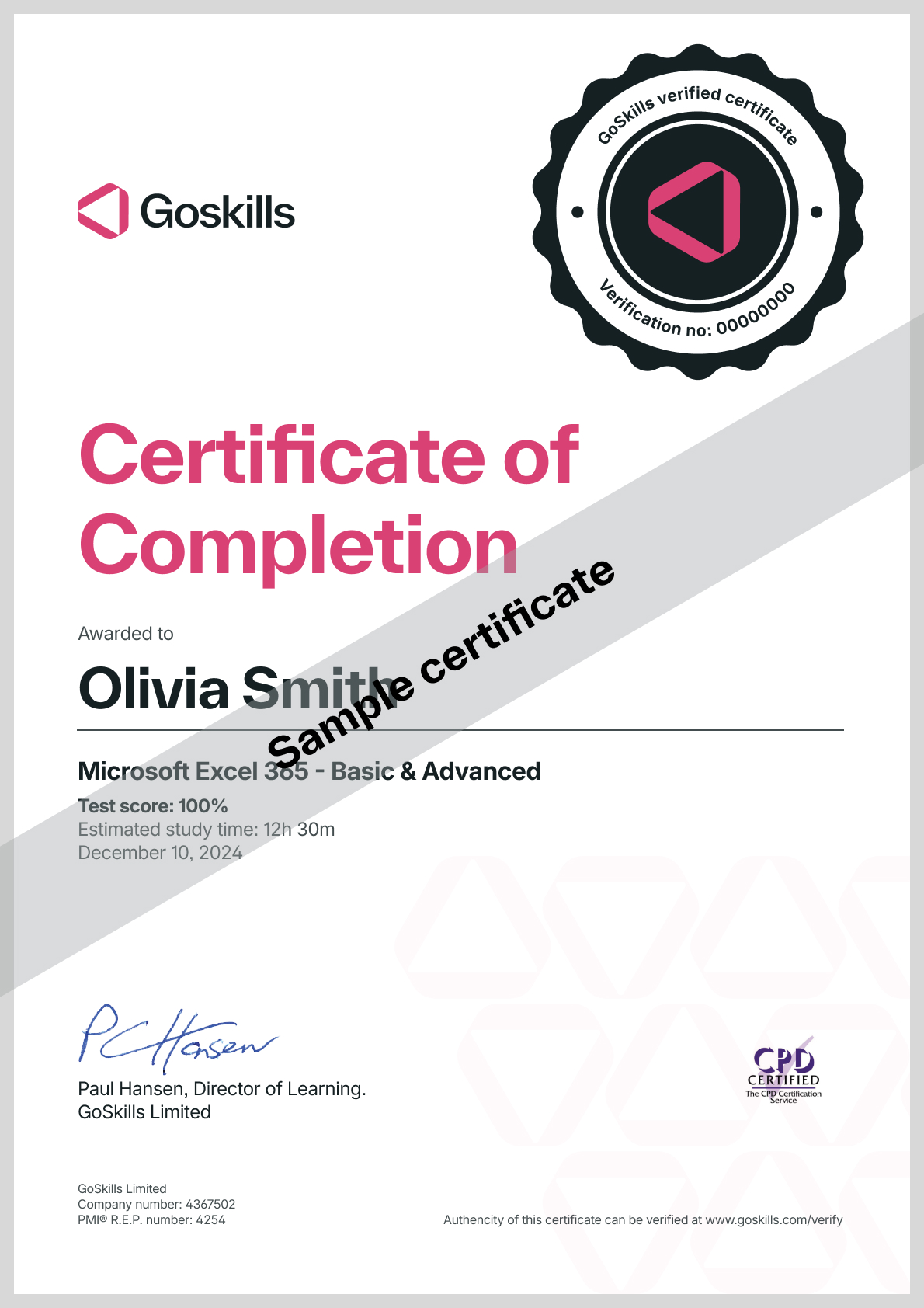
Certificate of Completion
Awarded upon successful completion of the course.
Instructor
James Parkin
James is an accomplished, versatile, and articulate senior software engineer with experience in software application development and enhancement, cross-functional teams collaboration, and business process automation.

James Parkin
Freelance Software Engineer
Accreditations
Link to awards
How GoSkills helped Chris
I got the promotion largely because of the skills I could develop, thanks to the GoSkills courses I took. I set aside at least 30 minutes daily to invest in myself and my professional growth. Seeing how much this has helped me become a more efficient employee is a big motivation.