Getting Started with the Raspberry Pi Computer
Getting Started with the Raspberry Pi Computer
What you’ll learn
Skills you’ll gain
Discover the world of Raspberry Pi—a cost-effective and engaging platform designed for learning computer science principles, programming languages like Scratch and Python, and electronics. Join Raspberry Pi expert Daniel Davis as he guides you through platform selection, initial setup, and the creation of simple Python programs. Learn about "Physical Computing," enabling you to control motors, sensors, LEDs, and more with your Raspberry Pi.
Syllabus
Download syllabus-
1
Raspberry Pi computers There are several different types of Raspberry Pi's on the market, but the Raspberry Pi Computer is the most popular. 3m
-
2
Raspberry Pi compute module Although the Raspberry Pi Compute Module has more capabilities than the Raspberry Pi Computers, it's intended for industry and not beginners. 2m
-
3
Raspberry Pi Pico The Raspberry Pi Pico is the first Raspberry Pi product line that is not a full computer. 2m
-
1
Raspberry Pi 4 features As of this guide, the Raspberry Pi 4 is the most recent and the most powerful Raspberry Pi computer. 2m
-
2
Accessory requirements Even though the Raspberry Pi has a lot of functionality built in, there are still some components needed to set it up for first use. 1m
-
3
Installing the Raspberry Pi OS All computers, including the Raspberry Pi, require an operating system in order to use them. 3m
-
1
Raspberry Pi OS initial setup Once the Raspberry Pi OS is installed, it requires a few additional customizations for use. 3m
-
2
Remote access Operating a Raspberry Pi doesn't require a physical monitor, mouse or keyboard to be attached to it. 7m
-
3
Basic Linux Terminal commands The most efficient way to use Linux is through its Command Line Interface, but in order to do so, there are some commands that are helpful to know. 6m
-
1
Python programming environment The Raspberry Pi OS comes with several different coding editors. 4m
-
2
Python syntax Similar to how grammatical rules give structure to a book or document, Python code also has rules that follow a certain structure. 6m
-
3
Variables and data types The Python programming language makes it easy to add, subtract or compare numbers and values. 4m
-
4
Control flow When a Python script is executed, it always runs linearly line-by-line until the end of the code. 7m
-
1
Input and output pins A revolutionary feature of the Raspberry Pi is the ability to use it as an interface with other components and electronic devices. 3m
-
2
Breadboard basics An easy way to create an electronic circuit without soldering is by using a breadboard. 6m
-
3
Buttons and inputs The Raspberry Pi can send data to, and receive data from a electronic components, such as buttons and LEDs respectively. 7m
-
4
Connecting sensors Some electronic components produce lots of data that can be used with a Raspberry Pi and Python for graphing or monitoring the data. 4m
-
5
The Raspberry Pi camera A great feature of the Raspberry Pi is it's ability to use a digital camera and analyze what it "sees". 8m
-
1
Begin your Raspberry Pi journey Thank you for taking the time to watch this course! 1m
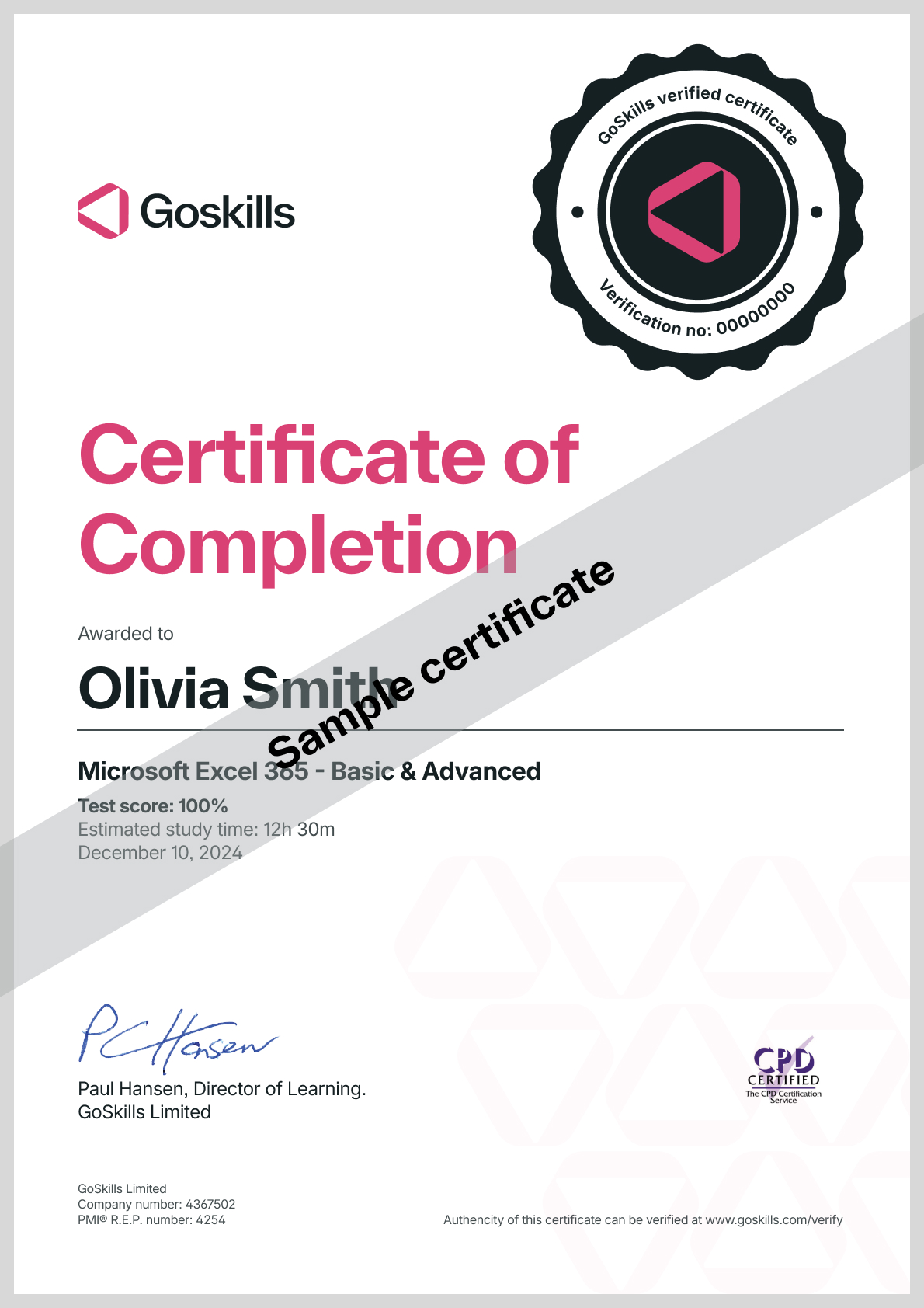
Certificate
Certificate of Completion
Awarded upon successful completion of the course.
Instructor
Daniel Davis
Daniel Davis is a Technology Instructor and Content Creator for the Duke Co-Lab. A published author and professional Youtuber, Daniel has a passion for tinkering and utilizing new and emerging technologies. His lessons on Raspberry Pi’s have landed him partnerships with the Raspberry Pi Foundation, Hackster.io, Howcast.com and various other magazines and news outlets.

Daniel Davis
Technology Expert and Content Creator
Accreditations
Link to awards
How GoSkills helped Chris
I got the promotion largely because of the skills I could develop, thanks to the GoSkills courses I took. I set aside at least 30 minutes daily to invest in myself and my professional growth. Seeing how much this has helped me become a more efficient employee is a big motivation.