Machine Learning with Scikit-Learn
Machine Learning with Scikit-Learn
What you’ll learn
Skills you’ll gain
Machine learning is a practical way to turn real-world data into models that can predict outcomes, classify information, and uncover patterns. In this course, Brett Vanderblock, a data analytics leader and professor, guides you through an end-to-end Scikit-Learn workflow from preparing data to training and evaluating models. You’ll build supervised models like linear and logistic regression, explore decision trees and random forests, and get introduced to boosting. You’ll also cover clustering and dimensionality reduction, then wrap up with pipelines, cross-validation, and hyperparameter tuning. After this course, you’ll be ready to build and improve your own machine learning models using Python’s Scikit-Learn.
Syllabus
Download syllabus-
1
Explore machine learning in the AI age Machine learning can extract structure from data and solve problems that are normally too difficult or tedious for humans to solve. 2m
-
2
Discover the benefits of scikit-learn Programming machine learning algorithms from scratch is no easy task. 2m
-
3
Prepare your environment A solid setup makes it easier to run machine learning experiments quickly and confidently. 3m
-
1
Predict values with supervised learning The most common form of machine learning is supervised learning. 2m
-
2
Format your data Before you fit a model with scikit-learn, your data has to be in a recognizable format. 4m
-
3
Perform a train-test split A goal of machine learning is to build a model that performs well on new data. 3m
-
4
Create a linear regression model While linear regression is a simple model, it is still widely used for various applications. 4m
-
5
Leverage logistic regression Logistic regression is a simple model used for classification tasks. 3m
-
6
Evaluate classification models Building a model is only half the job. 4m
-
7
Build a decision tree One of the more important considerations when choosing a machine learning algorithm is how interpretable it is. 4m
-
8
Rapidly build models with random forest Decision trees can overfit and be sensitive to small changes in the training data. 3m
-
9
Boost model performance Gradient boosting builds models in stages, correcting the errors of prior trees to deliver exceptional predictive power. 3m
-
1
Explore unsupervised learning Machine learning isn't always about trying to predict a value. 2m
-
2
Group data with clustering algorithms Clustering algorithms help identify distinct groups of data. 4m
-
3
Speed up with dimensionality reduction As datasets grow, redundant or highly correlated features can slow training and hurt performance. 3m
-
1
Automate preprocessing with pipelines Machine learning workflows can get messy fast when you manually manage preprocessing steps. 3m
-
2
Optimize your hyperparameters Getting the best results from your model requires tuning its parameters systematically. 4m
-
1
Build models with scikit-learn Congratulations on completing this course! Now, you're ready to build your own machine learning models using Python's scikit-learn with confidence. 1m
Certificate
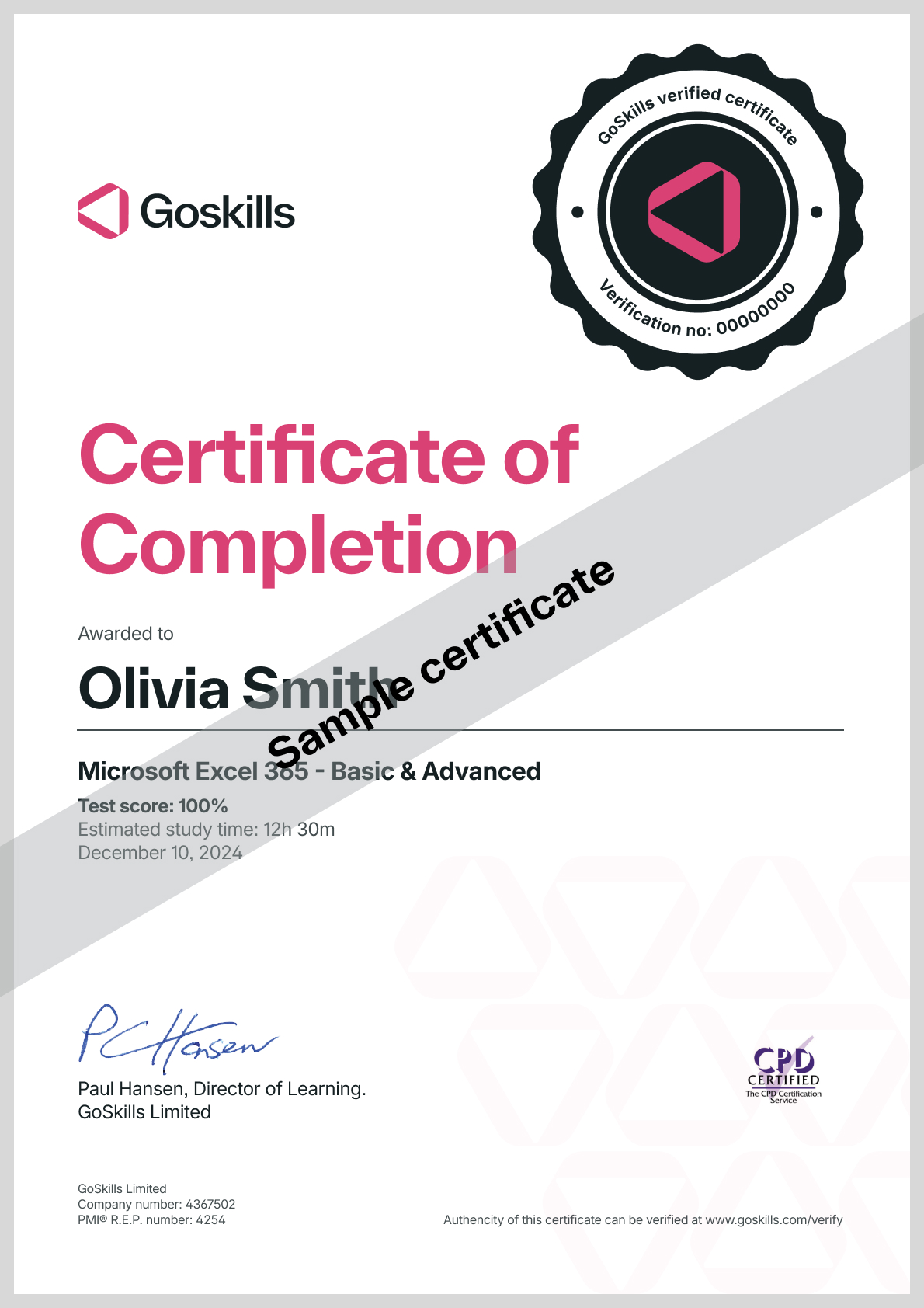
Certificate of Completion
Awarded upon successful completion of the course.
Instructor
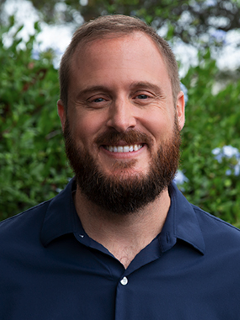
Brett Vanderblock
Brett Vanderblock is a data scientist with Patagonia and co-founder of Think Fast Analytics. He has proven experience surfacing insights across industries, from start-ups, state and local governments, higher education, healthcare, to retail. He is always furthering his deep expertise in machine learning, data visualization, and data pipelines. An educator at heart, Brett enjoys providing "data therapy" to enable others to realize the benefits of their data through self-service analytics.
Brett Vanderblock
Data Scientist
Accreditations
Link to awards
How GoSkills helped Chris
I got the promotion largely because of the skills I could develop, thanks to the GoSkills courses I took. I set aside at least 30 minutes daily to invest in myself and my professional growth. Seeing how much this has helped me become a more efficient employee is a big motivation.