Overcoming Public Speaking Anxiety
Overcoming Public Speaking Anxiety
What you’ll learn
Skills you’ll gain
You've probably heard that public speaking is feared more than death itself. It sounds crazy, but according to the National Institutes of Mental Health, 73% of people rank speaking in public as their number one fear. But those fears can be overcome when you're given the best tips, tools, and strategies, which is what you get in this course taught by noted lecturer, professor and keynote speaker Eric Zackrison, PhD, you'll discover why speeches go wrong, and how to make sure you meet everyone’s expectations, including your own. You'll learn all about gesturing, how to use facial expressions and eye contact, and determine whether a slide deck will help or hinder your presentation. You'll also discover how to recover from mistakes, the best way to practice your speech, and how to effectively handle a question-and-answer session. You'll even learn how to analyze your audience in order to craft a stronger speech and get tips on how to manage anxiety. Upon completion of this course, you'll have all the tools you need to speak in front of any group with confidence.
Syllabus
Download syllabus-
1
What are the expectations When speeches go wrong one of the most common causes is that the speaker misunderstood the expectations. 2m
-
2
It's all about the audience The most important thing any public speaker needs is knowledge about the audience. 2m
-
3
What do they know and/or believe Knowing what your audience already knows and believes is vital if you're to keep them interested or get them to change. 2m
-
4
Where are you speaking There are so many key things about the speaking environment itself that can cause a speaker problems. 3m
-
1
What do I do with my hands? What do I do with my hands is one of the most common challenges of speakers. 3m
-
2
What do I do with my feet? How and where to stand and walk is one of the little know ways to improve or disrupt a great speech. 3m
-
3
What do I do with my face? Your eyes and face play an important role in connecting to your audience. 2m
-
4
What can I do with my voice? Voice modulation is far more than a way to just keep your audience engaged, it is the difference between a great speech and an okay speech. 3m
-
5
Adjusting to virtual presentations More and more presentations are moving to virtual formats and this affects how we use our non-verbals. 2m
-
1
Introductions and conclusions How you start and how you end are arguably more important than what you say in between. 3m
-
2
Aristotle had it right Three of the key pieces of any great speech have been known since the times of the ancient Greeks. 3m
-
3
Building your speech If your audience can follow your main points, or misses your arguments your speech is not effective. 3m
-
4
Practice best practices Practice makes perfect, but not all practice offers the same benefits. 3m
-
5
To slide or not to slide? Slide decks can be incredibly useful, or incredibly distracting. 2m
-
1
Overcoming anxiety According to the National Institute of Mental Health 73% of people experience speech anxiety. 3m
-
2
Expect anything You never know what may come up. This lesson identifies some potential unexpected things and give you the skills to react to them. 3m
-
3
Managing mistakes Everyone makes mistakes and it can happen to you during a presentation, but that doesn't have to ruin your speech. 3m
-
1
Preparing for Q+As The question and answer session is where you can really shine. After this lesson, you'll be able to work a Q+A into your presentation. 2m
-
2
Managing the conversation You should be driving the entire presentation, including the Q+A at the end. 2m
-
3
Answering tough questions The last thing you want is for a tough question to throw you off balance. 3m
-
1
Be bold 1m
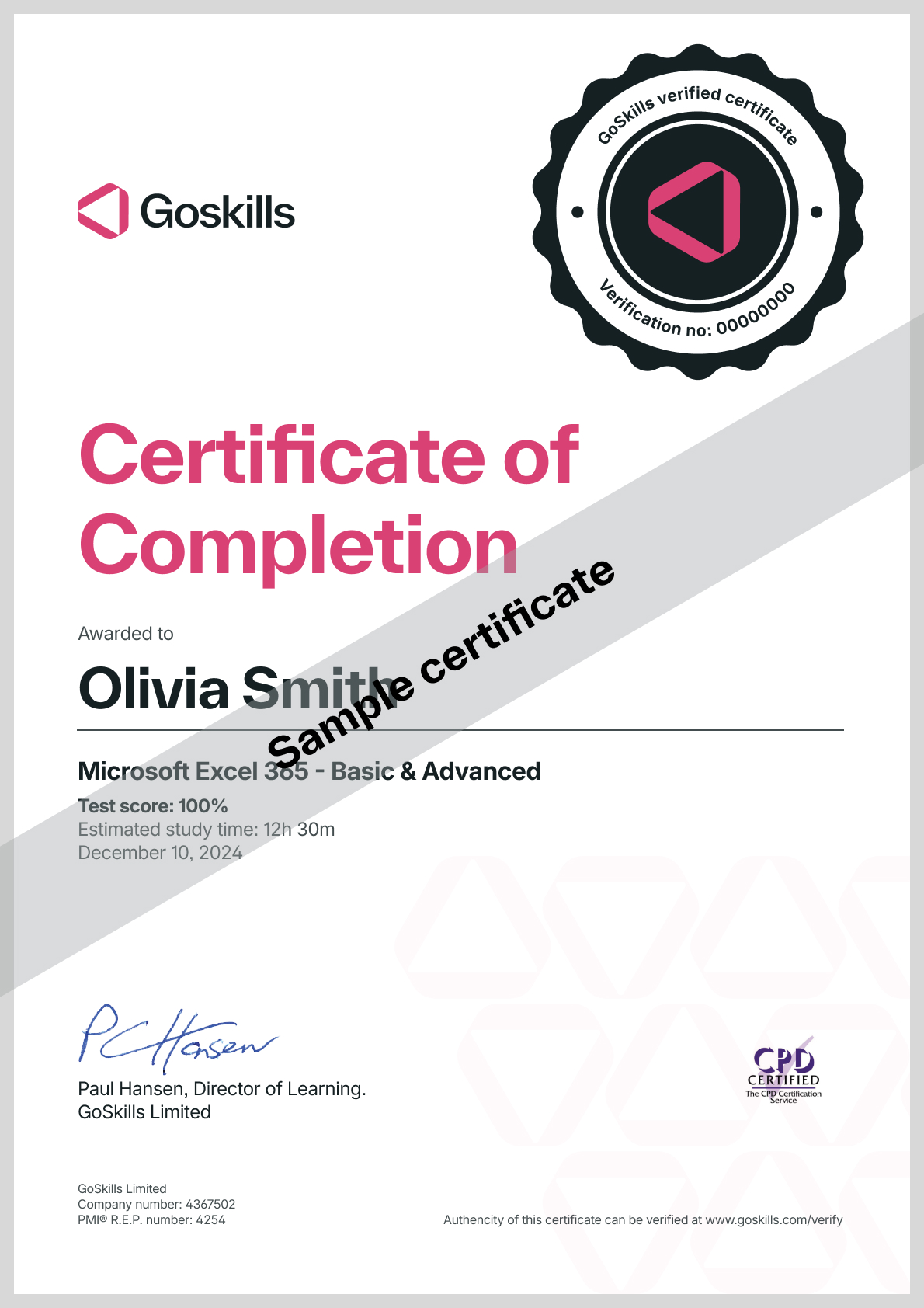
Certificate
Certificate of Completion
Awarded upon successful completion of the course.
Instructor
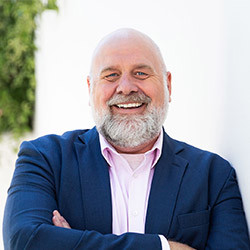
Eric Zackrison
Dr. Eric Zackrison is the president and CEO of IDI.US Inc., which controls the rights to the Interpersonal Dynamics Inventory (IDI), a powerful multi-rater personality and behavioral style measurement tool. After 25 years as a manager and entrepreneur and earning his MA, MBA, and PhD, Eric is furthering IDI awareness and use by training and licensing others, as well as adopting the name of his father's consulting firm, Effectiveness Consultants. Eric also teaches for the Technology Management Program (TMP) at UCSB. His work focuses on the diverse methods of interaction and empowerment and how to use these different approaches successfully.
Eric Zackrison
CEO of IDI.US Inc and University Professor
Accreditations
Link to awards
How GoSkills helped Chris
I got the promotion largely because of the skills I could develop, thanks to the GoSkills courses I took. I set aside at least 30 minutes daily to invest in myself and my professional growth. Seeing how much this has helped me become a more efficient employee is a big motivation.