From Pandas to Polars
From Pandas to Polars
What you’ll learn
Skills you’ll gain
Navigate the shift from Pandas to Polars, uncovering motivations, essential differences, and comparative performance insights. Led by Brett Vanderblock, a seasoned business intelligence manager and data science expert, this course offers an insider's perspective on effective data handling. First, it breaks down the fundamental contrasts and similarities between Pandas and Polars. Next, it goes into the efficiency and advanced features of Polars, alongside practical applications and optimization techniques. Finally, best practices are shared to maximize data analysis outcomes. After completing this course, participants will be adept at leveraging Polars for data aggregation, distinguishing between the data structures of both libraries, and evaluating their performance, empowering them with the skills to navigate the evolving landscape of data analysis with Polars.
Syllabus
Download syllabus-
1
Features, strengths, and limitations of pandas There are core strengths and inherent limitations embedded within the Pandas framework. 2m
-
2
Key features and benefits of transitioning to polars Polars has unique functionalities and salient advantages. 3m
-
1
Data structures: pandas dataframe vs polars dataframe There are notable similarities and differences in the data structures inherent in Pandas and Polars DataFrames. 3m
-
2
Indexing and data selection There are contrasting methods of indexing and data selection techniques within Pandas and Polars. 4m
-
3
Comparing data manipulation There are nuanced variations in data manipulation techniques between Pandas and Polars. 4m
-
4
Handling missing data It is important to know how to engage in an in-depth study of handling missing data in both Pandas and Polars. 3m
-
5
Apply aggregation and grouping Polars requires a nuanced approach to aggregation and grouping. 3m
-
1
Memory management in polars It is important to grasp how Polars optimizes memory usage, enhancing data processing efficiency. 3m
-
2
Efficient data processing with polars Polars allows you to leverage advanced strategies for expeditious data processing. 3m
-
3
Benchmarking performance of pandas vs polars Benchmarking exercises allow you to methodically analyze and compare the performance metrics of Pandas and Polars. 4m
-
1
Explore advanced polars functions There are several intricate functionalities available within the Polars library. 4m
-
2
Time series analysis in polars streamlined techniques for conducting time series analysis allows for higher levels of efficiency. 2m
-
1
Real-world data analysis Understanding how Polars functions in diverse real-world data analysis scenarios will allow for practical insights. 3m
-
2
Transitioning your pandas code to polars It is possible migrate existing Pandas code to Polars. 3m
-
3
Moving between pandas and polars There are several instances in which knowing how to move between Pandas to Polars will be beneficial. 2m
-
1
Writing efficient polars code Polars can be a powerful tool for crafting efficient and effective code. 2m
-
2
Debugging and troubleshooting in polars There are debugging and troubleshooting techniques specific to Polars. 3m
-
1
The future of data analysis with polars It is important to be able to anticipate potential future developments and applications of Polars in data analysis. 1m
Certificate
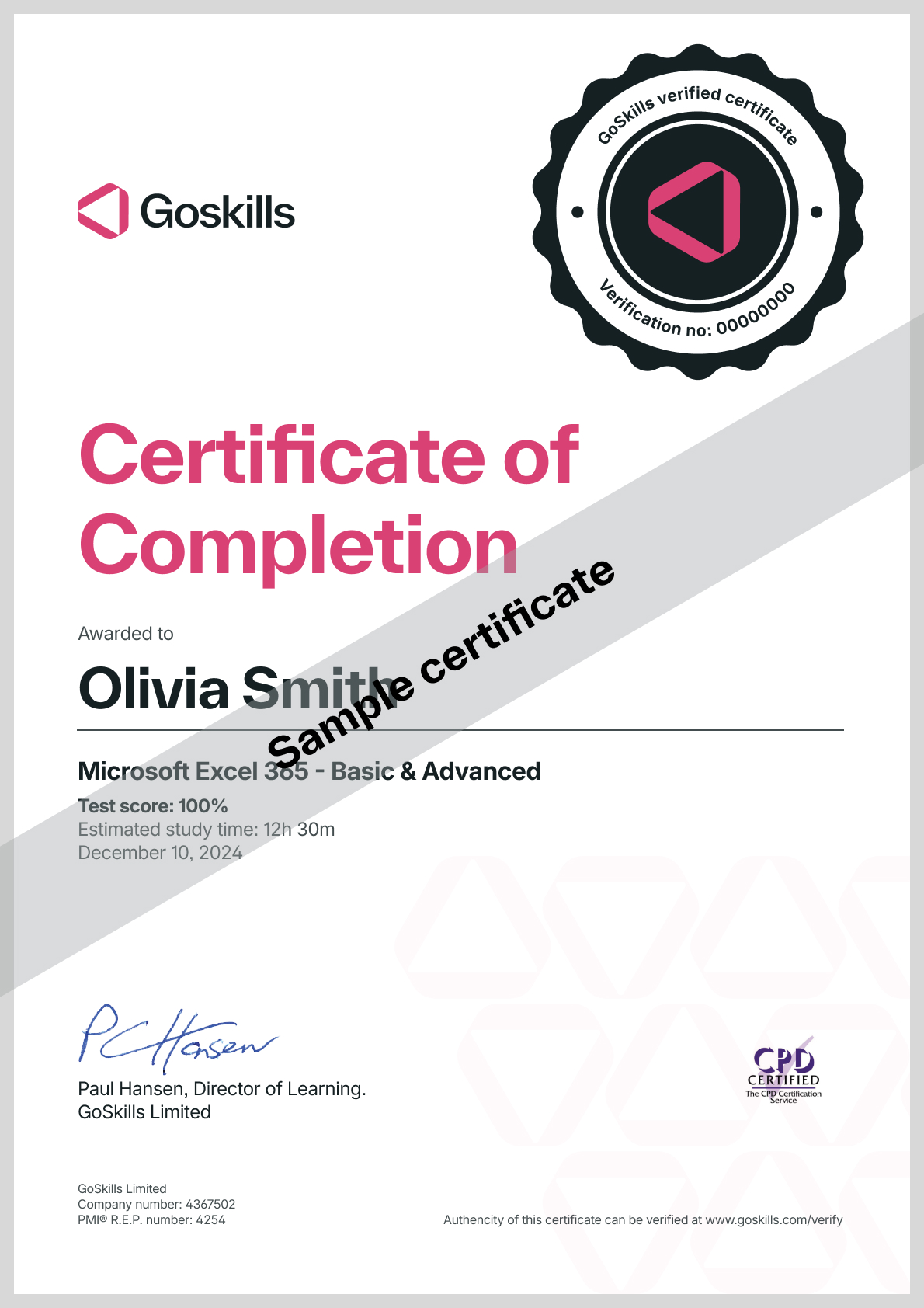
Certificate of Completion
Awarded upon successful completion of the course.
Instructor
Brett Vanderblock
Brett Vanderblock is a data scientist with Patagonia and co-founder of Think Fast Analytics. He has proven experience surfacing insights across industries, from start-ups, state and local governments, higher education, healthcare, to retail. He is always furthering his deep expertise in machine learning, data visualization, and data pipelines. An educator at heart, Brett enjoys providing "data therapy" to enable others to realize the benefits of their data through self-service analytics.

Brett Vanderblock
Data Scientist
Accreditations
Link to awards
How GoSkills helped Chris
I got the promotion largely because of the skills I could develop, thanks to the GoSkills courses I took. I set aside at least 30 minutes daily to invest in myself and my professional growth. Seeing how much this has helped me become a more efficient employee is a big motivation.