Using Tableau to Discover Powerful Business Insights
Using Tableau to Discover Powerful Business Insights
What you’ll learn
Skills you’ll gain
Making informed decisions based on data insights can be a powerful tool for growing your business. In this course, expert data analyst John David Ariensen walks you through the foundations of using Tableau for your business insights. This easy-to-follow course explains how to use Tableau effectively, the best way to connect to company data, and methods for building visualizations to create effective, informative models. John David shares basic dashboarding techniques, walks you through dimensions versus measurement, and offers best practices for using visual analytics. By the end of this course, you should have the necessary skills to use Tableau to analyze and visualize important data to better inform your company’s decisions.
Syllabus
Download syllabus-
1
What is Tableau? Tableau is a powerful data visualization tool. In this lesson, you'll identify its core functions and how it fits into a business context. 2m
-
2
How can I use Tableau effectively for business? There are many great uses for Tableau in a business. In this lesson, you'll identify practical use cases that illustrate its value across industries. 2m
-
3
Excel vs. Tableau There are some key differences between Microsoft Excel and Tableau. In this lesson, you'll evaluate which tool best supports various data workflows. 2m
-
4
What is data visualization? Do you understand what data visualization is? In this lesson, you'll identify key elements that make visualization effective and actionable. 3m
-
5
Four main functions of Tableau Tableau has four main functions. In this lesson, you'll pinpoint the core tasks Tableau is designed to support. 2m
-
6
Basic Tableau terminology Before you get started using Tableau, it's important to understand the terminology. 4m
-
1
Data connection screen One of the first screens you'll encounter in Tableau is the data connection screen. 3m
-
2
Types of data to connect to There are many different types of data that you can connect to. In this lesson, you'll identify the range of data types compatible with Tableau. 3m
-
3
Live vs. extracted data sources You can connect to live or extract the data sources. In this lesson, you'll assess the benefits of using live and extract connections. 2m
-
4
Defining joins, unions and data blending There are many different ways to manipulate data. In this lesson, you'll identify the roles of joins, unions, and blends. 2m
-
5
Creating joins, unions and data blending There are a few things you should know when you want to manipulate data. In this lesson, you'll combine sources using Tableau’s built-in features. 2m
-
6
Changing field types When organizing your data, you may need to update the field types. In this lesson, you'll modify field types to prepare for analysis. 3m
-
7
Creating an alias Often you'll need to create an alias and Tableau. In this lesson, you'll create aliases that make your data easier to interpret. 2m
-
8
Default formatting There are many formatting options available. In this lesson, you'll apply default formatting to keep your visuals consistent. 2m
-
9
Case study part 1 To help this knowledge stick. 2m
-
1
Interface overview There are essential components of the tablet interface. In this lesson, you'll navigate the interface and locate essential tools. 3m
-
2
Building visualizations There are a few things you should know about building visualizations. In this lesson, you'll create impactful charts and visual elements. 3m
-
3
Creating calculated fields Calculated fields are easy to create. In this lesson, you'll build calculated fields to expand your analysis options. 3m
-
4
Groups Groups are easy to use in Tableau. In this lesson, you'll group data points to highlight trends and comparisons. 1m
-
5
Sets There are a few things you should know about working with sets. In this lesson, you'll use sets to isolate and compare data subsets. 3m
-
6
Table calculations There are a few things you should know about working with table calculations. 2m
-
7
Sorting Sorting is easy in Tableau. In this lesson, you'll organize information through sorting. 2m
-
8
Filters There are a few things you should know about using filters. In this lesson, you'll control what data appears using filters. 1m
-
9
Histogram and bins Histograms are easy ways to showcase your data. In this lesson, you'll create histograms and bins to break down ranges of data. 1m
-
10
Analytics pane overview There are many powerful analytics tools. In this lesson, you'll explore the Analytics pane for trends and forecasts. 2m
-
11
Scatter plot and clustering Scatterplots can help you analyze your data. In this lesson, you'll build scatter plots and identify clusters of interest. 2m
-
12
Case study part 2 Real-world examples can help you understand how data could be used. 5m
-
1
Dashboard interface overview Tableau has a powerful dashboard. In this lesson, you'll discover how to use dashboards with ease. 3m
-
2
Basic dashboarding There are a few basics of dashboarding that you should know. In this lesson, you'll see how to build basic dashboards in Tableau. 5m
-
3
Interactive elements Tableau is known foremost as being interactive. In this lesson, you'll gain strategies to create interactive elements in Tableau. 3m
-
4
Tiled vs. floating objects There's a huge difference between tiled and floating objects. In this lesson, you'll use object types to structure your layout. 2m
-
5
Creating stories Stories are an excellent way for you to share your data in Tableau. In this lesson, you'll find ways to create stories in Tableau. 1m
-
6
Case study part 3 To help the knowledge stick, check out this real-world example. 3m
-
1
Dimension vs. measure There are some key differences between dimensions and measures. In this lesson, you'll evaluate dimension and measure in Tableau. 1m
-
2
Discrete vs. continuous It's essential to understand the difference between discrete and continuous. 2m
-
3
Aggregation Aggregation is an important concept. In this lesson, you'll follow aggregation logic in Tableau. 1m
-
4
Timeliness You need to consider the timeliness of your data. In this lesson, you'll consider time sensitivity in your dashboards. 5m
-
5
Visual analytics best practices There are a few best practices that you should be aware of. In this lesson, you'll apply professional design practices to elevate your visuals. 2m
-
1
Tableau public forums There are many great Tableau public forums available. In this lesson, you'll find resources and answers through Tableau’s forums. 1m
-
2
Sharing your Tableau portfolio If you want to get noticed, it's a good idea to share your Tableau portfolio publicly. 1m
-
3
Reddit Reddit is another great place to share your knowledge and learn from others. 1m
-
4
Forums You can Google millions of forums on Tableau. In this lesson, you'll locate helpful communities and resources on your own. 1m
-
5
YouTube YouTube is a great price to find quick tips for using Tableau. In this lesson, you'll find helpful videos that speed up your skill development. 1m
-
1
Wrap up your Tableau journey Congratulations on completing this course! Now, you're ready to commit to practicing small shifts that lead to lasting results. 1m
Certificate
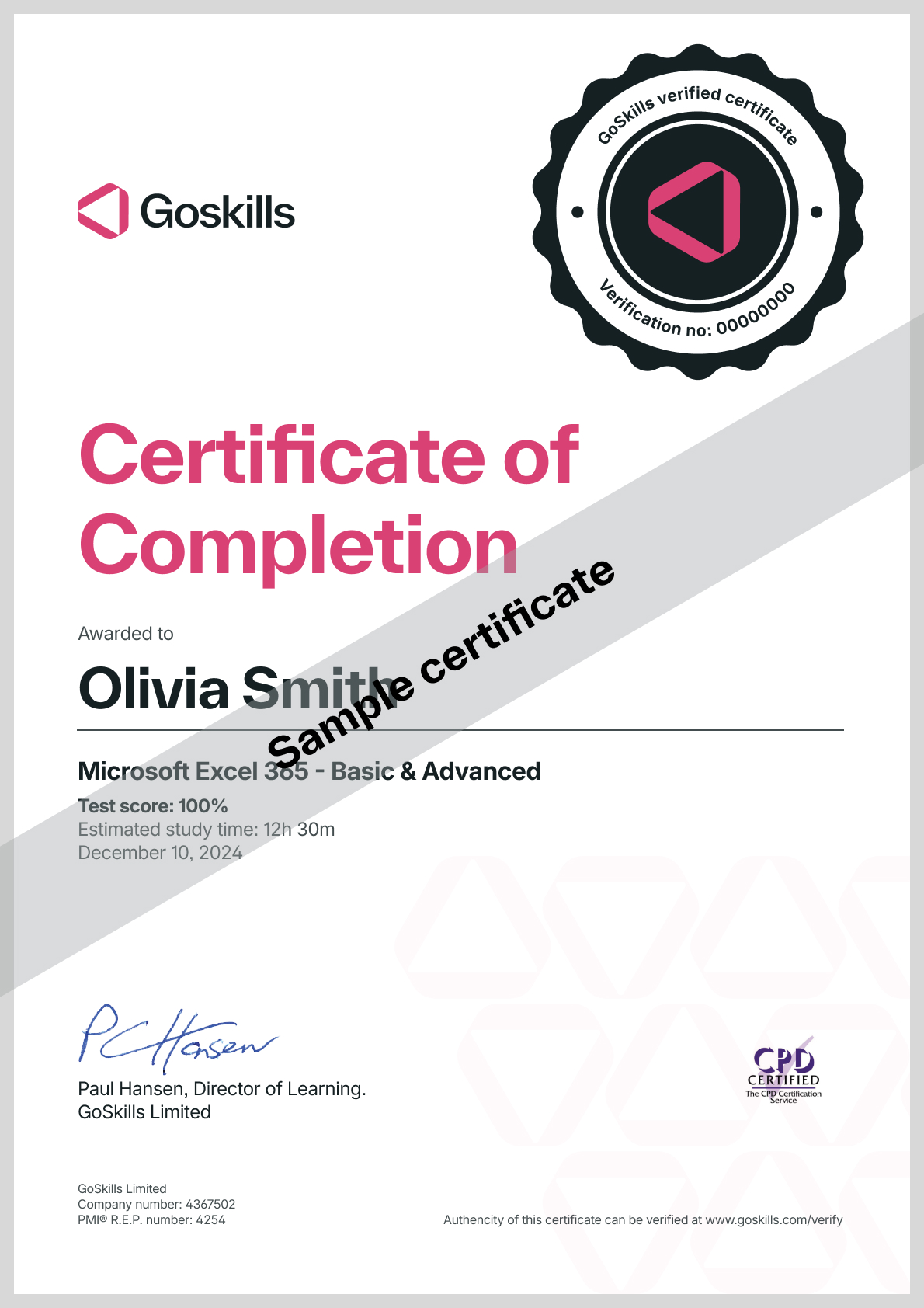
Certificate of Completion
Awarded upon successful completion of the course.
Instructor
John David Ariansen
John David Ariansen is an expert in helping organizations understand and use data. John David is the co-founder of Silvertone Analytics, a consulting firm that focuses on helping organizations with data governance, data analysis, and data-informed strategy. His specialty is data visualization, which helps take large sets of data and turn them into infographics that highlight underlying trends in the data. These trends help his clients make the right decisions. In addition to his consulting work, he also sits on the board of directors for Triad Local First, a nonprofit geared towards helping support local businesses in North Carolina. Through Triad Local First, he holds regular classes and workshops that help educate business owners in becoming more data literate. John David has a passion for education and currently sits on the advisory council at Greensboro College. He teaches data visualization and the analytics minor capstone course for Greensboro College.

John David Ariansen
Helping organizations understand and use data
Accreditations
Link to awards
How GoSkills helped Chris
I got the promotion largely because of the skills I could develop, thanks to the GoSkills courses I took. I set aside at least 30 minutes daily to invest in myself and my professional growth. Seeing how much this has helped me become a more efficient employee is a big motivation.