Transitioning From Excel to Tableau
Transitioning From Excel to Tableau
What you’ll learn
Skills you’ll gain
Making the switch from manipulating your data and insights in Excel to Tableau can feel like a daunting task, but this transition doesn't have to be so intimidating. In this course, data visualization expert Heather Johnson will guide you through the process of moving from Excel over to Tableau. First, Heather will guide you through the basics of using Tableau's desktop application and connecting your Excel data source with Tableau. Then she'll walk through the steps of creating the data worksheets you'll need to visualize the data. Finally, Heather shares her tips for creating dashboards in Tableau. You'll finish this course feeling prepared to get started using Tableau.
Syllabus
Download syllabus-
1
Migrating your data from Excel To begin to convert your Excel dashboards to Tableau dashboards, you should first connect to your file. 6m
-
1
Basics of Tableau worksheets Every visualization begins with creating a worksheet, which is an individual component that will be placed in your finished dashboard. 6m
-
2
Creating chronological tables in Tableau Looking at numbers according to a range of dates is a common component of most dashboards, and something you will want to know. 3m
-
3
Bar charts and aggregations in Tableau Aggregating your data in Tableau is one of the most important steps to building easy-to-read dashboards. 4m
-
4
Creating colored trend charts in Tableau Trend charts are another helpful data visualization that can indicate data. 6m
-
5
Creating moving maps in Tableau In Tableau, you have the ability to move dimensions and measures within a map at once. 6m
-
6
Adding a filter in Tableau Filters are one of the most important parts of a dashboard, and most people expect them. 5m
-
7
Additional tips and tricks in Tableau There are several additional "pro tips" you can use to build your sheets in Tableau. 5m
-
1
Building the framework in Tableau The first step to take when building a dashboard is to create its framework inside of the Tableau workbook. 4m
-
2
Adding sheets and filters in Tableau The most important step to your dashboard is the sheets you pull in, as these are your sources of data. 8m
-
3
Validating your dashboard in Tableau Once you've built out your dashboard, you'll want to validate that the data points are being displayed accurately and that your dashboard is behaving as expected. 8m
-
4
Taking it to the next level in Tableau There are several creative liberties you can take to enhance your analysis and detail your insights. 18m
-
1
Tableau communities Making the transition from Excel to Tableau can feel daunting, but it doesn't have to. 1m
Certificate
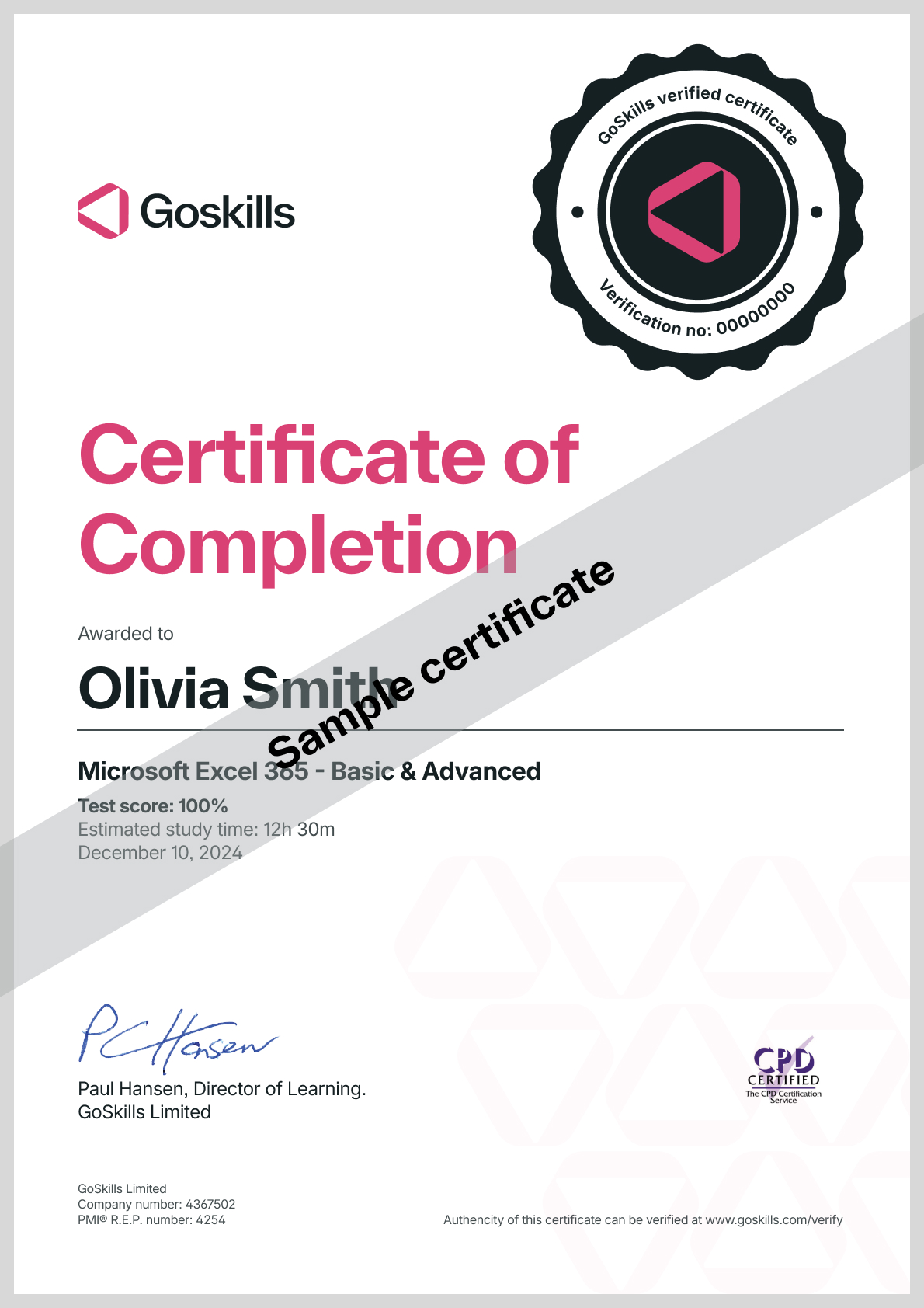
Certificate of Completion
Awarded upon successful completion of the course.
Instructor
Heather Johnson
Heather Johnson is an experienced senior data analyst with a passion for making business analytics easier to understand. In 2002 she got her start at Visa, Inc. creating dashboards that helped clients easily understand their operations metrics. She is certified in Tableau and equally skilled in Excel and other desktop data tools. Recently, she has consulted in data visualization for Intuit and Salesforce.

Heather Johnson
Data Visualization Engineer and Consultant
Accreditations
Link to awards
How GoSkills helped Chris
I got the promotion largely because of the skills I could develop, thanks to the GoSkills courses I took. I set aside at least 30 minutes daily to invest in myself and my professional growth. Seeing how much this has helped me become a more efficient employee is a big motivation.