HTML Quick Start
HTML Quick Start
What you’ll learn
Skills you’ll gain
You're wanting to build a website, and you know that it is going to require you to learn a fancy computer language to do it. Hypertext Markup Language (HTML) is the most commonly used code in website design. This course taught by TJ Oyeniyi, founder of ROOTs Technology, a service that helps instruct blooming web developers, will provide you with basic knowledge of the language and how to use it within a text editor. You'll first learn how to recognize HTML’s common tags and elements. With TJ’s direction, you'll learn how to incorporate text, embed images, add hyperlinks, and create lists, forms and tables to your website using HTML. He'll teach you how to format your site’s layout for maximum impact, and give you master hacks to create and launch your first website. You'll finish this course with the confidence to write basic HTML and apply the most frequently used elements to create your website.
Syllabus
Download syllabus-
1
HTML overview HTML, or hypertext markup language, is most often utilized in website design. 3m
-
2
Anatomy of HTML elements HTML is traditionally structured with a start and end tag, with content and elements in between the tags. 4m
-
3
Web design with HTML Since HTML is most commonly used when designing a website, you'll want to be mindful of the basic structure to use. 4m
-
1
Text elements in HTML Although text content is the most common form of information you'll add to your website, you have different options for how you'd like to display your text. 4m
-
2
IMG element in HTML Image tags can be used to embed an image into your HTML webpage. 2m
-
3
Using links in HTML Using web links, or hyperlinks, allows you to route your website viewer to another page or document. 4m
-
4
HTML lists If you want to group a set of related items together on a page, you'll use an ordered or unordered list. 5m
-
5
Creating forms in HTML Using an HTML form allows you to collect user input and send it to a server for processing. 4m
-
6
Using HTML tables Creating an HTML table can be an effective way to organize content and data into rows and columns. 2m
-
1
Using semantic elements and DIVs Semantic elements, or tags, are a helpful guide for being able to recognize the flow of your webpage and the different areas of the page itself. 4m
-
1
Top 5 HTML Gotchas When putting everything together and creating your first website using HTML, there are several hacks you can use to ensure you're successful. 4m
-
2
Layout best practices When you create your layout of the site, there are several things you can do to make this process simpler. 2m
-
3
Launching your website When you launch your website, there are several considerations for doing so locally as well as updating the site over time. 2m
-
1
Your next steps with HTML Thanks for watching this course! Now, you should feel confident in your ability to use basic HTML tools and commonly used elements to craft a webpage. 1m
Certificate
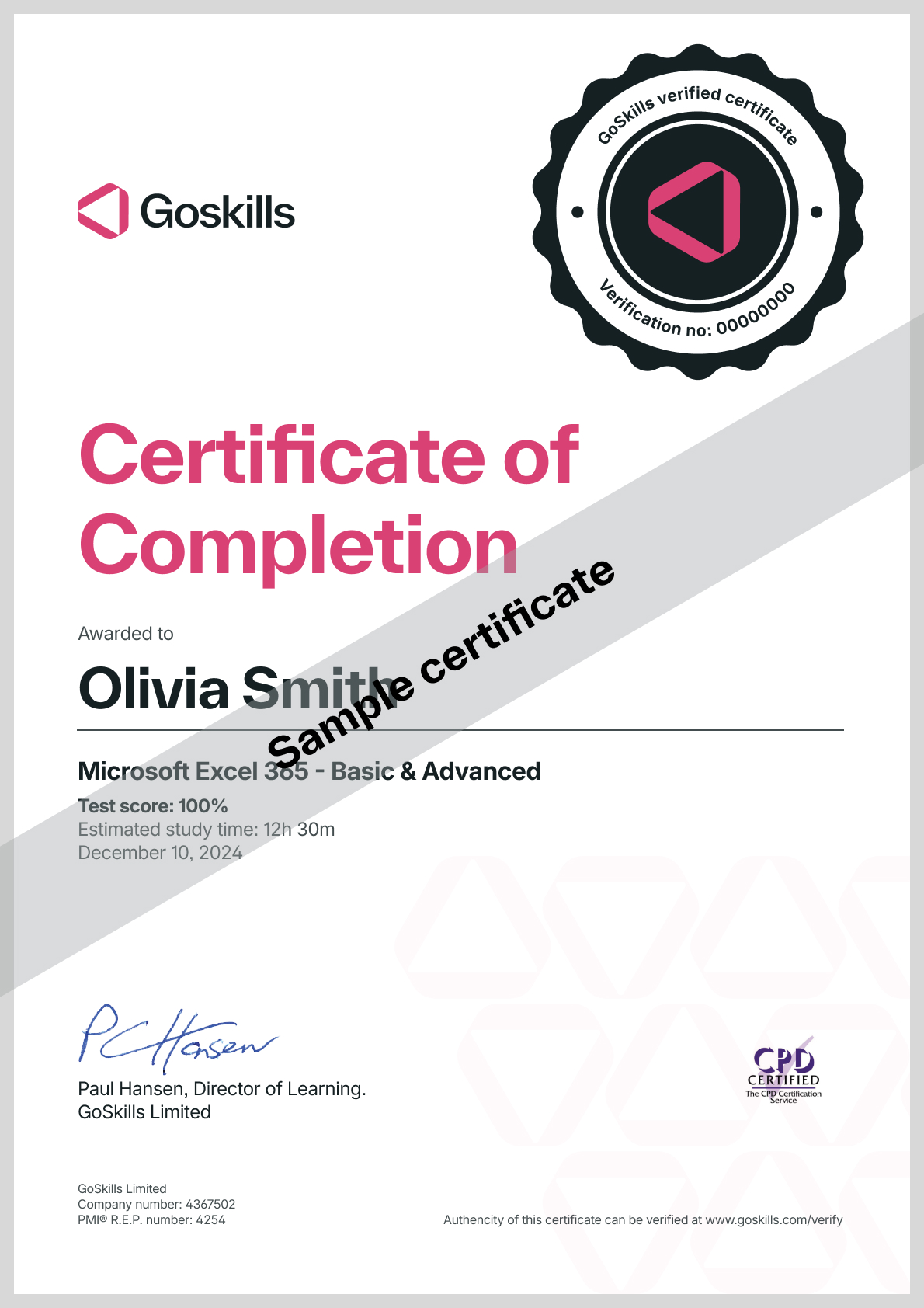
Certificate of Completion
Awarded upon successful completion of the course.
Instructor
Tolu (TJ) Oyeniyi
Tolu Oyeniyi is a web development specialist with an extensive background in software engineering and business analytics. He is also the founder of ROOTs Technology, which helps beginners learn web development while helping them prepare to job search. Tolu is an ICAgile Certified Professional and holds a MA in Management from Arizona State University.

Tolu (TJ) Oyeniyi
Founder at ROOTs Technology
Accreditations
Link to awards
How GoSkills helped Chris
I got the promotion largely because of the skills I could develop, thanks to the GoSkills courses I took. I set aside at least 30 minutes daily to invest in myself and my professional growth. Seeing how much this has helped me become a more efficient employee is a big motivation.