Public Relations Mistakes to Avoid
Public Relations Mistakes to Avoid
What you’ll learn
Skills you’ll gain
Businesses and the media have necessary, yet sometimes tumultuous relationships. These relationships can be mutually beneficial, but a single misstep can create a costly mistake. In this course, you'll learn how to avoid PR blunders that keep you in good graces with media outlets and the public’s trust. Taught by PR professional and business builder Andrea Holland, you'll learn how to avoid mistakes when talking to reporters, how to write short pitches aimed to catch media attention, and why saying "no comment" is a terrible response (and what to say instead). Andrea also shows you common mistakes that can make you look foolish and unprofessional, along with the appropriate ways to conduct follow-ups. Since writing a press release will not get you press, you'll discover how to enlist media outlets that accompany and complement the process. After this course, you'll know how to make trustworthy media inroads to build your company’s brand no matter your business' size.
Syllabus
Download syllabus-
1
Misunderstanding what is newsworthy What you think is a great PR story might not be a great story for the press. 3m
-
2
Hiring PR when you’re not ready Hiring PR before you're ready can be detrimental to your reputation as well as your business. 4m
-
3
Choosing the wrong spokespeople If you've ever wondered who the right person to deliver a message is for your company or product, you're not alone. 2m
-
4
Missing proactive story opportunities From upcoming holidays to cultural celebrations, planning ahead is key to identify how your company fits into guaranteed conversations. 2m
-
1
Writing a long pitch The easiest way to get your email pitch trashed is by making it too long. 2m
-
2
Getting the reporter's name wrong When you get a reporter's name wrong, you lose all trust with that journalist. 1m
-
3
Using buzzwords to make your point People use too many phrases that they can't backup. 2m
-
4
Withholding supporting documents In order to tell a full story and strength a pitch, you should include hyperlinks and attached visuals. 2m
-
5
Attacking your competition People often want to prove they are better than their competition by attacking them by name. 2m
-
1
Sending mass email pitches When pitching the same exact pitch to a massive list of reporters, you run the risk of being received as annoying and unprofessional. 2m
-
2
Misunderstanding media relations Simply writing a press release will not get you press, you need media relations to accompany and complement the process. 2m
-
3
Poor timing You can have the most newsworthy media story, but if your timing is off, you run the risk of not getting reporters to listen to you. 2m
-
4
Selecting the wrong publication A great story in a big publication means nothing if it's not where your customers are. 3m
-
5
Pitching multiple reporters When pitching multiple reporters the same story, you risk being perceived as unprofessional. 1m
-
6
Not building reporter relationships Ever wonder why when you pitch a reporter after finding their email, they're not quick to respond? 2m
-
1
Using “off the record” PR is not like the movies. 1m
-
2
Asking a reporter to proofread Asking a reporter to proofread their story before it gets published to make sure it's positive is not appropriate. 2m
-
3
“Following up” without intention When following up with a reporter via email, there is a right and wrong way to do it to receive a response. 2m
-
4
Commenting with “no comment" The statement "no comment" actually means you have a comment and is the worst thing you can say. 1m
-
1
Unethical PR It's easy to want to bash your competitors, stretch the truth to get a reporter's attention or tell a quick white lie to get ahead. 1m
-
2
Don’t capitalize on a crisis Communicating with the media during a crisis the wrong way, can cause a crisis for your business. 1m
-
3
Missing the human element How is what you’re pitching, impacting the everyday-person? 1m
-
4
Burying the lead Asking a reporter to proofread their story before it gets published to make sure it's positive is not appropriate. 2m
-
1
On the correct path Thanks for watching this course! 1m
Certificate
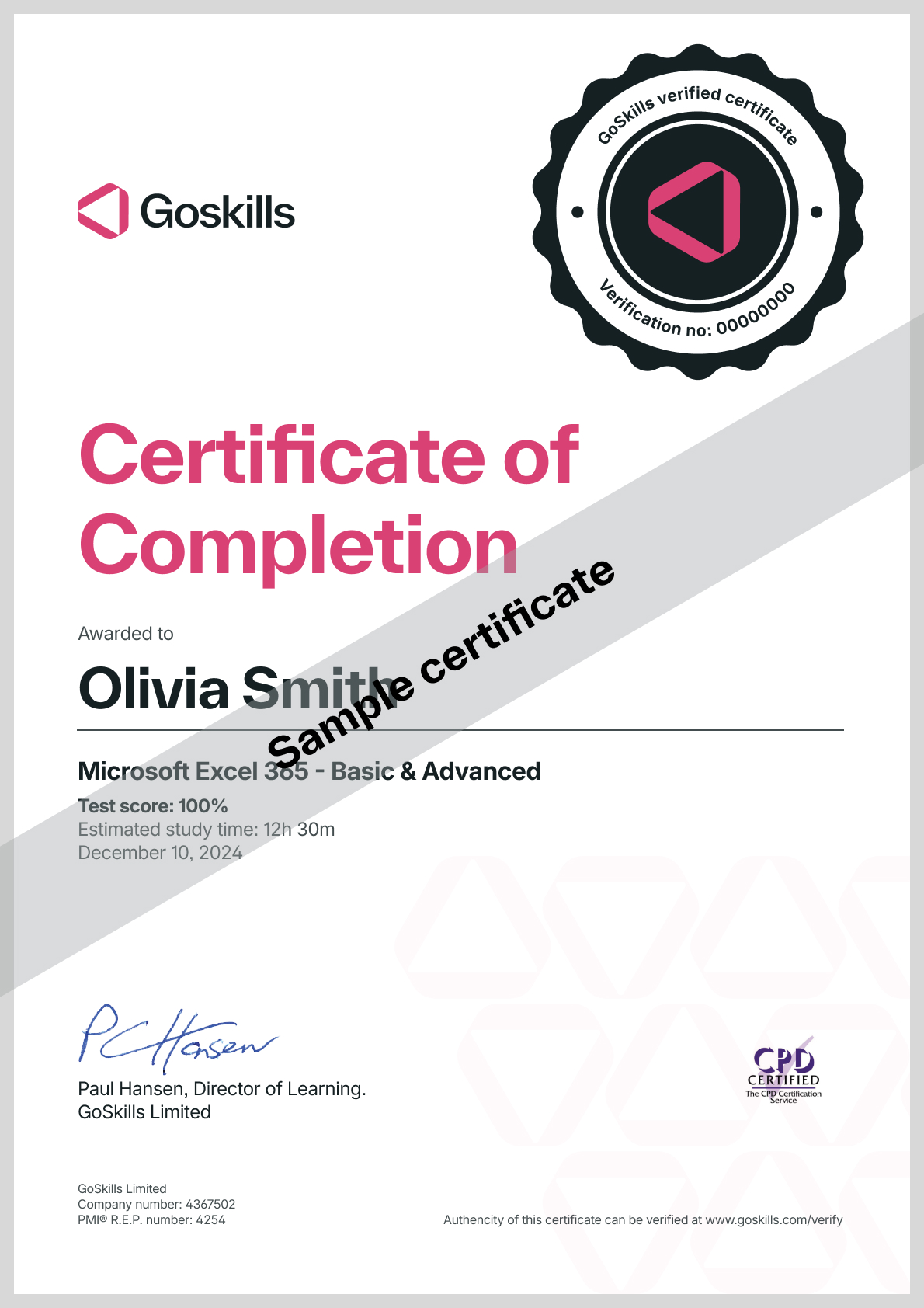
Certificate of Completion
Awarded upon successful completion of the course.
Instructor
Andrea Holland
Andrea Holland has managed PR teams for some of the biggest brands in consumer technology and learned from some of the brightest minds in the industry. Her experience with initiatives for PayPal, Intuit, and Visa led her to start her own consultancy, DialedPR, which focused on early-stage startups. DialedPR was created with a certain design in mind - to be able to serve clients anywhere in the world, from anywhere in the world.

Andrea Holland
Founder of Dialed PR and Remote PR Jobs
Accreditations
Link to awards
How GoSkills helped Chris
I got the promotion largely because of the skills I could develop, thanks to the GoSkills courses I took. I set aside at least 30 minutes daily to invest in myself and my professional growth. Seeing how much this has helped me become a more efficient employee is a big motivation.