Python for Automation
Python for Automation
What you’ll learn
Skills you’ll gain
If you've ever been faced with repetitive and tedious tasks such as renaming hundreds of files or updating dizzying amounts of spreadsheet cells, then you know what a time-saving boon automation can be. From mastering file handling to conquering web scraping with BeautifulSoup and Selenium. Discover the ultimate game-changer in productivity with "Python for Automation" by Lavanya Vijayan. Learn the art of parsing, error handling, and weaving through command lines. Unlock the power of APIs, seamlessly connecting software pieces for robust solutions. This course isn't just about coding; it's about crafting digital artistry with Python. Ready for the journey? Let's automate the future, one line of code at a time!
Syllabus
Download syllabus-
1
Read files with Python Reading files in Python provides the building blocks for manipulating external data. After this lesson, you'll be able to read text files with Python. 3m
-
2
Write files with Python Writing files in Python unlocks a new layer of depth by allowing programs to write data that persists after a program is finished executing. 2m
-
3
Use Python's command-line interface The command-line interface makes it possible for basic automation, such as moving files and allowing a user to enter data while a program is running. 2m
-
4
Organize directories with Python Organizing directories is a necessary skill, as it allows for more clarity and flexibility in file structure and increased workplace efficiency. 3m
-
5
Parse data with Python Parsing allows you to make the data stored in a file more readable and isolate specific pieces of that data. 6m
-
6
Extract data with regular expressions Regular expressions are a coding structure that allow you to extract data using patterns in text. 2m
-
7
Validate inputs with automation Input validation involves checking that the value entered by a user is formatted correctly. 2m
-
8
Prepare for error handling Errors will happen, no matter how experienced you are with Python. 2m
-
9
Automate error handling Error handling is a crucial aspect of programming and involves detecting and resolving errors that occur when a program is executed. 3m
-
1
Use BeautifulSoup for web scraping The BeautifulSoup library in Python provides several functions to support web scraping, which allows you to fetch data from from any website efficiently. 1m
-
2
Explore HTML structure Understanding the basis of the HTML system is critical in being able to navigate through a website's information. 1m
-
3
Inspect your data source Before starting the process of scraping, it's essential to inspect the data source so you can determine which sections of the page to focus on based on your goals. 2m
-
4
Request and parse HTML code Two fundamental steps to web scraping involve creating a request a website, and decoding that response from the website into useful information. 2m
-
5
Extract data from HTML code After you receive a response to your request, you'll want to navigate the HTML code to extract specific pieces of data that you need from the larger response. 2m
-
6
Prepare for scraping multiple pages In the realm of web scraping, an important skill to gain is creating a scraper that works independent of what page number it’s on. 1m
-
7
Scrape multiple pages Time to explore how to scrape information divided onto multiple pages. After this video, you'll be able to scrape multi-paged websites. 3m
-
1
Use Selenium for automating web browsing Selenium has many useful applications, such as testing website functionality efficiently and automating repetitive browser tasks. 1m
-
2
Automate basic browser interactions The most common browser interactions that can be automated are clicking and typing. 3m
-
3
Automate drag and drop functionality Some websites have drag and drop functionality, which is a more complex browser interaction. 2m
-
4
Explore waiting strategies with Selenium Waiting strategies are pivotal when it comes to interacting with most modern asynchronous loading websites. 1m
-
5
Implement explicit wait with Selenium The explicit wait strategy allows you to wait for specific elements to appear on a webpage before automating browser interactions. 4m
-
1
Identify the value of APIs APIs unlock a range of functions that help you automate different processes in Python without having to start building from scratch. 1m
-
2
Make API requests in Python Making an API request is the first step to take if you want to use an API. 2m
-
3
Parse API responses in Python with JSON After making an API request, the next step is to parse through the response you get back, which is often in JSON format. 2m
-
4
Use API keys in Python Many API's are locked behind keys to prevent unwarranted use, so it's critical to understand how to use keys when interacting with APIs. 2m
-
5
Connect information between APIs Connecting information between different APIs allows you to create complex software solutions with minimal time investment. 3m
-
1
Unlock resources and next steps Congratulations on completing this course! 1m
Certificate
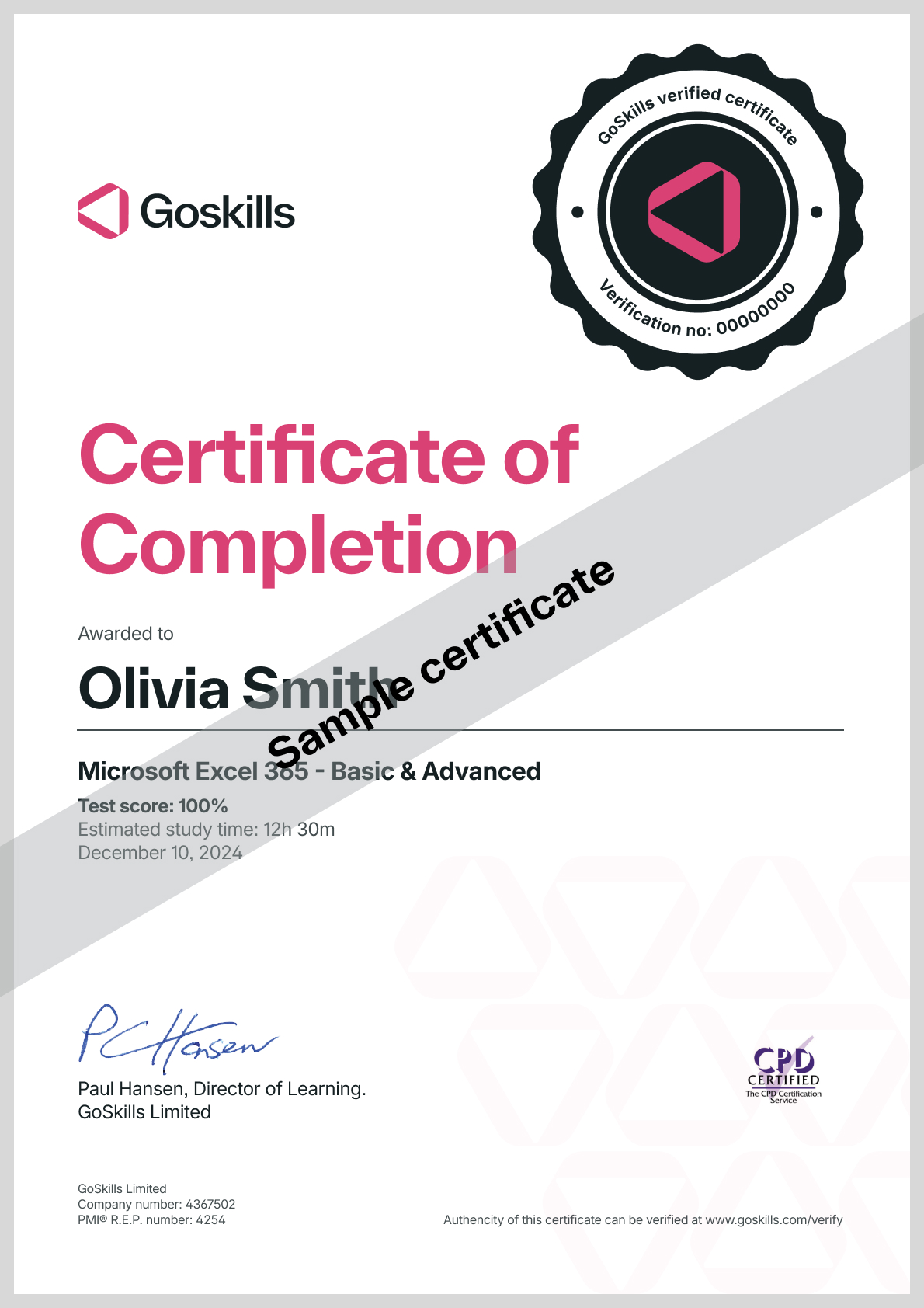
Certificate of Completion
Awarded upon successful completion of the course.
Instructor
Lavanya Vijayan
Lavanya Vijayan is a Technical Curriculum Architect and Data Science Instructor at Madecraft. Lavanya has authored several programming and data science courses for LinkedIn Learning. She has also developed technical curriculum for Google’s Advanced Data Analytics and Cybersecurity career certifications.
Lavanya has a Master’s degree in Information and Data Science from UC Berkeley.

Lavanya Vijayan
Technical Curriculum Architect and Data Science Instructor
Accreditations
Link to awards
How GoSkills helped Chris
I got the promotion largely because of the skills I could develop, thanks to the GoSkills courses I took. I set aside at least 30 minutes daily to invest in myself and my professional growth. Seeing how much this has helped me become a more efficient employee is a big motivation.