Python Data Science Mistakes to Avoid
Python Data Science Mistakes to Avoid
What you’ll learn
Skills you’ll gain
Whether you're a master in Python or still learning your way around the multi-paradigm programming language, chances are you're making simple mistakes that cost you significant time and productivity. In this course, you'll learn the most common mistakes data scientists make while using Python. By the end of this course, you'll be armed with a list of tools, strategies, and best practices to improve your effectiveness working with data in Python.
Syllabus
Download syllabus-
1
Not writing comments One of the most common mistakes when programming is not writing comments along the way. 3m
-
2
Not organizing your directory Another common mistake when working with data is not organizing your directory into categories, which causes clutter and confusion. 3m
-
3
Not testing As you make changes to your code, it is important to consistently test to ensure that your code does not break. 2m
-
4
Not sharing data referenced in code If you share your code with a project partner, but you do not share the data you referenced, there is not much they can do. 1m
-
5
Hardcoding inaccessible paths If you hardcode paths that others do not have access to, they cannot run your code and will have to manually change paths. 3m
-
6
Name clashing with Python Standard Library A common mistake that can occur when programming is name clashing with modules from the Python Standard Library. 2m
-
7
Not importing relevant libraries and modules A common mistake that can come up when using modules and libraries is not importing them first. 1m
-
8
Naming vaguely A programming mistake you want to avoid is naming things vaguely. 1m
-
1
Modifying a list while iterating over it Another common mistake in programming is modifying a list while iterating over it. 2m
-
2
Using for loops instead of vectorized functions For loops are great, but there are times when for loops are too slow. 3m
-
3
Using class variables vs. instance variables A common mistake to avoid when using object oriented programming is incorrectly using class variables instead of instance variables. 4m
-
4
Calling functions before defining A mistake that can come up when programming is calling functions before defining them. 1m
-
5
Creating circular dependencies When you're programming, it's important to avoid the mistake of creating circular dependencies. 1m
-
1
Not choosing the right data structure When working with data, a common mistake is choosing the wrong data structures. 2m
-
2
Skimming data Another common mistake that data scientists should avoid is skimming data. 2m
-
3
Not using the right visualization type When creating visualizations of your data, it is easy to get caught up on the aesthetic. 1m
-
4
Not addressing outliers A mistake that data scientists should avoid is not addressing outliers in data. 1m
-
5
Not updating your dataset Another mistake to avoid when working with data is not updating your dataset properly. 1m
-
6
Not cleaning data A common mistake that can occur when working with data is not cleaning your data, which can be problematic. 1m
-
1
Using features that will be unavailable later A common mistake in machine learning is choosing features that will not be available in the future. 1m
-
2
Using redundant features Another mistake to avoid in machine learning is using redundant features, which affects your model's performance. 1m
-
1
Next Steps 1m
Certificate
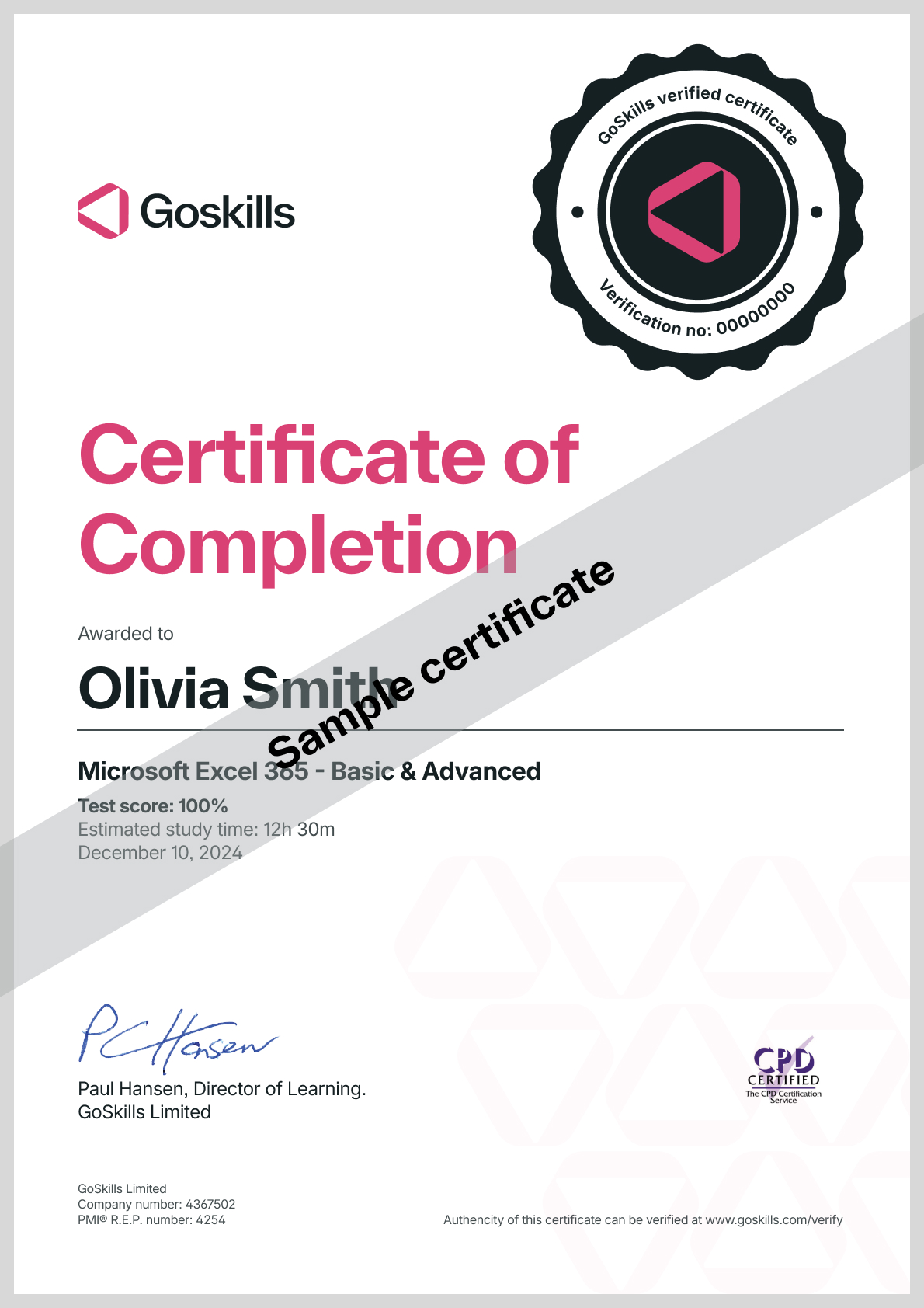
Certificate of Completion
Awarded upon successful completion of the course.
Instructor
Lavanya Vijayan
Lavanya Vijayan is a Technical Curriculum Architect and Data Science Instructor at Madecraft. Lavanya has authored several programming and data science courses for LinkedIn Learning. She has also developed technical curriculum for Google’s Advanced Data Analytics and Cybersecurity career certifications.
Lavanya has a Master’s degree in Information and Data Science from UC Berkeley.

Lavanya Vijayan
Technical Curriculum Architect and Data Science Instructor
Accreditations
Link to awards
How GoSkills helped Chris
I got the promotion largely because of the skills I could develop, thanks to the GoSkills courses I took. I set aside at least 30 minutes daily to invest in myself and my professional growth. Seeing how much this has helped me become a more efficient employee is a big motivation.