Python Quick Start
Python Quick Start
What you’ll learn
Skills you’ll gain
Want an easy-to-follow, fast-paced introduction to Python? This course shows you all the fundamentals of this in-demand programming language, and you'll see why programmers fall in love with it because of the increased productivity it provides. You'll learn from Python expert and trainer Lavanya Vijayan, who shows you all the programming basics. These include variables, built-in and custom functions, data types and data storage, conditional statements, sequences, recursion, iteration, and more. You'll even get a short introduction to object-oriented programming in Python. If you're an experienced programmer, you'll pick up Python rapidly. Are you a beginner? No worries, you'll be delighted to discover that it's also easy for beginners to use and learn. This is the perfect course to "get your feet wet" and learn the basics you need to become proficient, and also to decide if it's the appropriate language for your projects.
Syllabus
Download syllabus-
1
Demystifying Python Python is one of the most used and fastest growing programming languages, and it's a great way to enter into the world of programming. 1m
-
2
Starting with Python Python is a great first language to start with for several reasons. 1m
-
3
Comparing Python vs. Java Another commonly taught language in introductory programming courses is Java. 1m
-
4
Harnessing the power of Python Python is versatile, and building your Python skills can set you up for future opportunities in programming. 1m
-
1
Setting up your Python environment There are a few things you'll want to have in place on your device to ensure you can work effectively with Python. 3m
-
2
Sorting your types of data Categorizing data into different types helps you organize information and solve problems. 3m
-
3
Storing data using variables You'll naturally need to keep track of the data or information you find, but as your datasets grow, it becomes tougher to remember and keep track of things. 2m
-
1
Defining functions in Python You may be familiar with functions in math, and functions in programming are structured similarly. 1m
-
2
Using built-in functions in Python There are many useful functions that have already been created in Python that are ready for you to use. 4m
-
3
Building your own functions While there are cool built-in functions, you'll often need to create your own functions to complete a certain task or solve a specific problem. 3m
-
4
Distinguishing types of functions Recognizing the different forms that a function can have is critical to defining and using functions in your programs. 7m
-
5
Using modules in Python Modules contain code that has already been written, and being able to reuse them is a critical programming skill. 6m
-
1
Defining sequences Sequences allow you to store collections of data. 1m
-
2
Using lists in Python A list is a commonly used type of sequence. After watching this video, you'll be able to create lists in Python. 4m
-
3
Leveraging tuples in Python A tuple is a common form of a Python sequence. After this lesson, you'll be able to utilize tuples when working in Python. 6m
-
1
Defining conditional statements Conditional statements help you control the computer's actions by dictating the terms of a function. 1m
-
2
Working with if statements An if statement is used to evaluate if something is true or false across your data in Python. 3m
-
3
Using If-else statements An if-else statement is a common conditional statement that allows you to do things like skip sections of code from your evaluation in Python. 3m
-
4
If-elif and if-elif-else statements If-elif and if-elif-else statements are conditional statements used to navigate code blocks that feature two alternatives. 11m
-
1
Defining iteration Iteration enables the computer to repeatedly perform tasks when working in Python. 4m
-
2
Using a for loop A for loop is a means you can use to achieve iteration. After watching this video, you'll be able to explain what a for loop is and write a for loop. 4m
-
3
Writing a while loop A while loop is a means you can use to achieve iteration. 2m
-
1
Demystifying recursive functions Recursive functions are important in programming. 2m
-
2
Navigating a recursive function Many recursive functions share a particular anatomy. 6m
-
1
What is Object Oriented Programming? Python supports Object Oriented Programming (OOP), a useful approach to programming. 4m
-
2
Applying Object Oriented Programming There are several ways that OOP can be applied which are helpful when getting started with programming. 9m
-
1
Next steps Thanks for watching this course! 1m
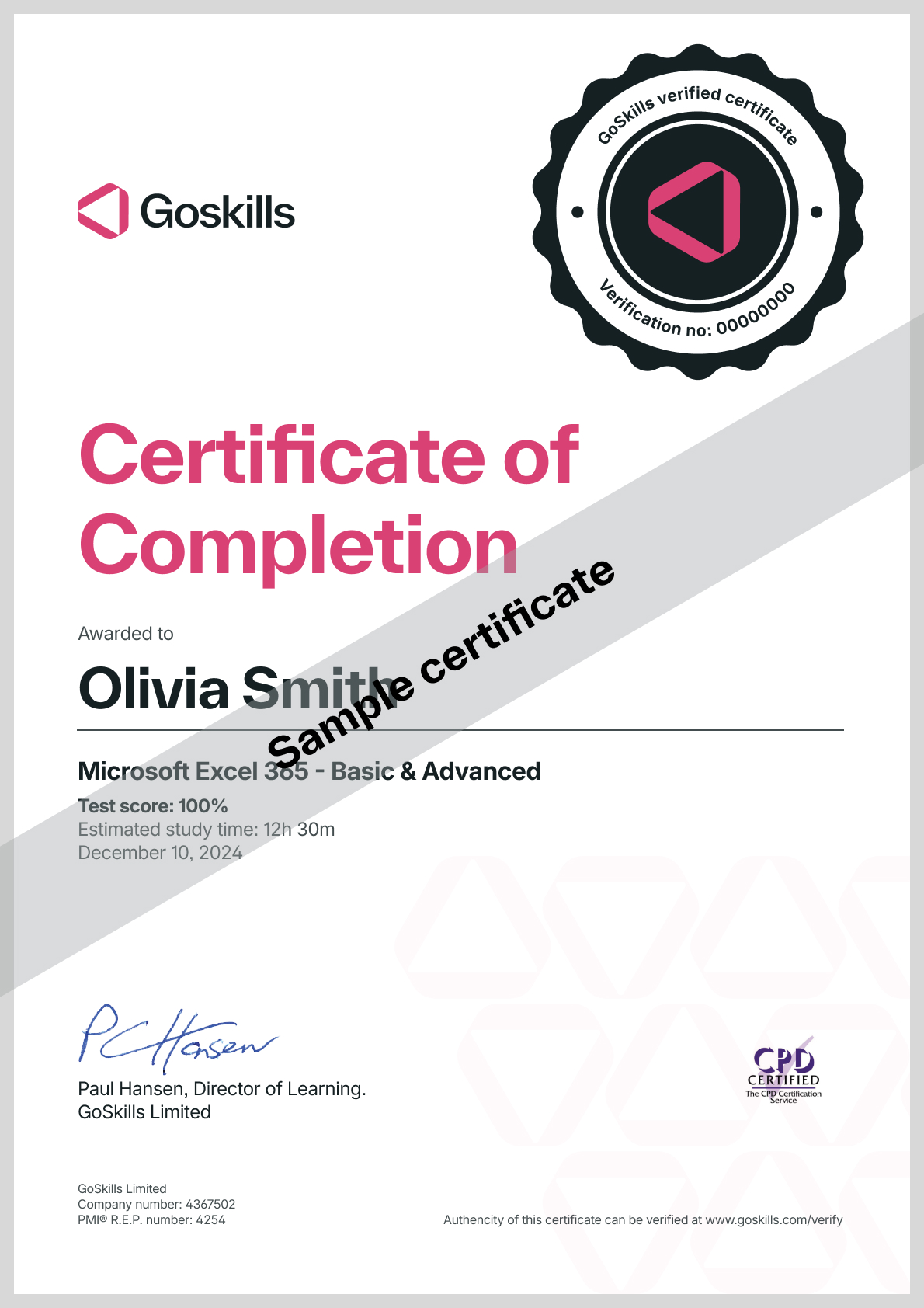
Certificate
Certificate of Completion
Awarded upon successful completion of the course.
Instructor
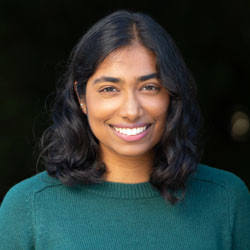
Lavanya Vijayan
Lavanya Vijayan is a Technical Curriculum Architect and Data Science Instructor at Madecraft. Lavanya has authored several programming and data science courses for LinkedIn Learning. She has also developed technical curriculum for Google’s Advanced Data Analytics and Cybersecurity career certifications.
Lavanya has a Master’s degree in Information and Data Science from UC Berkeley.
Lavanya Vijayan
Technical Curriculum Architect and Data Science Instructor
Accreditations
Link to awards
How GoSkills helped Chris
I got the promotion largely because of the skills I could develop, thanks to the GoSkills courses I took. I set aside at least 30 minutes daily to invest in myself and my professional growth. Seeing how much this has helped me become a more efficient employee is a big motivation.