Regression Analysis Fundamentals
Regression Analysis Fundamentals
What you’ll learn
Skills you’ll gain
What can ordinary least squares regression reveal about your data? In this course, Fro Carducci walks you through how to run OLS regression using tools like Excel, SPSS, and R. Through step-by-step screen recordings, you’ll interpret outputs, build clear visuals, and present results in a way that makes sense to stakeholders. By the end, you’ll be ready to apply OLS regression to real-world customer data and business trends to inform better decisions.
Syllabus
Download syllabus-
1
Understand the basics of OLS regression OLS is the foundation of most regression work—it’s the rule behind the line of best fit. 2m
-
2
Know the different regression types Regression isn't one-size-fits-all. 2m
-
1
Choose the best regression tool Whether you use Excel or R, each program makes regression accessible in its own way. 3m
-
2
Run a simple regression in Excel Excel makes it easy to run basic regressions if you know where to click. 5m
-
3
Use SPSS to analyze data with regression Point-and-click interfaces like SPSS offer robust regression options. 5m
-
4
Run a linear model in R using code R is powerful for reproducible, flexible analysis—especially with just a few lines of code. 4m
-
1
Understand what regression output means Every regression model creates output, but not all numbers are equally important. 3m
-
2
Check model assumptions OLS regression assumes your data meets certain conditions—like linearity, independence, and constant variance. 3m
-
3
Evaluate correlation vs. causation Regression reveals relationships, but it doesn’t always prove cause and effect. 3m
-
4
Checking goodness-of-fit and R² Go beyond coefficients and p-values. 2m
-
5
Handling outliers and influential points Sometimes data points are truly dramatically different from the rest, and sometimes they could just be an error. 2m
-
1
Create clear charts Charts help others quickly grasp the insights behind your model. 3m
-
2
Translate your results into insights Non-technical audiences need clear takeaways, not technical jargon. 2m
-
3
Tell the story behind your data model Telling a story makes your findings more memorable and persuasive. 2m
-
4
Visual storytelling with regression In this lesson, you'll discover how to combine regression outputs, visuals, and narratives into a compelling presentation that connects insights to decisions. 2m
-
1
Apply your regression skills in projects Congratulations on completing this course! 1m
Certificate
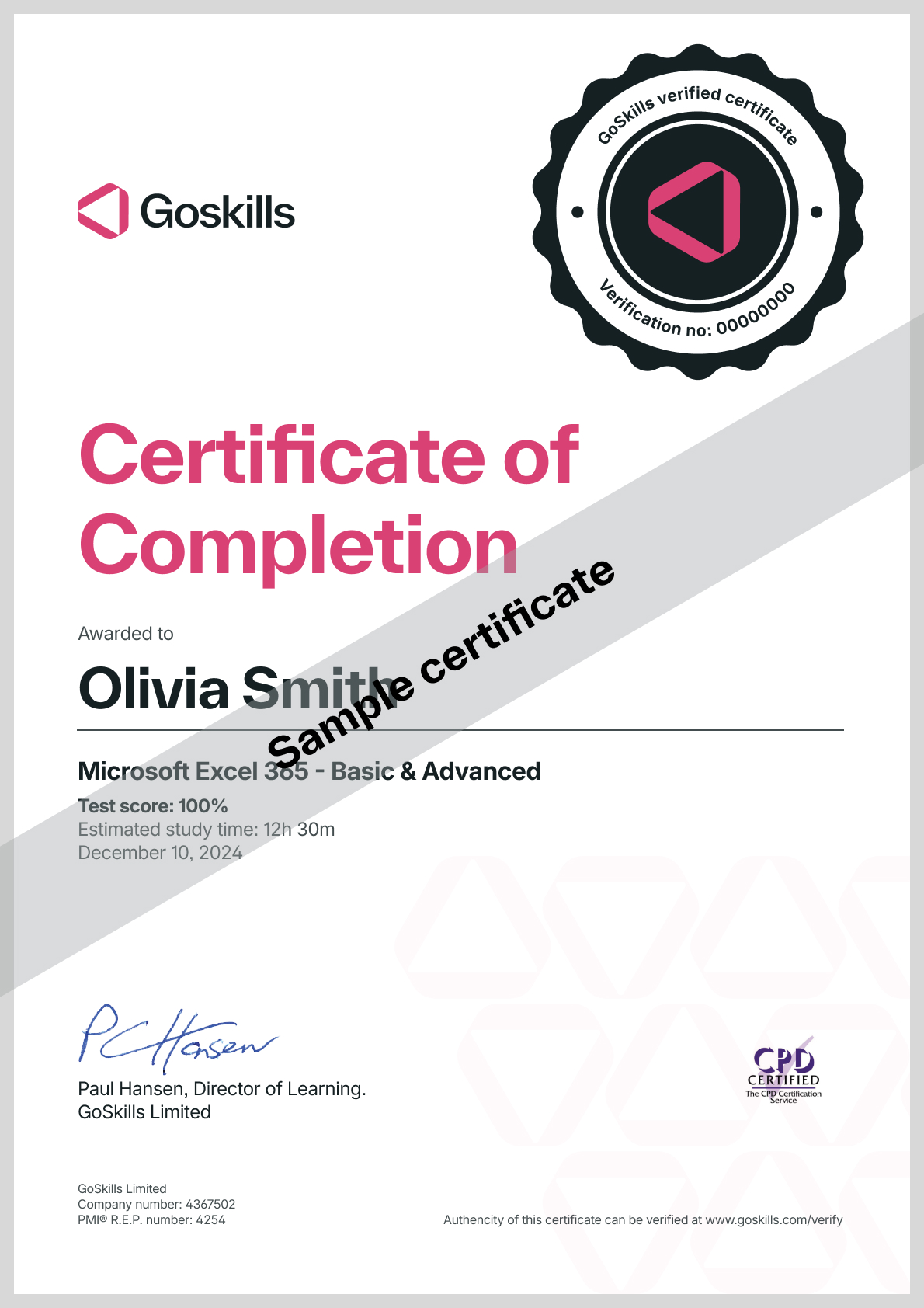
Certificate of Completion
Awarded upon successful completion of the course.
Instructor
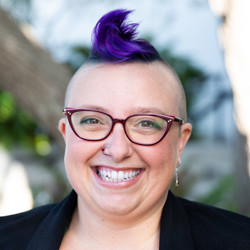
Fro Carducci
Fro (they/them) is a senior software engineer and data scientist with experience in both the science and tech industries. They aspire to inspire the next generation of young people to explore the wide range of careers available in science, math, and engineering. Committed to fostering diversity and inclusion, Fro devotes their time to organizations and programs that they support. Their efforts include participating in informative panels, offering mentorship, creating safe spaces for others, hosting coding sessions, and serving as the co-chair for a grassroots Diversity and Inclusion team. Fro holds two Bachelor of Science degrees, one in Mathematics and another in Environmental Science, Technology & Policy from California State University, Monterey Bay, as well as a Master of Science degree in Land, Resources, and Environmental Sciences from Montana State University.
Fro Carducci
Senior Software Engineer and Data Scientist
Accreditations
Link to awards
How GoSkills helped Chris
I got the promotion largely because of the skills I could develop, thanks to the GoSkills courses I took. I set aside at least 30 minutes daily to invest in myself and my professional growth. Seeing how much this has helped me become a more efficient employee is a big motivation.