
For many organizations, the employee onboarding process still relies on scattered documents, spreadsheets, and email threads, creating more friction than clarity for employees, HR teams, and managers alike.
Employee onboarding software can change that. It creates a smoother, more engaging onboarding experience, gives HR teams visibility into onboarding progress, and turns routine administrative work into a more efficient onboarding workflow.
In this guide, we’ll explore how modern employee onboarding software works, why traditional methods often fall short, and how the GoSkills Learning Management System (LMS) can help deliver a great onboarding experience that sets employees up for long-term success.
What is employee onboarding software?
Employee onboarding software is a digital solution that helps organizations manage the process of welcoming and preparing new employees to succeed in their roles. It centralizes key onboarding activities in one place, from collecting documents and setting up accounts to assigning training and tracking onboarding progress.
Onboarding software helps HR teams streamline the transition from hiring to full productivity.
Traditionally, onboarding new hires has focused on administrative tasks such as signing contracts, submitting tax forms, and enrolling employees in payroll and benefits systems. Many modern HR systems now include tools that help manage these steps through digital workflows and onboarding portals.
However, effective onboarding goes beyond paperwork. A strong onboarding process should also help employees build the knowledge, relationships, and confidence they need to succeed from day one.
This broader approach is often called functional onboarding. Instead of focusing only on forms and compliance, functional onboarding prepares employees for the practical realities of their role.
It may include:
- Job-specific training
- Company culture education
- Introductions to the new team
- Skill development tailored to the employee’s responsibilities
Types of employee onboarding software
In practice, employee onboarding software can refer to several different types of platforms that support different parts of the onboarding workflow.
1. HR systems (HRIS)
Human Resource Information Systems manage employee records, payroll, benefits, and other administrative processes. Many HRIS platforms include built-in onboarding workflows that help HR teams collect employee information and manage documentation.
Examples include:
- BambooHR
- Workday
- Rippling
These systems typically handle the administrative side of onboarding, such as managing employee data, contracts, and payroll setup.
2. Dedicated onboarding platforms
Some tools focus specifically on the onboarding experience, helping organizations guide new employees through structured onboarding workflows and engagement activities.
Examples include:
- Enboarder
- Sapling by Kallidus
- Talmundo
These platforms often emphasize communication, checklists, and automated onboarding flows designed to create a smoother onboarding experience.
3. Learning management systems (LMS)
Learning management systems support the functional side of onboarding by delivering training, managing learning paths, and tracking skill development.
Examples include:
- GoSkills
- LearnUpon
- Docebo
An LMS allows organizations to provide structured onboarding training, ensuring employees gain the knowledge and skills they need to perform their roles effectively.
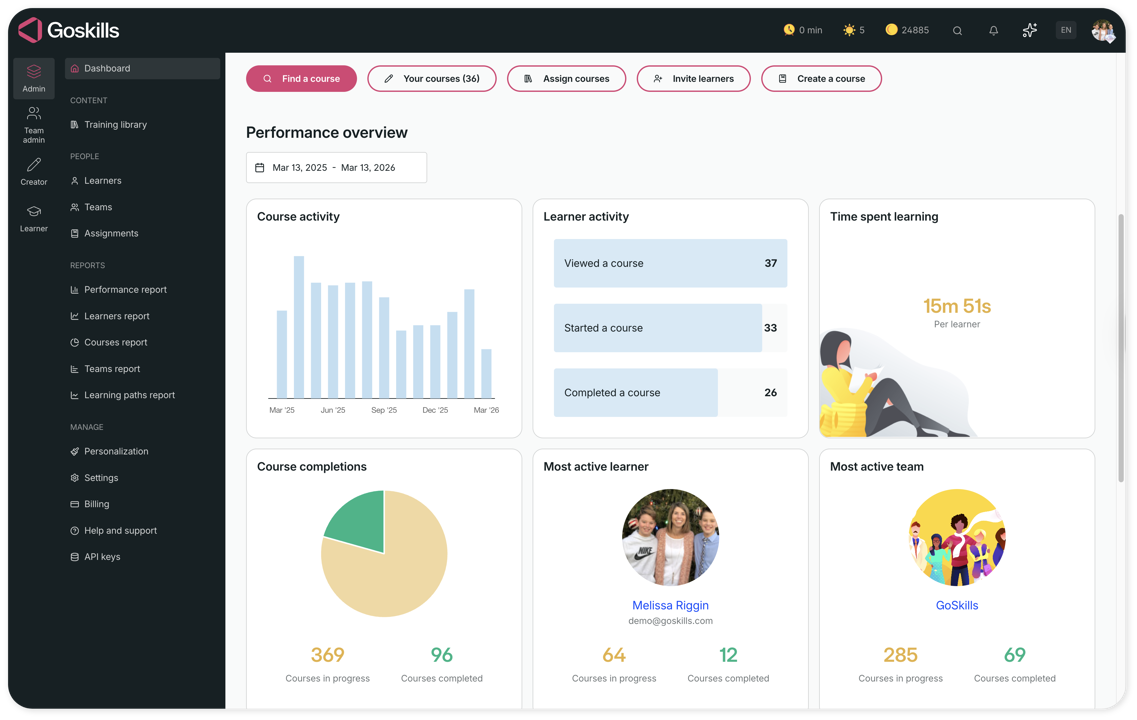
Onboard with ease
Onboarding is easier than ever with GoSkills LMS. Get started in minutes — no credit card required!
Get your free account nowHow these systems work together
In many organizations, onboarding involves multiple systems working together.
An HRIS may handle employee records and payroll setup, while an LMS delivers training and tracks onboarding progress. Dedicated onboarding platforms may also be used to coordinate tasks, communication, and onboarding workflows.
This combination creates a more complete onboarding ecosystem that supports both the administrative and functional sides of onboarding.
As organizations invest more in employee experience and retention, onboarding software is increasingly designed to support the entire onboarding journey — from paperwork and compliance to learning, engagement, and long-term success.
Why your current onboarding process may be costing you money
Neglecting the functional side of onboarding can come at a higher cost than many companies realize.
When new hires do not get the training, guidance, and support they need early on, the effects can ripple across the organization:
- Slower productivity as new hires struggle to find information or training
- Lower employee engagement during the critical first months
- Extra administrative work for the HR team and managers
- Higher turnover among new employees
These gaps affect more than efficiency. They can also damage employee retention and weaken the overall employee experience.
As these challenges became harder to ignore, onboarding tools evolved from simple paperwork managers into platforms designed to support the full onboarding journey.
What to look for in a modern onboarding training solution
A modern onboarding solution should act as a force multiplier for HR teams, handling repetitive administrative tasks while creating a more intuitive onboarding experience for new hires.
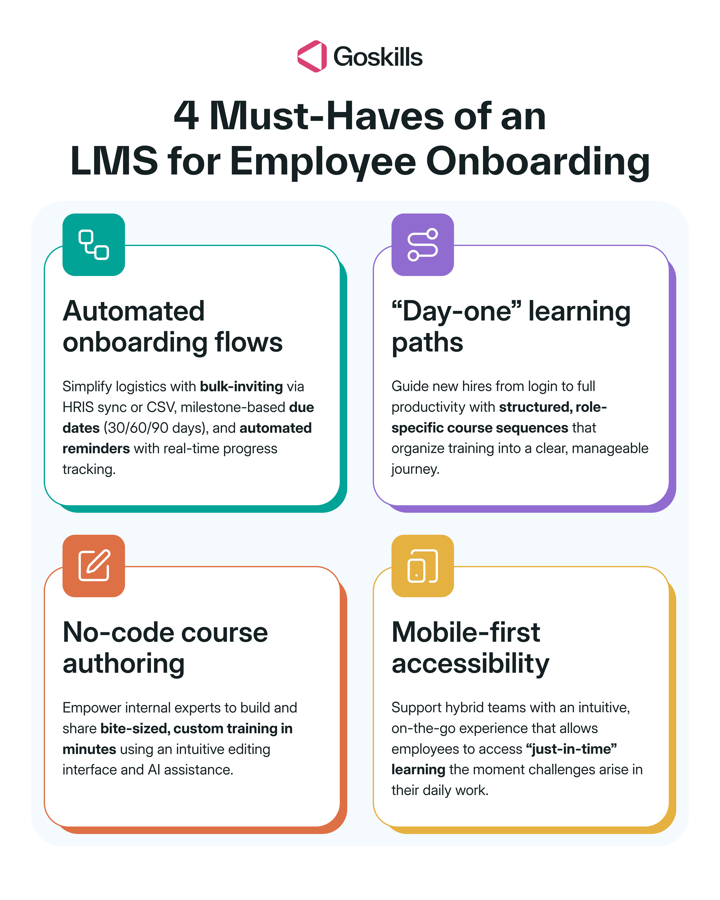
Here are four key LMS features to look for when streamlining the onboarding workflow:
- Automated onboarding flows to scale learning logistics
- “Day-one” learning paths to guide employees through each step of the onboarding journey
- No-code course authoring for customizable onboarding content
- Mobile-first accessibility to support hybrid onboarding environments
1. Automated onboarding flows
Even the best training content fails if the process of delivering it is manual.
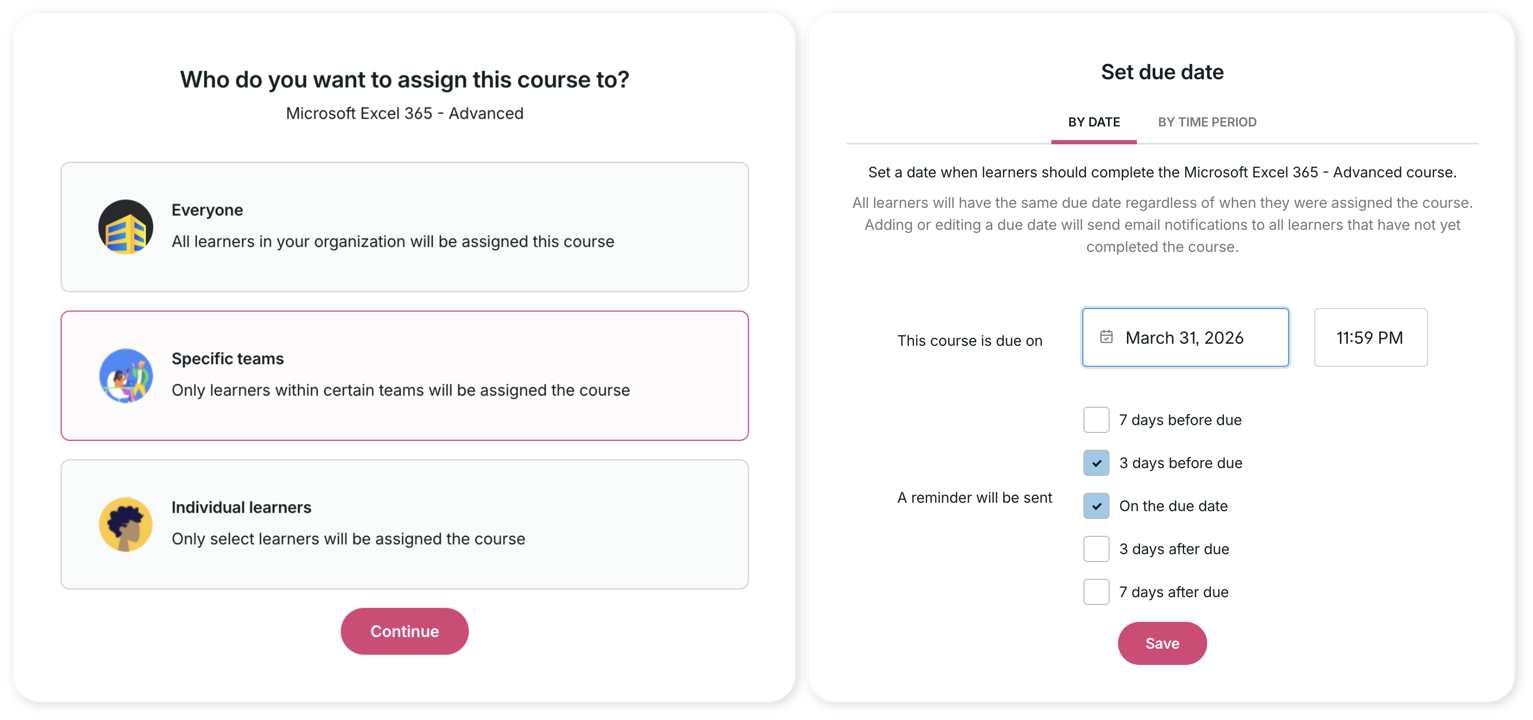
An LMS should help HR teams simplify the onboarding workflow with features such as:
- Bulk-invite learners: Sync with your HRIS or upload a CSV to get everyone started in seconds.
- Automated due dates: Set deadlines — for example, requiring modules to be completed within 30, 60, or 90 days of the hire date.
- Automated reminders: The system sends nudges to employees and managers as due dates approach.
- Centralized tracking: Real-time dashboards allow HR to track onboarding progress and identify bottlenecks before they become compliance risks.
2. “Day-one” learning paths
New hires shouldn’t have to hunt for what to do next. Learning paths organize courses into a structured sequence that guides employees from their first login to full productivity.
With the GoSkills LMS, teams can build onboarding learning paths using curated courses from the GoSkills library.
Organizations can create:
- Role-specific tracks: A developer needs a different functional onboarding than a sales rep. Use Teams and Assignments to create distinct paths based on department or unit.
- Tailored management onboarding: Onboarding a manager is different from onboarding an associate. Tailor leadership development training for new executives so they understand the firm’s strategic goals from day one.
- Milestone-based learning: Using the GoSkills Course Library, organizations can assign meaningful milestones for the first 90 days.
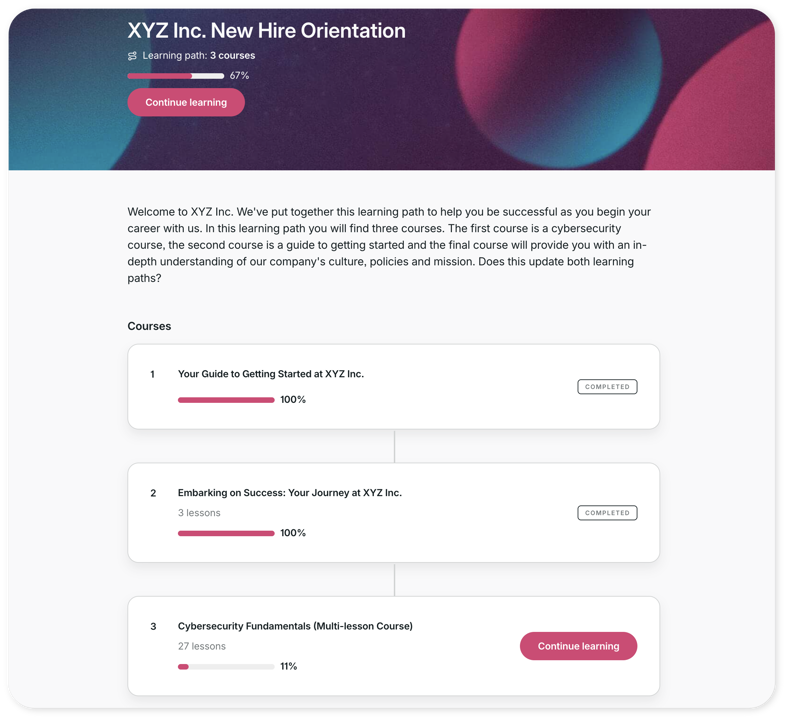
Law firm AWKO, for example, used the GoSkills LMS to create structured 90-day onboarding milestones. Employees were assigned courses with clear deadlines, helping them complete onboarding with measurable goals.
Learn from a real-world onboarding program: Download the full AWKO case study
3. No-code course authoring
If your onboarding platform requires a technical expert or external agency just to upload a training module, your content will quickly become obsolete.
Modern solutions prioritize no-code authoring, allowing HR teams and internal experts to drag and drop videos, quizzes, and documents into a lesson in minutes.
With the GoSkills Course Builder, subject matter experts (SMEs) can turn their day-to-day knowledge into bite-sized, accessible courses.
This approach proved especially effective at AWKO, where departments like IT and HR began sharing knowledge that previously lived in silos.
- Boost engagement: AWKO achieved a 95% course completion rate by making training approachable and tailored to their needs.
- Scale knowledge: The “Creator” role allows internal experts to build and share training content.
4. Mobile-first accessibility
In today’s workplace, a digital onboarding process shouldn’t be tethered to a desktop computer.
Training must be accessible on the go to ensure a smooth, intuitive onboarding experience for everyone.
Mobile-friendly design also supports just-in-time learning, allowing employees to revisit lessons the moment a challenge arises in their daily work.
This accessibility helps new hires feel more self-sufficient and confident as they navigate new roles.
Scaling personalized onboarding: The GoSkills Course Builder and Genie AI
As a company grows, the time required to create and customize onboarding can quickly become a bottleneck.
The GoSkills Course Builder removes that hurdle by combining an intuitive interface with a built-in AI course creator, making it easier to build a scalable onboarding experience in a fraction of the time.
Build and tailor onboarding in minutes with Genie
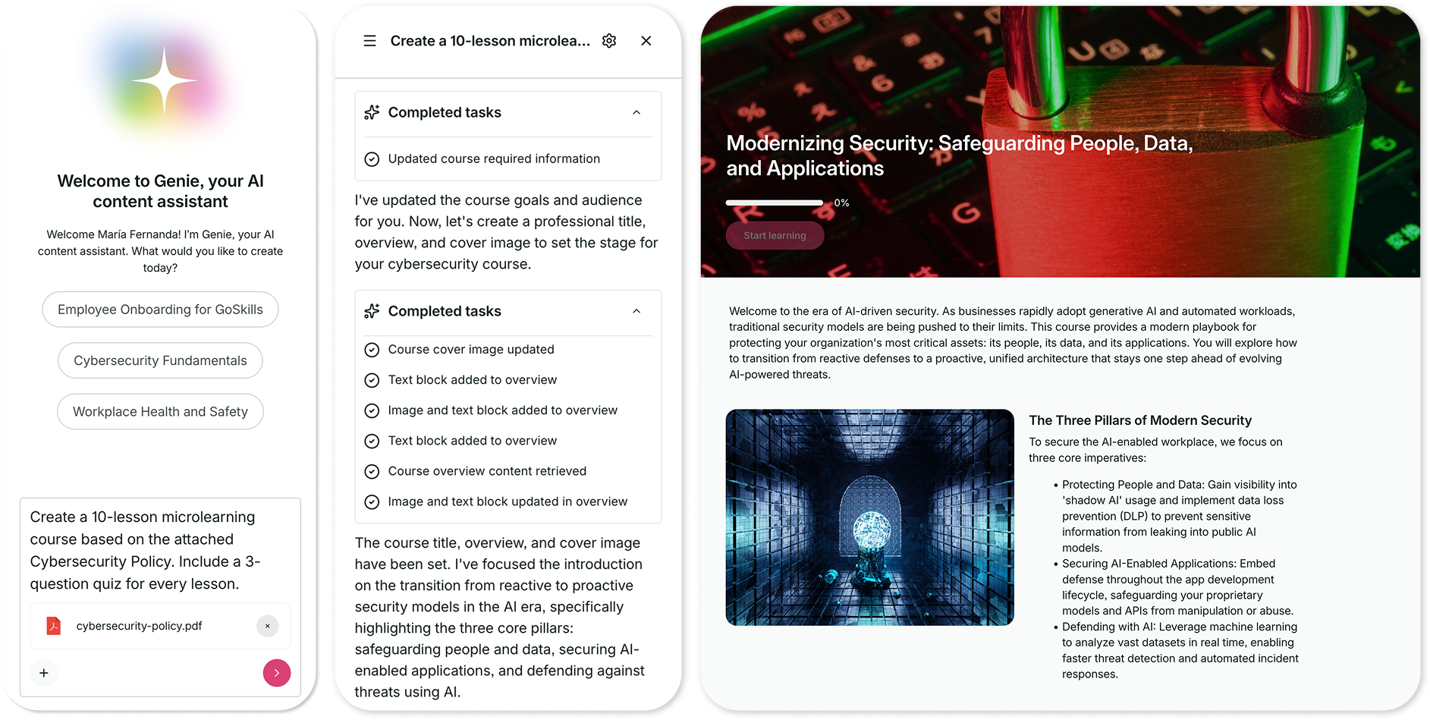
Genie is an AI course creator built directly into the Course Builder and fully integrated with the GoSkills LMS.
Together, they provide a single hub for creating custom courses and visibility into onboarding progress.
With a single prompt, Genie can generate a complete course draft in minutes, including a structured outline, lesson content, and quizzes.
Organizations can also upload existing onboarding documents, such as PowerPoint decks, policies, and manuals. Genie uses this content to tailor courses to internal standards, creating a more personalized onboarding experience that reflects your company’s processes and expectations.
How GoSkills functions as your onboarding partner
Modern organizations rarely rely on a single tool to manage the entire employee lifecycle. Instead, they use a combination of systems, from HR software that manages employee data and employee documents to specialized onboarding platforms that support learning and development.
This is where the GoSkills LMS fits in.
Rather than replacing your existing HR system, it acts as the training layer within your employee onboarding platform, helping organizations deliver seamless onboarding, track onboarding progress, and keep new hires engaged from day one.
GoSkills supports an efficient onboarding workflow with features such as:
- Custom learning paths for different roles and milestones
- Hundreds of bite-sized courses across business, tech, and soft skills
- Microlearning that helps new hires absorb information in manageable lessons
- Gamification features that make onboarding more interactive and motivating
- AI-powered course creation for tailored onboarding content
- Teams, assignments, and automated reminders to keep learning on track
- Visibility into onboarding progress through clear, robust reporting
By combining automation, structured learning paths, and engaging training formats, the GoSkills LMS helps organizations deliver a more consistent onboarding experience and support new hires from their very first day.
Better onboarding starts with the right software
A strong onboarding experience does more than make new hires feel welcome. It helps them understand their role, build confidence, and start contributing sooner.
That is why investing in employee onboarding software should go beyond the administrative side. A holistic approach to onboarding should also support functional onboarding, helping employees build the knowledge and skills they need to succeed from day one.
Solutions like the GoSkills LMS combine automation with training tools that support functional onboarding at scale. With custom learning paths, AI-powered course creation, and clear reporting, organizations can create a more personalized onboarding program that helps new hires feel confident and productive from the start.
Onboarding new employees? See how the GoSkills LMS can help you build a more engaging and effective onboarding program. Create a free account or book a demo with our success team to see the platform in action.