Empathy: Your Secret to Working More Effectively
Empathy: Your Secret to Working More Effectively
What you’ll learn
Skills you’ll gain
One of the most valuable yet undervalued resources in the workplace is empathy. Not only does being more empathetic make you a better friend, partner, or family member, it makes you a better coworker. If you want to become your most innovative, collaborative self, and really thrive, you need empathy. In this course, taught by Whitney Detar, PhD, a psychology instructor and a specialist in behavior and motivation, you'll discover exactly why empathy is the key to workplace success. She'll also teach you how to develop it within yourself. After completing this course, you'll be able to use the skill of empathy to build your relationships and make your workplace a better place. You'll have a concrete process to show your empathy to others, and you'll be able to use empathy to both interview more effectively and navigate remote work more meaningfully.
Syllabus
Download syllabus-
1
Connections to workplace outcomes The majority of employees cite empathy as an important value for companies to demonstrate. 3m
-
2
Building positive relationships Sharing of emotions is one of the key ways humans bond and connect with each other. 2m
-
1
Components of empathy What even is empathy? After this lesson, you'll be able to define empathy, identify it's function, and differentiate it from other emotions 3m
-
2
Empathy and other emotions Empathy is commonly confused with sympathy, to the detriment of our relationships. 3m
-
3
Your Empathy Quotient (EQ) Empathy starts with self-awareness. After this lesson, you'll be able to assess your current level on this important skill. 2m
-
1
Capitalizing on opportunity The first step in being able to show empathy is figuring out when is an opportunity for it! 3m
-
2
Questions to empathize Having a hard time empathizing? After this lesson, you'll be able to ask yourself key questions to help you empathize and 1 not to! 2m
-
3
Prime yourself for empathy There are times when it seems you cannot be empathetic. 3m
-
4
Providing opportunities for empathy In order to reap the benefits of an empathetic organizational environment, you must first create opportunities for them and yourself to demonstrate empathy. 3m
-
1
Empathy in action It is not enough to know how someone feels in a situation - you have to be able to communicate it! 2m
-
2
Demonstrating understanding How do you make people feel heard and understood? After this lesson, you'll be able to communicate understanding of the emotions being expressed. 3m
-
3
Showing interest A simple question can go a long way in communicating empathy. After this lesson, you'll be able to communicate interest in the situation/person. 3m
-
4
Putting it all together Putting the two components of communicating empathy can be short and simple. 3m
-
1
Job interviews The job interview is a glorified social skills test. 3m
-
2
Remote work environments Remote workers often feel disconnected from the team. 4m
-
1
Demonstrating empathy Now that you've watched this course, you should be able to recognize what empathy is, how you can build this skill, and what demonstrating empathy looks like at work. 2m
Certificate
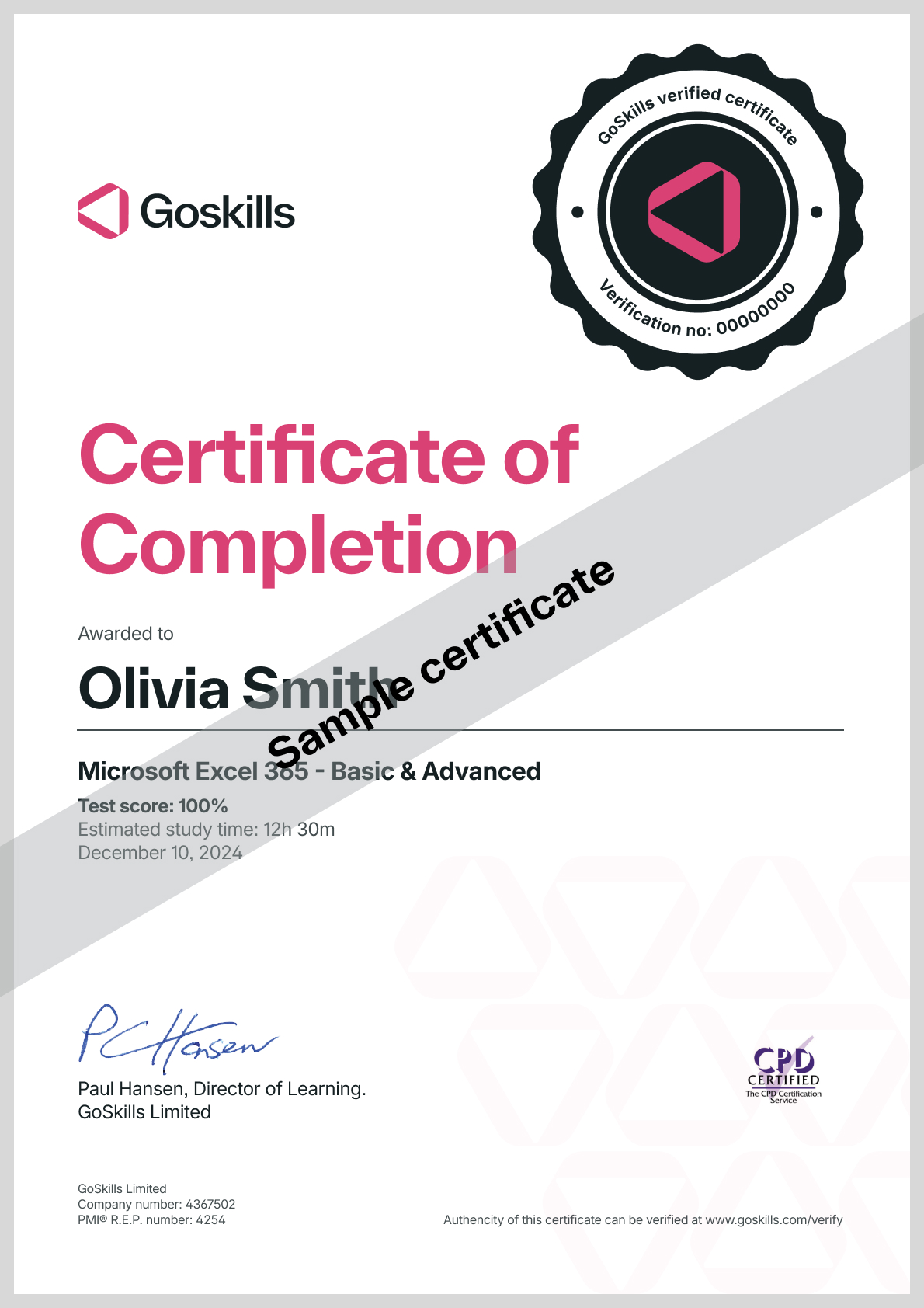
Certificate of Completion
Awarded upon successful completion of the course.
Instructor
Whitney Detar
Whitney is an educator, researcher, and practitioner dedicated to the interdisciplinary advancement of evidence-based practices. She serves as Core Faculty and Director of the Master’s in Clinical Psychology Program at Antioch University and Lecturer in Psychology at California State University, Channel Islands. She earned her doctorate from the University of California, Santa Barbara, specializing in motivational principles for working with children and adults with Autism. Her research interests are broad in the field of motivational behavioral science, from investigating growth mindset in students, to strategies to improve quality of life in Autistic young adults and their families.

Whitney Detar
Psychology Professor and Behavior Analyst
Accreditations
Link to awards
How GoSkills helped Chris
I got the promotion largely because of the skills I could develop, thanks to the GoSkills courses I took. I set aside at least 30 minutes daily to invest in myself and my professional growth. Seeing how much this has helped me become a more efficient employee is a big motivation.