How to Improve Your Thinking
How to Improve Your Thinking
What you’ll learn
Skills you’ll gain
Thinking is one of the most important things to be good at. Being a better thinker can improve your relationships, your work, and your emotional intelligence. But “improving your thinking” is so abstract; it’s hard to know where to start, or what starting would even look like. In this course, you'll learn how to do just that from Alyssa Lowery, PhD, a philosophy instructor at Vanderbilt University. She'll walk you through her very best advice on ways to improve your thinking, including what to do and what not to do when tackling a complicated idea, problem, or conversation. Rather than focusing on a list of fallacies to avoid when thinking alone, you'll learn how to improve your thinking by having better conversations with others. You'll also walk away with strategies to improve your intellectual humility, improve your ability to analyze difficult concepts, and better handle notoriously tricky ideas. By the end of this course, you'll be prepared to become a much better thinker and communicator.
Syllabus
Download syllabus-
1
Cultivating intellectual humility Being a great thinker starts before you ever crack open a book or enter a conversation. 3m
-
2
Taking your time Our cultural emphasis on efficiency is often in tension with what makes for great thinking: patience and care. 3m
-
1
Making distinctions Some of the most critical tools in your thinking toolkit are distinctions. 2m
-
2
Making more distinctions A place where vagueness often slips into thinking or conversations is in confusing descriptive and normative sentences. 3m
-
3
Only the best argument When you're already inclined to think something, it's easy to be satisfied with the first argument for it that you hear. 3m
-
4
Assessing your sources You might already be skeptical of Wikipedia, but what makes for an actually trustworthy source of information? 3m
-
5
Use generalizations carefully Generalizations are both fast and useful, but sometimes they become a way to avoid thinking carefully about a topic. 2m
-
6
Considering other worlds Now what's this really about? 3m
-
1
Not defining your terms Perhaps the most famous philosopher of all time, Socrates, opened almost all of his conversations with one question: "What is that?" After this lesson you'll be able to avoid being stumped by this simple question and instead provide a clear account of your subject matter. 3m
-
2
Resisting the strawman When you already know you're right, it's really easy to dismiss your opponents. 2m
-
3
Infamous ad hominem One of the most familiar fallacies is the ad hominem. 3m
-
4
On question-begging A common phrase is "begging the question." But for philosophers, this phrase has a very particular meaning. 3m
-
1
Two key questions Answers are overrated! After this lesson you'll be able to ask two key questions to get to the heart of any issue, problem, or conversation. 2m
-
2
What's up with truth? Some of our most popular ideas rely on untenable claims about truth as a whole. 3m
-
3
When thinking isn't the right tool It's tempting to think that thinking alone can solve all of your problems, but sometimes you need to use a different approach. 2m
-
1
Where to go from here 1m
Certificate
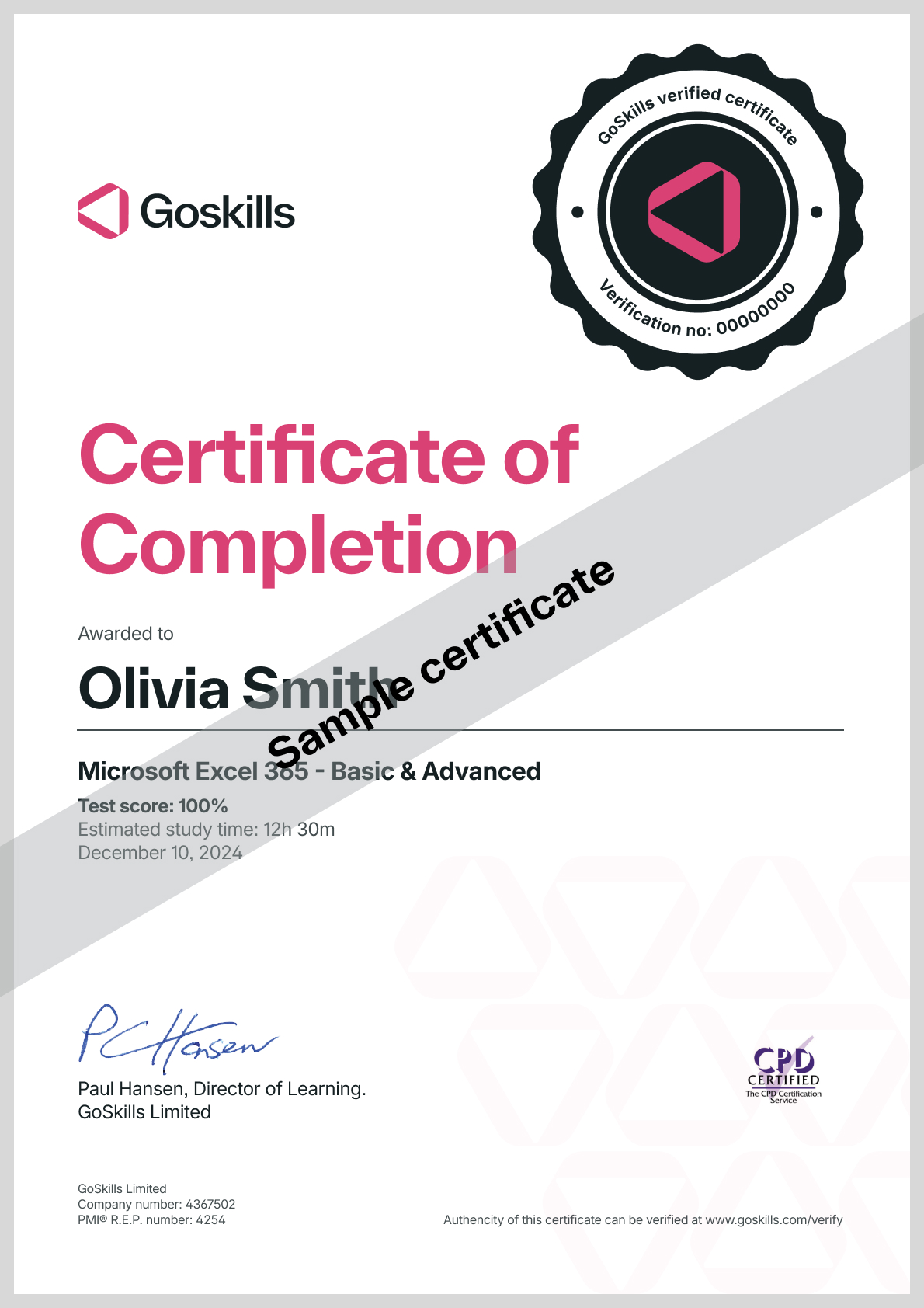
Certificate of Completion
Awarded upon successful completion of the course.
Instructor
Alyssa Lowery
Alyssa Lowery is a philosophy instructor and educational consultant who’s passionate about thinking with others. She completed her Ph.D. in Philosophy at Vanderbilt University in 2020, and was most recently a Learning Content Producer at Madecraft. She currently teaches at Vanderbilt University and for Campus, a startup providing remote courses for college credit. Alyssa loves trail running, talking about Plato, and researching what counts as a “religion.” She's also passionate about creating inclusive, accessible education.

Alyssa Lowery
Professor and Online Learning Expert
Accreditations
Link to awards
How GoSkills helped Chris
I got the promotion largely because of the skills I could develop, thanks to the GoSkills courses I took. I set aside at least 30 minutes daily to invest in myself and my professional growth. Seeing how much this has helped me become a more efficient employee is a big motivation.