Improving Your Conversations
Improving Your Conversations
What you’ll learn
Skills you’ll gain
Good conversational skills are necessary anywhere within the business landscape. In this course, you'll learn how to get more out of your conversations with a toolkit of skills from award-winning author and podcast host, Michael Shermer, PhD. Learn how to improve your listening skills, level up your curiosity, and prepare for fascinating and productive conversations. Michael will cover key topics such as getting comfortable with silence, managing nonverbal communication, and handling remote interactions. you'll also learn when to be assertive, how to overcome contrasting opinions, and the difference between steel-man and straw-man arguments. By the end of this course, you'll have the confidence and skills to really improve your conversations.
Syllabus
Download syllabus-
1
Listening for comprehension Good conversations start with good listeners. 2m
-
2
Signaling you are listening Listening actively lets others know you are connecting with what they’re saying. 2m
-
3
Curiosity as a driving force The foundation to all conversation is some level of curiosity of what others can tell you. 2m
-
4
Level up to informed curiosity Bing curious is just the first step. 3m
-
5
Preparing for a conversation Informed curiosity is your springboard for a larger conversation. 2m
-
6
Getting comfortable with silence How, when and where to pause, to listen, to stop talking, to let silence itself be a form of communication and conversation. 3m
-
7
Nonverbal communication How you present yourself in a conversation is often just as important as what you say. 3m
-
8
In person vs. remote conversations The growing popularity of social media and online meetings has shifted conversations from in-person to distance talking. 3m
-
9
When to be assertive vs. passive People have different styles of conversing, some more assertive and some more passive. 3m
-
10
Become a mind reader One of the drivers of moral progress over the centuries has been our improved ability to put ourselves in someone else’s shoes. 3m
-
11
Overcoming differing opinions Role playing can help you see another's opinions more easily. 2m
-
12
The art of mirroring Mirroring is a useful strategy to connect with and understand others. 2m
-
13
Understanding intentions Often times you have to read between the lines to get to the true meaning. 2m
-
14
Steel-man vs. straw-man arguments When you straw-man the other person's beliefs and opinions, you mischaracterize them in a way that is easy to refute or dominate. 2m
-
1
Take conversations to the next level 2m
Certificate
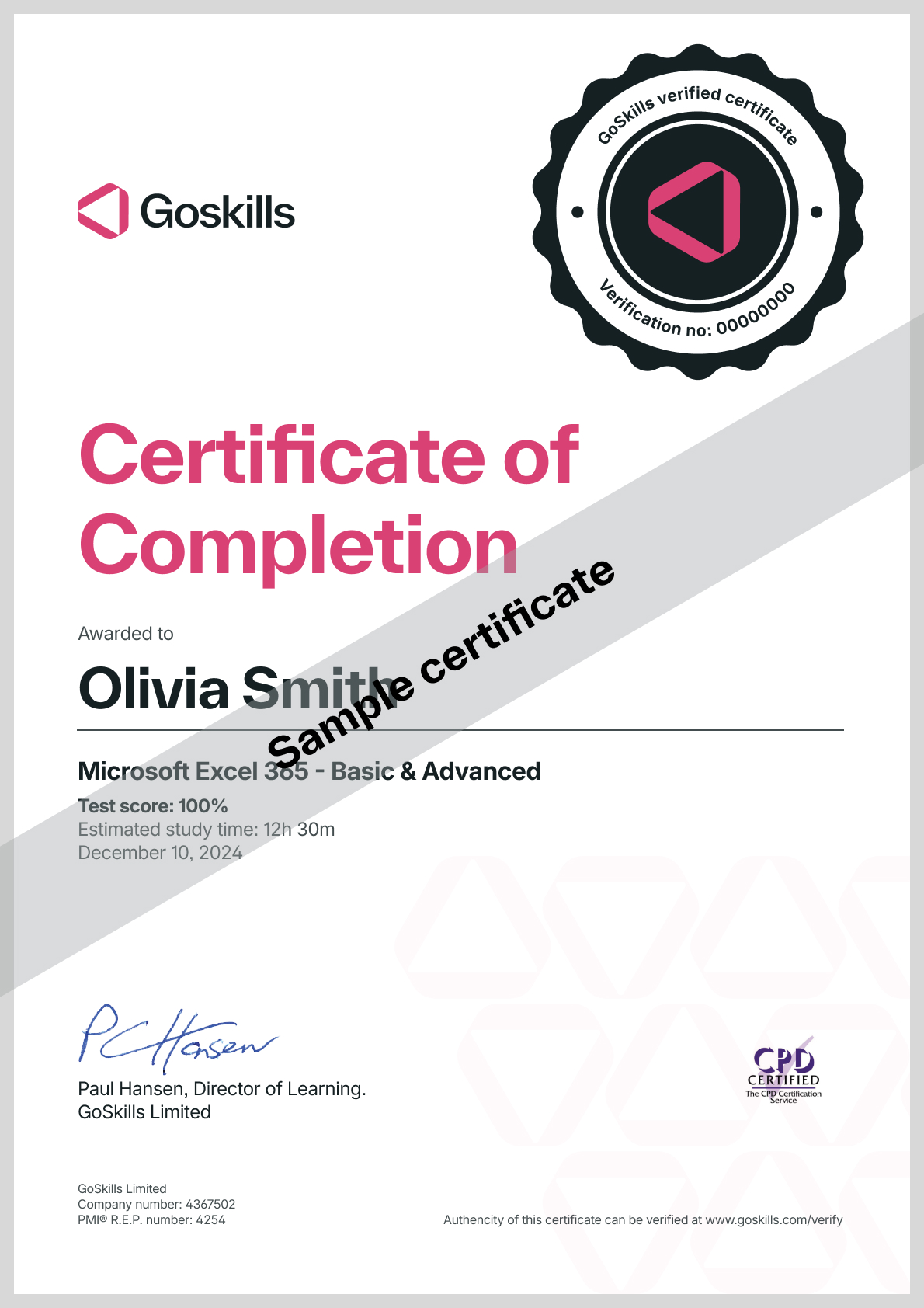
Certificate of Completion
Awarded upon successful completion of the course.
Instructor
Michael Shermer
Dr. Michael Shermer is a noted science writer, a professor, and the founding publisher of Skeptic magazine. Dr. Shermer also hosts the Science Salon Podcast and is a Presidential Fellow at Chapman University where he teaches Skepticism 101. For 18 years he was a monthly columnist for Scientific American. He is the author of New York Times bestsellers Why People Believe Weird Things and The Believing Brain, Why Darwin Matters, The Science of Good and Evil, and The Moral Arc. His new book is Heavens on Earth: The Scientific Search for the Afterlife, Immortality, and Utopia. Learn more at michaelshermer.com

Michael Shermer
Science Writer, Professor, Publisher of Skeptic Magazine
Accreditations
Link to awards
How GoSkills helped Chris
I got the promotion largely because of the skills I could develop, thanks to the GoSkills courses I took. I set aside at least 30 minutes daily to invest in myself and my professional growth. Seeing how much this has helped me become a more efficient employee is a big motivation.