Introduction to Technical SEO
Introduction to Technical SEO
What you’ll learn
Skills you’ll gain
To help improve your website's SEO performance, it is important to know about the technical side of search engine optimization. This course is designed for marketers who aren’t technical but need to know the more technical aspects of search, and tech. SEO consultant, Matthew Edgar, highlights the basics of technical SEO by reviewing the key parts, then walks through the most fundamental aspects of optimizing your website. You'll learn how search engine robots work, how to guide them through your website, and how best to structure it for optimal search performance. After completing this course you’ll have a solid grasp on the design and development needed to apply to SEO.
Syllabus
Download syllabus-
1
Overview of technical SEO Before diving too deeply into technical SEO, it's important to understand what technical SEO is. 3m
-
2
Technical SEO considerations There are a lot of factors to consider, but before getting lost in the details, there are three main considerations to keep in mind: crawling, indexing, and ranking. 3m
-
3
Terms to know You've probably heard of robots, canonical tags, titles, descriptions, schema, status codes and more but what do those terms mean for SEO? 4m
-
4
Understanding search robots You've probably heard of robots that crawl the web to find pages. 2m
-
1
SEO and URLs URLs play a critical role in optimizing a website. 3m
-
2
Understanding duplicate content Duplicate content can ruin a website's performance in search results. 3m
-
3
Internal links and XML sitemaps Once you have pages, you need to get people and bots to those pages. 2m
-
4
Updating the XML Sitemap Learn how to update your XML sitemap and check it for errors. 4m
-
5
HTML tags for SEO You don't have to be a developer to work on technical SEO, but you do need to know a few basic tags. 3m
-
1
Controlling search robots There are certain parts of a website search robots should crawl but also plenty of pages robots shouldn't. 3m
-
2
Robots.txt and SEO The first common method of guiding a robot's activity on a website is the robots.txt file. 3m
-
3
Meta robots noindex The second common method of guiding a robot through a website is with a <meta> tag. 2m
-
4
Meta robots nofollow and rel nofollow Another way of controlling robots is with a nofollow. 3m
-
1
Using redirects Redirects are a fundamental part of SEO but can also cause a lot of problems if implemented incorrectly. 2m
-
2
Understanding not-found errors Not-found errors (or 404s) can range from a minor nuisance to a critical problem that negatively impacts the website's performance. 3m
-
3
Fixing not-found 404 errors There are four methods you can use to fix not-found errors. 3m
-
1
Core Web Vitals Google uses a website's speed as one of the factors to determine how a website ranks in search results. 3m
-
2
Reducing website load time There are many areas to address when optimizing your website’s speed, making the process of decreasing your website’s load time feel overwhelming. 3m
-
3
Testing mobile friendliness Google also uses mobile usability as one of many factors to determine where a website ranks in search results. 2m
-
1
Next steps Thank you for watching this course! 1m
Certificate
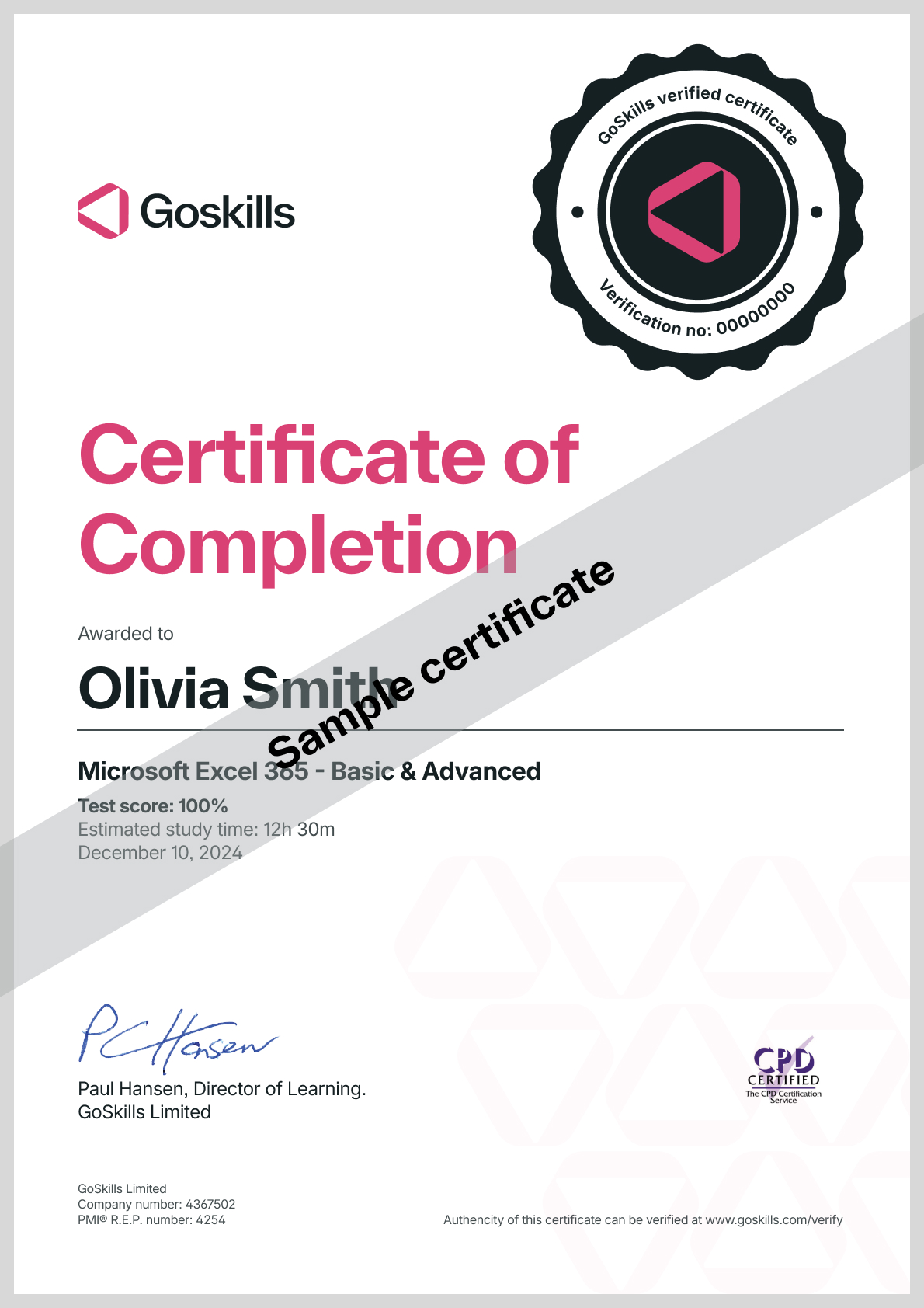
Certificate of Completion
Awarded upon successful completion of the course.
Instructor
Matthew Edgar
Matthew Edgar is a partner at Colorado-based Elementive, a consulting firm specializing in analytics, research, and technical SEO. Author of “Elements of a Successful Website” and “Tech SEO Guide,” Matthew has worked in the web performance field since 2001. He has been interviewed by Forbes, American Express, and other publications about analytics, CRO, UX, and SEO. He regularly speaks at conferences and workshops like MozCon, SMX and MarTech, and teaches courses with O’Reilly Media. Matthew holds a master’s degree in information and communications technology from the University of Denver.

Matthew Edgar
Technical SEO Expert, Author, and Speaker
Accreditations
Link to awards
How GoSkills helped Chris
I got the promotion largely because of the skills I could develop, thanks to the GoSkills courses I took. I set aside at least 30 minutes daily to invest in myself and my professional growth. Seeing how much this has helped me become a more efficient employee is a big motivation.