A Manager’s Guide to Calculating Employee Compensation
A Manager’s Guide to Calculating Employee Compensation
What you’ll learn
Skills you’ll gain
Compensation is nearly every organization's biggest expense. If managed effectively, it can allow you to maximize the potential of your company's greatest asset: people. If managed poorly, it can directly affect not only internal productivity and morale but also your bottom line. In this course, compensation professional, Justin Sun, shares his knowledge on developing a compensation strategy, including guidelines to use when determining pay, so you avoid overpaying or underpaying against the market. He shares about the art and science of benchmarking pay and the importance of effectively communicating compensation. After this course, you'll have actionable tips you can apply to building new pay structures and improving existing ones.
Syllabus
Download syllabus-
1
Creating a comp philosophy A comp philosophy, grounded in HR and business strategy, is the starting point for determining pay. 2m
-
2
Anatomy of rewards packages Base pay is only one component of your organization's overall rewards strategy. 2m
-
3
Understanding market pricing Clarifying the purpose and limitations of market pricing is critical to ensure you and your leaders are on the same page when interpreting external market pay data. 3m
-
1
Credible versus non-credible sources Not all sources for compensation data like employee self-reported data are reliable. 2m
-
2
Creating peer groups Identifying what companies to benchmark against is key to ensuring your pay programs are competitive. 3m
-
3
Collecting comp data Submitting your company's comp data to survey vendors is a preliminary step in purchasing market data. 3m
-
4
Pulling market data Using market data effectively starts with understanding what problem you're trying to solve and understanding when to use a particular data point over another. 3m
-
5
External factors affecting compensation Factors outside of comp surveys may influence how much you decide to pay. 2m
-
1
Building a job architecture A well-defined job architecture is the foundation for consistently and fairly applying compensation programs. 3m
-
2
Pricing a job Collecting as many data points as possible is critical to accurately benchmarking a job. 3m
-
3
Aging your data Salaries in the market can quickly become outdated, so you need to ensure the data you're using is as accurate as possible. 2m
-
4
Building pay ranges After you've market priced individual jobs, you're ready to create a compensation structure that will enable you to pay competitively. 3m
-
5
Applying geographic differentials Pay can vary across geographic locations for the same role. 3m
-
6
Advising on international nuances In today's global environment, many leaders are expected to support teams across multiple countries. 3m
-
1
Comp communication tools and strategies Communication is the most important aspect of effectively implementing a comp structure. 2m
-
2
Addressing common misconceptions If you fail to communicate around compensation proactively, incorrect assumptions will be made about what and how you pay. 2m
-
3
Understanding the role of leaders Communicating compensation is not just the responsibility of your HR or comp team. 3m
-
1
Your biggest competitive advantage Thank you for watching this course! 1m
Certificate
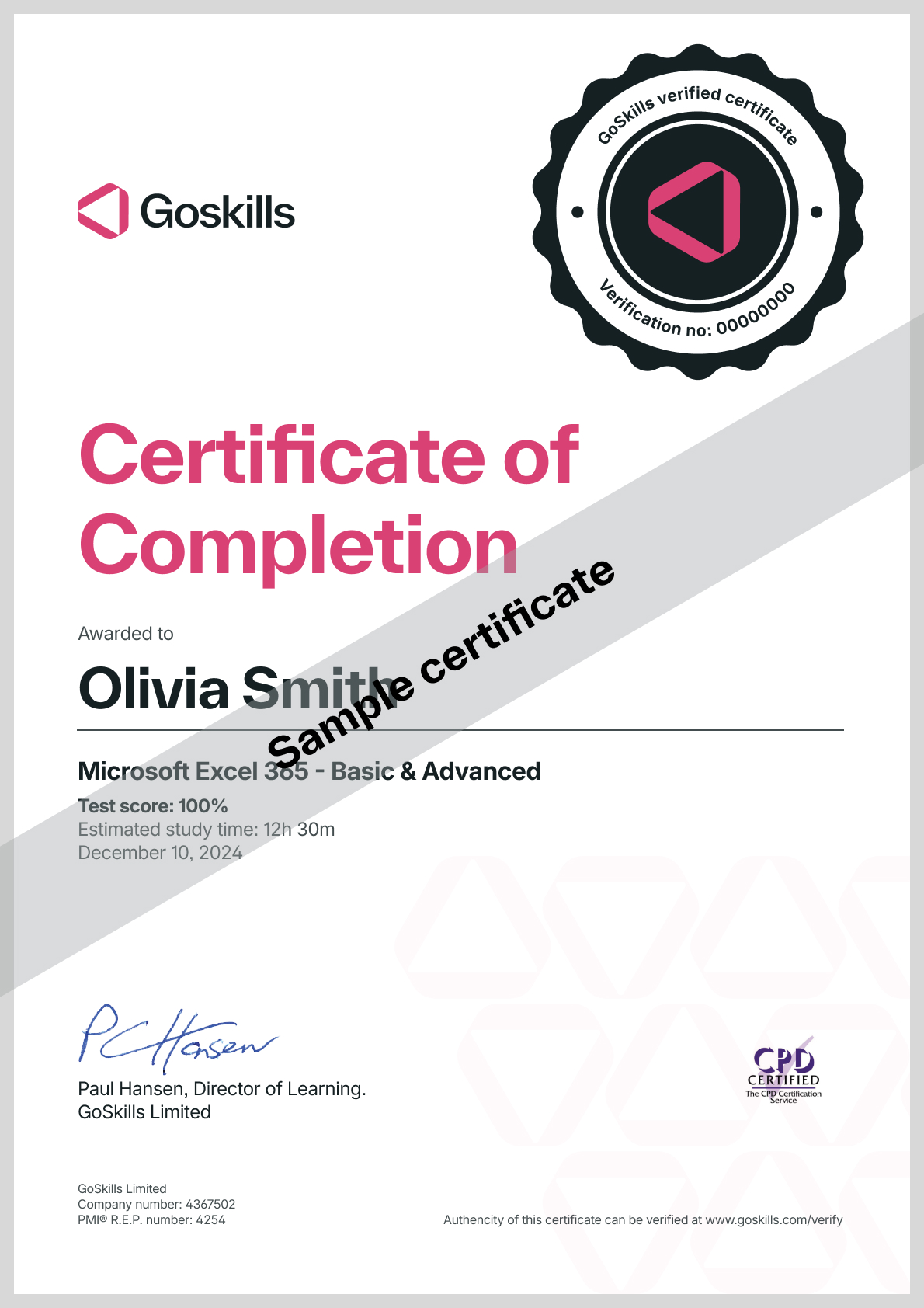
Certificate of Completion
Awarded upon successful completion of the course.
Instructor
Justin Sun
Justin is a global compensation advisor specializing in pay communications, job architecture, and performance management. He previously held roles in compensation and human resources at Expedia Group, Salesforce, Nordstrom, Lockheed Martin, PepsiCo, and Fairmont Hotels and Resorts. Justin serves as an adjunct instructor at the University of Washington's Continuum College where he developed a course on compensation and benefits, and he has been a guest speaker at The Conference Board, WorldatWork, and HR.com. He holds a master's degree in industrial and labor relations and a bachelor's degree in business management from Cornell University.

Justin Sun
HR Expert and HR Advisor
Accreditations
Link to awards
How GoSkills helped Chris
I got the promotion largely because of the skills I could develop, thanks to the GoSkills courses I took. I set aside at least 30 minutes daily to invest in myself and my professional growth. Seeing how much this has helped me become a more efficient employee is a big motivation.