Navigating Ambiguity
Navigating Ambiguity
What you’ll learn
Skills you’ll gain
Ambiguity causes a lot of problems. Think about it... a lack of clarity in a relationship or a misunderstanding of your boss' expectations can be costly. But what if you knew how to use ambiguity as a powerful tool to help you grow, and that it doesn't have to be such a bad thing? In this course, Dr. Eric Zackrison shares how ambiguity can unlock all kinds of new opportunities. He’ll define what ambiguity truly is, and why it can be so problematic. Eric dives into high-stakes scenarios when uncertainty should be reduced or eliminated, like in conversations or when an expectation is being set. He’ll balance out the negative chatter by digging into situations when ambiguity should always be welcome, like problem solving or learning new skills. After watching this course, you'll be able to confidently navigate ambiguity and use it as a skill to help yourself and others grow.
Syllabus
Download syllabus-
1
Language is not precise Language is complicated and messy, so it's only natural that it can lead to misunderstandings. 3m
-
2
Perception, biases, and interpretation It's common for people to think that their observations are objective, but based on bias, they can be inherently subjective. 3m
-
3
Communication is hard Communication is complex and includes so much more than just speaking and hearing. 2m
-
4
Ambiguity vs. uncertainty It's easy to confuse ambiguity and uncertainty, but they are distinct challenges that require their own solutions. 2m
-
1
Don't make assumptions Assumptions are at the base of much ambiguity and can cause all sorts of conflict. 2m
-
2
Ask questions One of the easiest and quickest ways to reduce ambiguity is to ask questions. 2m
-
3
Setting expectations in relationships If you're able to clearly outline your expectations, you can avoid the challenges offered by ambiguity before they even start. 2m
-
4
Strong relationships rely on clarity It can be easy to think you might not need to clarify things with people you're close to because of how well you know them, but this isn't true. 2m
-
1
What does my job description say? Ambiguity on the job can start with job descriptions. 1m
-
2
Negotiating your role Your job description may not always provide you with enough insight to understand your role. 2m
-
3
Setting expectations at work What coworkers expect of each other does not always align with what they actually do. 2m
-
4
What does my boss want? If you can't understand what's being asked of you, and feedback doesn't feel clear, you're likely immersed in a ton of frustration. 2m
-
1
Do your research If ambiguity is based in uncertainty, the best path forward is to gather data to help you make an informed decision. 2m
-
2
Talk to people Even if something feels clear to you, it might not be clear to others. 2m
-
3
Reflect on the past When you're really struggling or feeling trapped or confused, looking backwards on how you've resolved issues previously can be a huge help. 1m
-
4
Experiment to find solutions Sometimes, the best option is to just try. After this lesson, you'll be able to approach experimentation in ways that can help overcome ambiguity. 2m
-
1
Fostering empowerment When you want those around you to feel empowered, giving them opportunities to figure it out themselves can help. 2m
-
2
Fostering learning One of the best ways to learn is to experiment and make mistakes. 2m
-
3
Understanding equifinality There are more ways to get to the same point, and that is okay. 3m
-
1
Embrace the ambiguous Thanks for watching this course! 1m
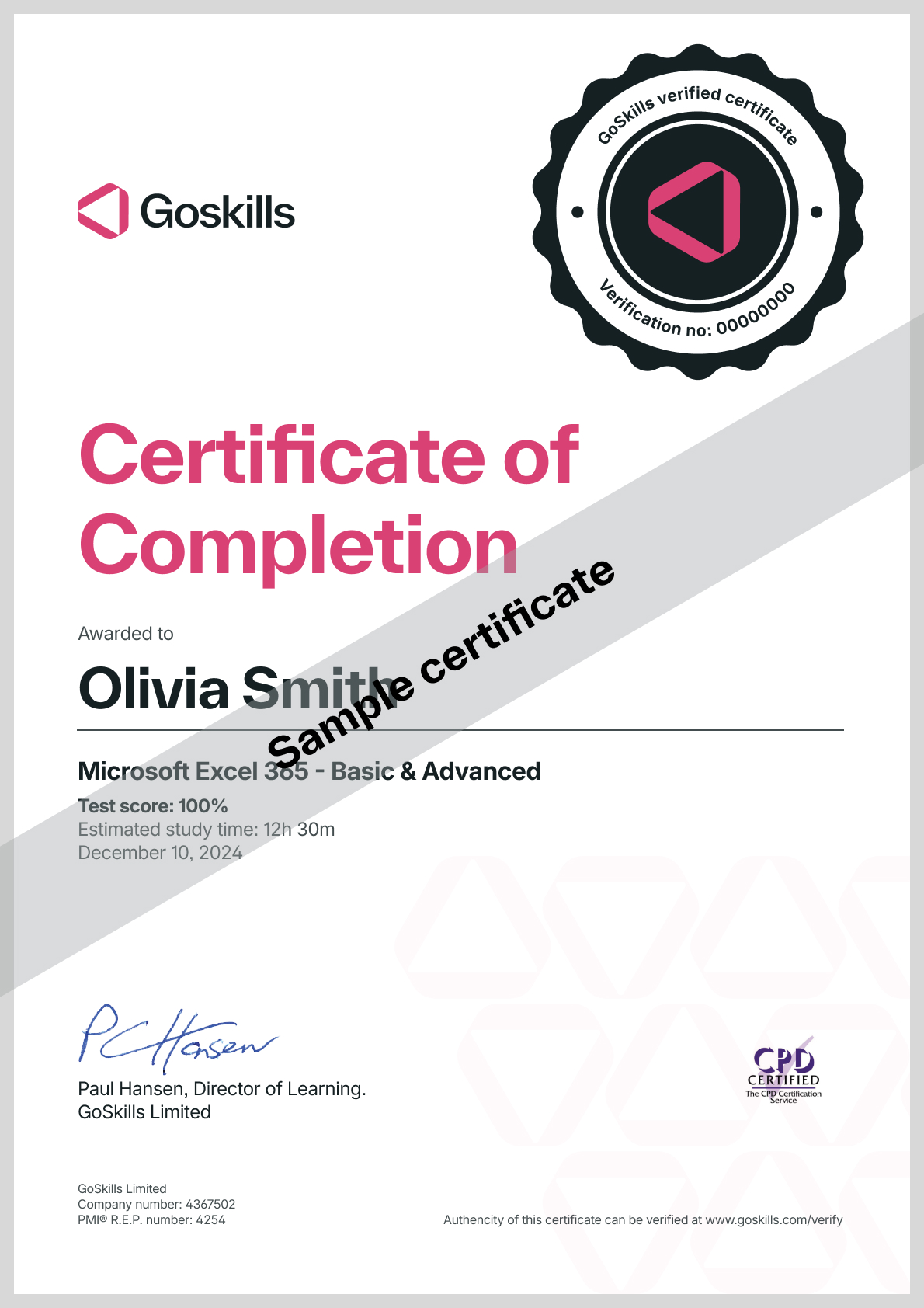
Certificate
Certificate of Completion
Awarded upon successful completion of the course.
Instructor
Eric Zackrison
Dr. Eric Zackrison is the president and CEO of IDI.US Inc., which controls the rights to the Interpersonal Dynamics Inventory (IDI), a powerful multi-rater personality and behavioral style measurement tool. After 25 years as a manager and entrepreneur and earning his MA, MBA, and PhD, Eric is furthering IDI awareness and use by training and licensing others, as well as adopting the name of his father's consulting firm, Effectiveness Consultants. Eric also teaches for the Technology Management Program (TMP) at UCSB. His work focuses on the diverse methods of interaction and empowerment and how to use these different approaches successfully.

Eric Zackrison
CEO of IDI.US Inc and University Professor
Accreditations
Link to awards
How GoSkills helped Chris
I got the promotion largely because of the skills I could develop, thanks to the GoSkills courses I took. I set aside at least 30 minutes daily to invest in myself and my professional growth. Seeing how much this has helped me become a more efficient employee is a big motivation.