Pandas for Data Analysts: Leveraging Python with Confidence
Pandas for Data Analysts: Leveraging Python with Confidence
What you’ll learn
Skills you’ll gain
Learning to code in Python may be an intimidating thought for many data analysts, but if you're comfortable using Microsoft Excel, you already know way more than you think! This course, taught by Founder and CEO of Stringfest Analytics George Mount serves as an introduction to the Pandas package for data analysis in Python. He’ll start by replicating some of the tasks you're familiar with from spreadsheets, like calculating columns and filtering rows. From there, you'll learn more advanced techniques like working with dates and missing values. When you complete this course, you’ll be able to build an end-to-end, fully repeatable data analysis project in Python using data directly from an Excel spreadsheet.
Syllabus
Download syllabus-
1
Why Pandas for analytics? Python wasn't designed specifically for data analysis, but the Pandas package for Python was. 4m
-
2
Using Pandas DataFrames Unlike in Excel, data typically isn't stored directly in Pandas. 4m
-
1
Printing and exploring DataFrames Chances are your data is too big to be analyzed simply by scrolling through it. 3m
-
2
Pandas plotting basics Pandas is built for data analysis... 3m
-
1
Adding calculated columns It's a rare occasion that a dataset comes to you with all the columns just the way you want them! 3m
-
2
Renaming and dropping columns Once you delete a column in classic Excel, it can be hard to get that data back. 2m
-
3
Sorting rows You can sort in Excel with a point-and-click menu, but in Python you have to code it yourself. 2m
-
4
Filtering rows Filtering rows is another Excel task that doesn't require coding but does in Python. 4m
-
1
Aggregating a DataFrame PivotTables in Excel work in a two-part process: you group by a category, then summarize by a quantity. 2m
-
2
Merging two DataFrames If VLOOKUP() is the duct tape that binds data sources together in Excel, Pandas relational merges are like a full-on welder. 4m
-
3
Working with missing values Excel does not feature a dedicated value for missing observations, which can be confusing and even detrimental to your data analysis. 2m
-
4
Reshaping a DataFrame Whether for personal preference or to meet the requirements of an analysis, sometimes you need to transpose a dataset entirely. 3m
-
1
Aggregating by time period Pandas got its name because it was designed to work with panel data, a type of time series source. 4m
-
2
Creating window functions Working with time series data often involves calculating so-called window functions such as rolling averages and lagged variables. 4m
-
1
Practicing with real data Data analytics has found perhaps its widest appeal with the general public in sports, particularly baseball. 4m
-
1
Continuing your Python journey Congratulations on "taming" Pandas for data analytics! 1m
Certificate
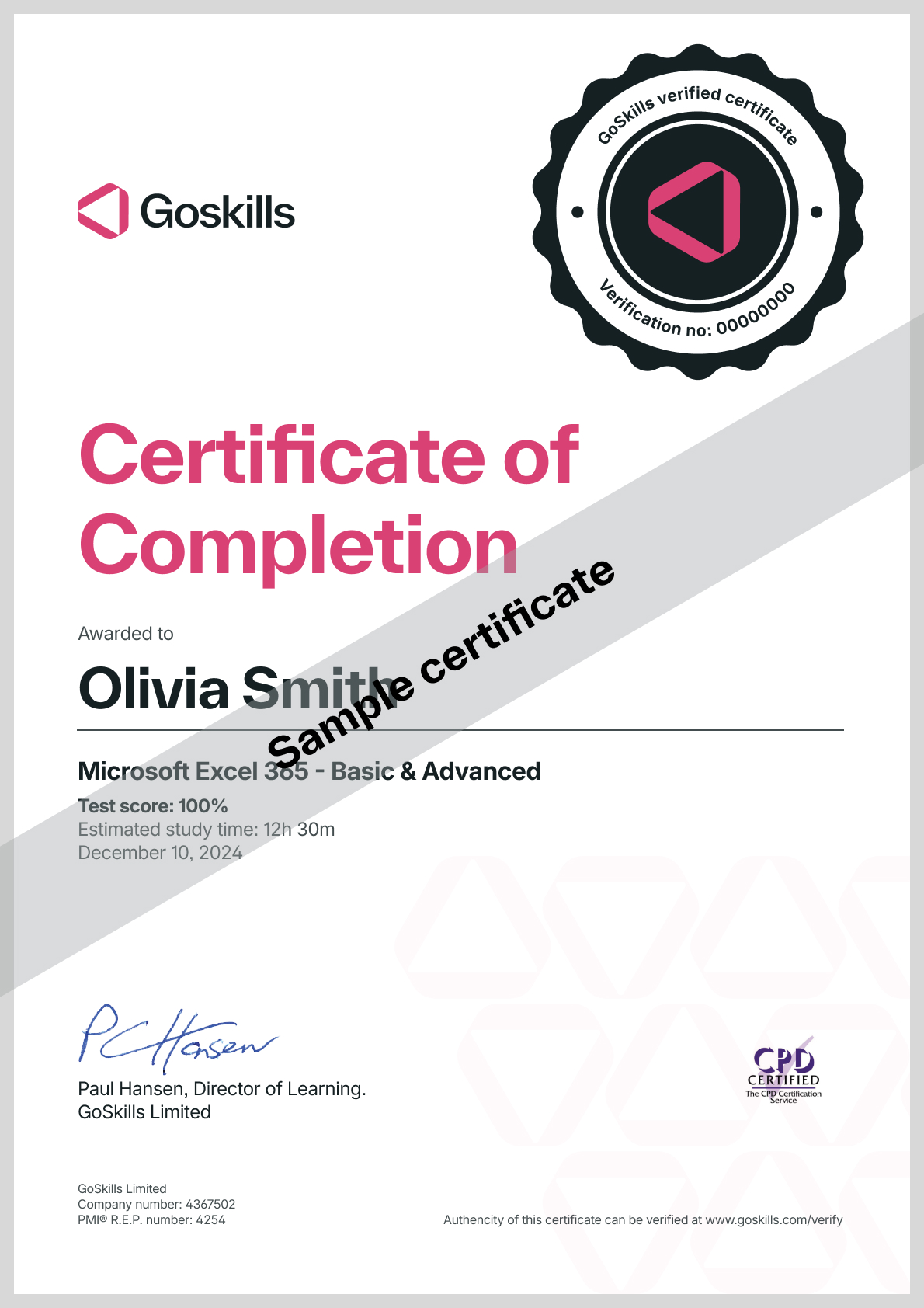
Certificate of Completion
Awarded upon successful completion of the course.
Instructor
George Mount
George Mount is the founder and CEO of Stringfest Analytics, a consulting firm specializing in analytics education and upskilling. He has lead bootcamps, and worked with learning platforms and practice organizations to help individuals shine at analytics. George regularly blogs and speaks on data analysis, data education, and workforce development. He holds a bachelor’s degree in economics from Hillsdale College and a Master’s Degree in Finance and Information Systems from Case Western Reserve University.

George Mount
Data Analytics Author and Expert
Accreditations
Link to awards
How GoSkills helped Chris
I got the promotion largely because of the skills I could develop, thanks to the GoSkills courses I took. I set aside at least 30 minutes daily to invest in myself and my professional growth. Seeing how much this has helped me become a more efficient employee is a big motivation.