Supporting Accessibility in a Hybrid Workplace
Supporting Accessibility in a Hybrid Workplace
What you’ll learn
Skills you’ll gain
As organizations begin to offer more worksite flexibility, the need for accessible, inclusive technology has increased. Over 1 billion people worldwide experience some form of disability, and most of these disabilities are invisible. Whether you’re aware of it or not, you share information in reports, spreadsheets, or presentations with someone with a disability. Today's digital collaboration tools can help you present your expertise to those with the most common disabilities in the workplace. In this course, organizational effectiveness consultant, Jessica Williams will share tips on how to apply inclusive principles to the content shared among your hybrid team. She'll dig into specific elements that often get overlooked when developing content for people using screen readers and meeting software. You’ll also learn how to effectively lead meetings so that everyone in attendance can comprehend, collaborate, and contribute their expertise. Those who master these tools and principles will gain a fundamental competitive advantage.
Syllabus
Download syllabus-
1
Pillars of success Inclusive experiences require three pillars. 3m
-
2
Fundamental content needs While teams may share common goals, you must communicate effectively with people at multiple locations, some with disabilities. 2m
-
3
Vision considerations People who are blind or have low vision may struggle to view text or images. 1m
-
4
Hearing considerations People who are Deaf or hearing impaired can benefit from using chat, captions, and transcription. 2m
-
5
Learning and neurodiversity People with learning disabilities or on the autism spectrum benefit from additional support. 3m
-
1
Formatting matters Tools like screen readers recognize pre-set templates. 3m
-
2
Images and links Many things count as "images" such as a border, line, or logo. 4m
-
3
Texture vs. color Many of us love using color, but those who are color blind or have low vision will struggle. 2m
-
4
Spreadsheet tips Spreadsheets with certain properties are difficult for people with disabilities to understand. 3m
-
1
Agenda and materials Many people benefit from being able to prepare in advance by reviewing meeting materials. 2m
-
2
Creating descriptive introductions Providing a description of yourself can help your audience relate to you. 2m
-
3
Using webcams Sharing webcams helps build connections with your audience. After this lesson, you'll be able to follow key principles for using a webcam effectively. 2m
-
4
Live captioning For those with hearing impairment, processing disorders, or language difficulties, live captioning is critical. 3m
-
5
Reading order Reading order is especially critical in presentations. 4m
-
6
Chat and reactions Not everyone can or wishes to speak during a meeting. 2m
-
1
Review and assess As you reflect on the basics of inclusive content and meetings, evaluate and update your own content and meetings using the principles and practices in this course. 2m
Certificate
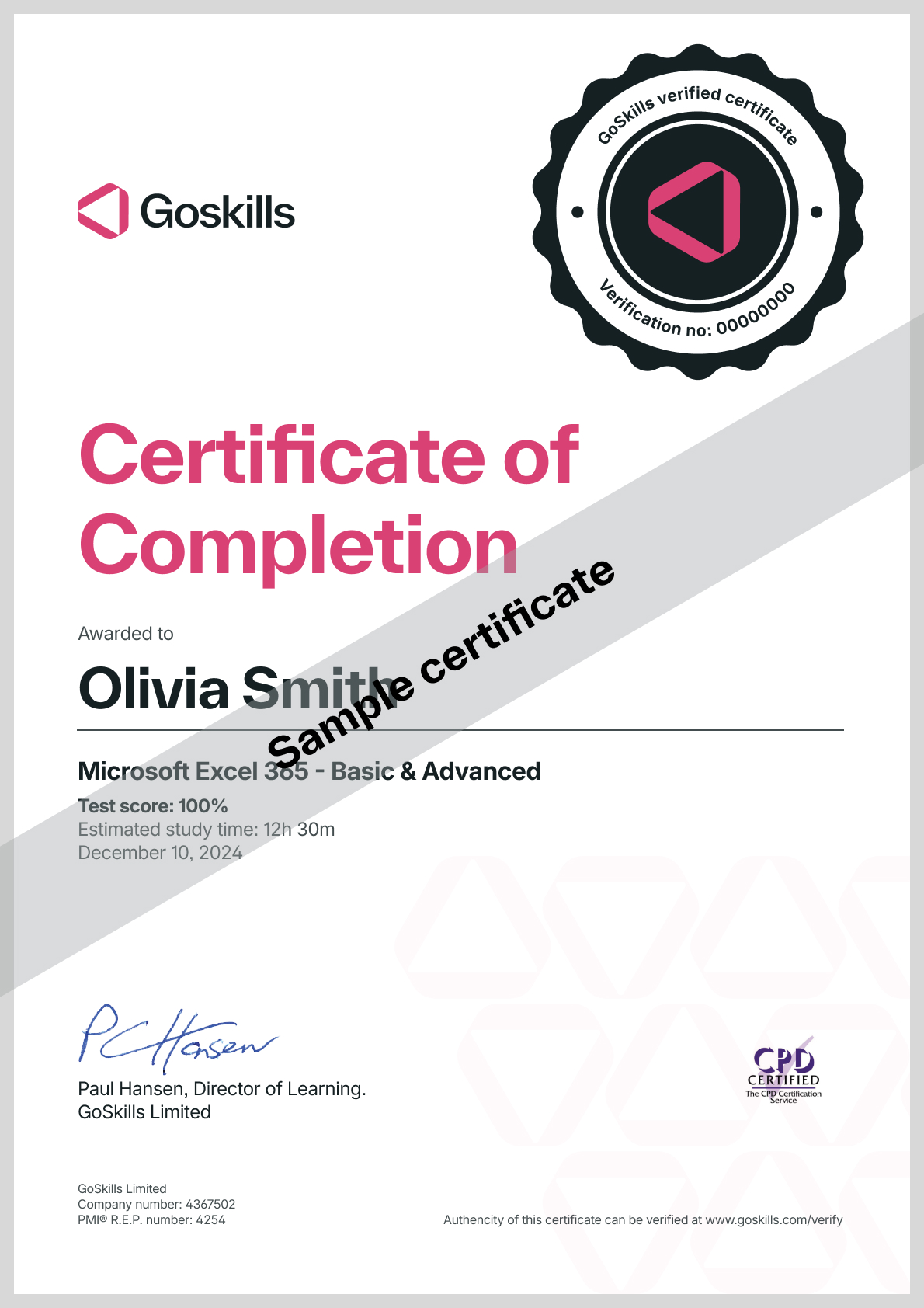
Certificate of Completion
Awarded upon successful completion of the course.
Instructor
Jessica Williams
Jessica Williams is an organizational effectiveness consultant who has extensive cross-industry experience leading initiatives that maximize the value of digital collaboration tools to optimize employee and organizational performance. She helps diverse stakeholder groups adapt to and sustain large scale organizational change that are often on multi-state or multi-country initiatives. Creating inclusive experiences with digital collaboration tools is crucial to engage all stakeholders, with and without disabilities, especially in hybrid work environments. Jessica holds a MA in Communications Management from the University of Southern California and received the Chief Learning Officer Trailblazer Award.

Jessica Williams
Independent Organizational Effectiveness Consultant and Accessibility Advocate
Accreditations
Link to awards
How GoSkills helped Chris
I got the promotion largely because of the skills I could develop, thanks to the GoSkills courses I took. I set aside at least 30 minutes daily to invest in myself and my professional growth. Seeing how much this has helped me become a more efficient employee is a big motivation.