Tools for Decision Making
Tools for Decision Making
What you’ll learn
Skills you’ll gain
We've all made decisions we feel really good about, and some decisions we probably aren't so proud of. Regardless, the decisions will keep coming, and the number of decisions you're responsible for will likely only increase the longer you're in the workforce. Whether you're being asked to make your tenth or ten-thousandth determination at work, this course is for anyone interested in improving their decision-making. You'll learn about the effects of time and context on your decisions, and how to navigate tough topics such as money and probability. you'll also learn how to avoid common mistakes people make in decisions, like the Over Optimism Bias and Survivor Bias. Finally, your instructor Michael Shermer, PhD, who is a New York Times bestselling author and noted professor, will walk you through a concrete 12-step process you can apply to whatever tough decision you might find yourself facing next.
Syllabus
Download syllabus-
1
Loss aversion Don’t let your choices be guided by the fear of failing. 5m
-
2
Fair risk assessments Assessing risks when making decisions is like gambling -- there's objective analysis and emotional analysis, and both affect your decision making. 3m
-
3
Time makes a difference Considering long-term outcomes versus short-term outcomes can be the difference between a sound decision and a poor decision. 3m
-
1
Mental accounting decisions Mental accounting can cloud how you decide to best spend your limited resources. 4m
-
2
S.H.O.P. until you drop Marketers have gotten great at selling people products they don't really need. 4m
-
3
The psychology of spending The pleasure and pain centers in your brain are hard at work when you make risky financial decisions. 3m
-
1
Delay of gratification Sometimes, the immediate and obvious choice is not the best one. After this lesson you'll be able to exercise willpower to make better decisions. 4m
-
2
The marshmallow decision No single variable can explain success or failure; but self-control can and will help you make less-impulsive and more long-term decisions. 6m
-
3
Disciplined decisions Self-control is the employment of one’s power to will a behavioral outcome. 4m
-
1
The Captain Kirk principle Many good decisions are made rapidly without any analysis whatsoever. 5m
-
2
The survivor bias After-the-fact reasoning is pervasive and distortive in making choices -- if you already have something, of course it seems like a viable option! 5m
-
3
The over optimism bias It's great to be confident in your choices, but not overly confident. 3m
-
1
Reality distortion field In every decision, reality must take precedence over willful optimism. 4m
-
2
The Dirty Dozen decision tools 12-Step Programs are prevalent for a reason. 4m
-
1
Go forth and decide Congratulations on completing this course! 2m
Certificate
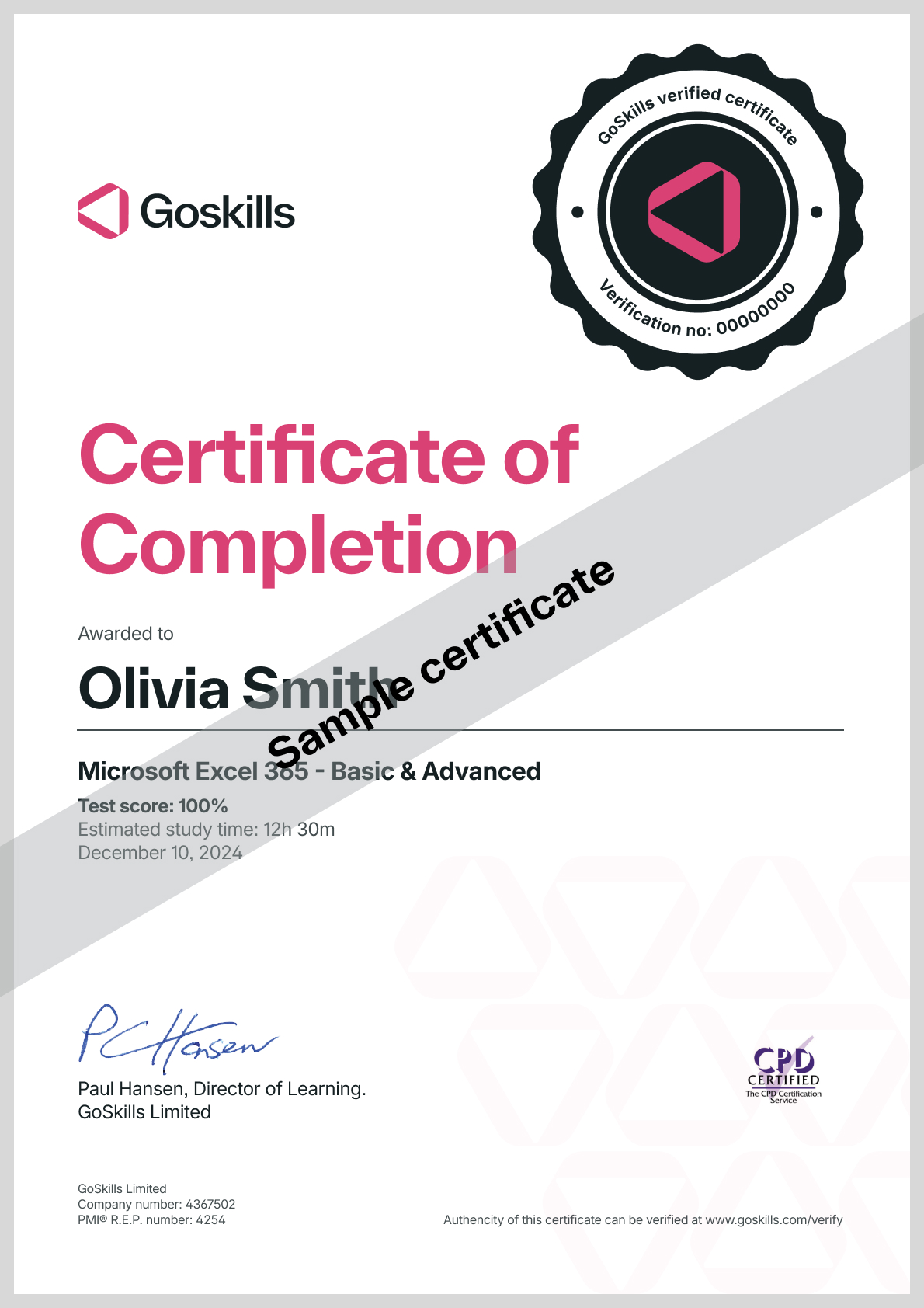
Certificate of Completion
Awarded upon successful completion of the course.
Instructor
Michael Shermer
Dr. Michael Shermer is a noted science writer, a professor, and the founding publisher of Skeptic magazine. Dr. Shermer also hosts the Science Salon Podcast and is a Presidential Fellow at Chapman University where he teaches Skepticism 101. For 18 years he was a monthly columnist for Scientific American. He is the author of New York Times bestsellers Why People Believe Weird Things and The Believing Brain, Why Darwin Matters, The Science of Good and Evil, and The Moral Arc. His new book is Heavens on Earth: The Scientific Search for the Afterlife, Immortality, and Utopia. Learn more at michaelshermer.com

Michael Shermer
Science Writer, Professor, Publisher of Skeptic Magazine
Accreditations
Link to awards
How GoSkills helped Chris
I got the promotion largely because of the skills I could develop, thanks to the GoSkills courses I took. I set aside at least 30 minutes daily to invest in myself and my professional growth. Seeing how much this has helped me become a more efficient employee is a big motivation.