Tools to Improve Your Thinking
Tools to Improve Your Thinking
What you’ll learn
Skills you’ll gain
Becoming a better thinker is a great way to become better at everything else. Critical thinking is one of the most desirable skills in the workforce today, and it’s something you can always be improving. Whether you're an executive or just getting started in your first position, in this course you'll gain a practical set of tools to level up your thinking, from how to think about thinking itself to how to become a true superforecaster. Learn the mental habits of Charles Darwin and Daniel Dennett, along with how to avoid common errors in thought such as the Availability Heuristic and the Negativity Bias. Your professor, Michael Shermer, PhD, an award-winning author, magazine editor, and host of the Science Salon podcast, will walk you through each tool with concrete examples and applications, so that you can apply your newfound knowledge to both business and personal contexts.
Syllabus
Download syllabus-
1
Curiosity, the beginning of infinity Good thinking starts with hard questions, but curiosity doesn't always come naturally. 3m
-
2
I am, therefore I think Once you get the hang of asking questions about everyday things, it's time to go a level deeper. 3m
-
3
The exquisite balance When you start thinking critically, it can become easy to dismiss any new ideas right away, but openness to new ideas is an important part of growing. 3m
-
1
Do as Darwin does Charles Darwin isn't just one of the most famous scientists in history, he's also an excellent role model for critical thinking. 4m
-
2
Intuition pumps Daniel Dennett is one of the foremost philosophers in the world. 4m
-
3
Mental models It can be hard to feel like you've got an entire idea under control; maybe it's tough to hold all the pieces in your head at once. 3m
-
4
Bayesian reasoning You probably like to think of yourself as an alright thinker and mathematician, but take a turn through Bayesian reasoning and you might have to revise your self-conception. 4m
-
5
Thinking about thinking Even if you get the hang of thinking through important ideas, there's still another important tool to assess: yourself! 3m
-
6
How to be a superforecaster None of us can really predict the future; the problem is with those who feel certain they can. 5m
-
7
Thought experiments It may seem like a waste of time to think about what might happen, instead of what did. 4m
-
8
How to think like a scientist A lot of us are easily swayed by scientific-sounding language, just because we don't really know how to assess the data ourselves. 4m
-
9
Critical thinking traps Being a good critical thinker can, believe it or not, get you into trouble. 4m
-
10
The Availability Heuristic We use heuristics all the time to help us think faster, but that doesn't mean they're all correct. 3m
-
11
Negative thinking If you feel like nothing's going your way, it's not just you. 3m
-
12
Improving your capacity to think Thinking is a skill you can get better at over time, but it also needs to supplemented by a good life. 4m
-
1
Resources for brighter thinking 2m
Certificate
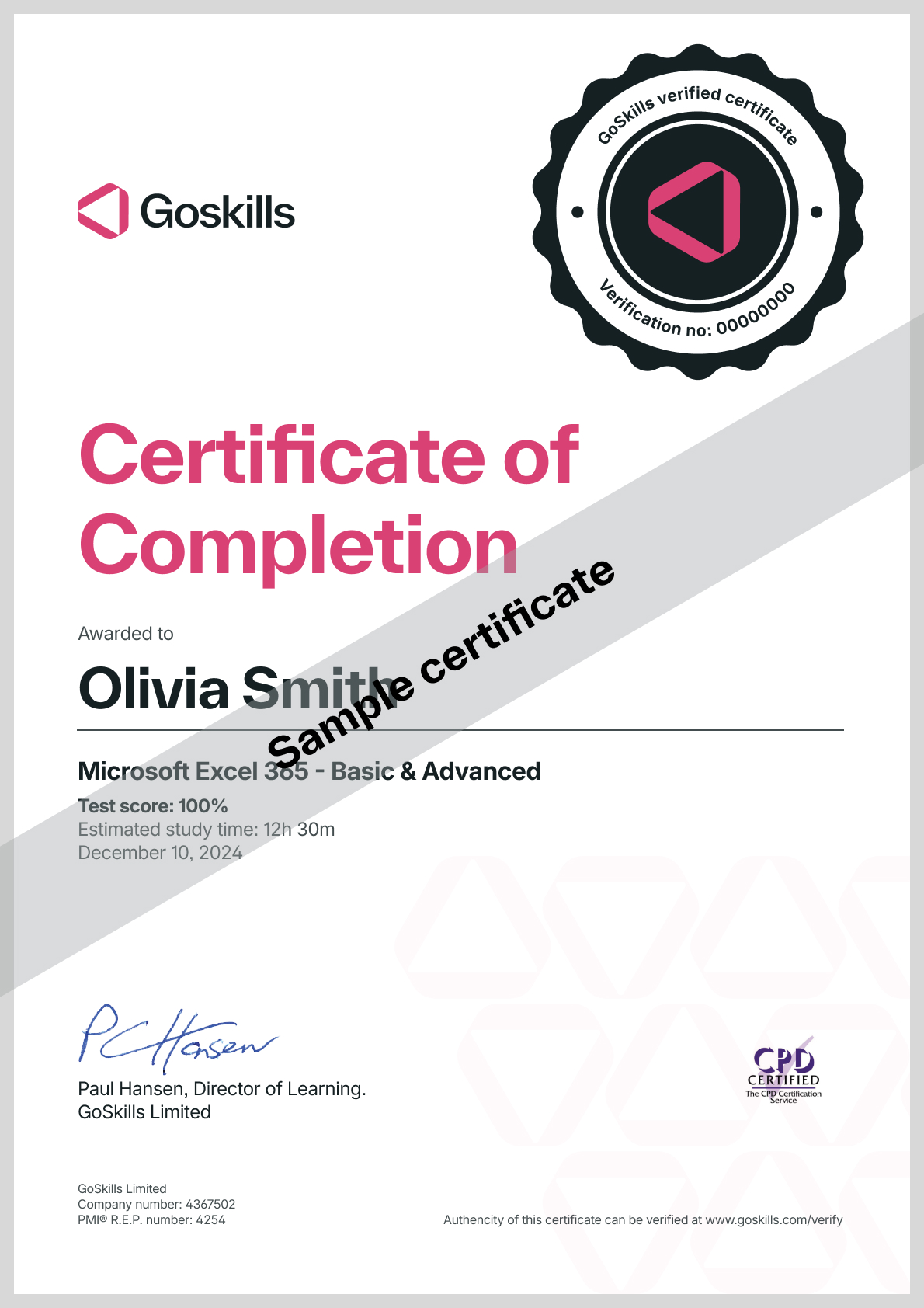
Certificate of Completion
Awarded upon successful completion of the course.
Instructor
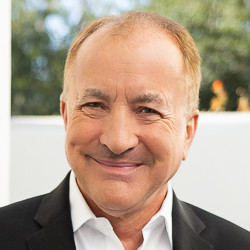
Michael Shermer
Dr. Michael Shermer is a noted science writer, a professor, and the founding publisher of Skeptic magazine.Dr. Shermer also hosts the Science Salon Podcast and is a Presidential Fellow at Chapman University where he teaches Skepticism 101. For 18 years he was a monthly columnist for Scientific American. He is the author of New York Times bestsellers Why People Believe Weird Things and The Believing Brain, Why Darwin Matters, The Science of Good and Evil, and The Moral Arc His new book is Heavens on Earth: The Scientific Search for the Afterlife, Immortality, and Utopia. Learn more at michaelshermer.com
Michael Shermer
Science Writer, Professor, Publisher of Skeptic Magazine
Accreditations
Link to awards
How GoSkills helped Chris
I got the promotion largely because of the skills I could develop, thanks to the GoSkills courses I took. I set aside at least 30 minutes daily to invest in myself and my professional growth. Seeing how much this has helped me become a more efficient employee is a big motivation.