The Visual Language of Design: A Guide for Non-Designers
The Visual Language of Design: A Guide for Non-Designers
What you’ll learn
Skills you’ll gain
Having a basic understanding of design is an important element towards creating stunning documents and presentations, simplifying file formats, and even avoiding legal trouble. In this course, taught by noted designer, illustrator, and creative technologist Sarah Lawrence, you’ll be empowered by learning some important fundamentals of design, as well as gain important insights into color theory, typography, design considerations, branding and more. Whether it’s being able to execute specific tasks such as quickly estimating a color value from the RGB codes, or simply setting up files for print perfectly every time, you’ll have a new set of skills that will allow you to avoid critical mistakes along with an ability to communicate your needs to outside talent when necessary to achieve your desired goals. You’ll also learn how to recognize emerging trends and understand what’s necessary to help your customers find you in a crowded field. By course’s end, you should feel confident in your ability to appropriately use colors, fonts, and files, as well as creating your own website and establishing consistent branding.
Syllabus
Download syllabus-
1
Color for devices (RGB) RGB graphics are designed to be used on backlit digital screens, so they're brighter and considerably more vibrant. 2m
-
2
Color for print (CMYK) While RGB files are a lot brighter and more vibrant on digital screens, they won't print that way since printers use ink instead of light. 2m
-
3
Color for branding (Pantone) Having a clearly distinguishable brand is important, and using Pantone to color match and create consistency can help to achieve this goal. 2m
-
1
Fonts + typefaces Have you ever tried to give feedback on a design and felt like you didn't quite have the vocabulary to describe what you were seeing? 2m
-
2
Custom lettering basics If you want a handmade look to your brand, you might want to hire a lettering artist – someone who will create your artwork for you totally by hand. 2m
-
3
Licensing your brand fonts When it comes to using fonts, if you're using anything you haven't made in-house, you might have to have a license. 2m
-
1
Painting with pixels: raster JPG, PNG, BMP? 2m
-
2
Drawing with vectors If you've ever tried to resize a grainy image or put a little image in a big space, you likely didn't have the vector image at your disposal. 2m
-
1
Top design trends There are several trends that have emerged in the design world that are important to be aware of. 2m
-
2
Finding inspiration In order to create your own brand and ideas for your design vision, you'll want to find inspiration. 2m
-
3
Mistakes to avoid There are some common do's when it comes to design, but that also means there are some don'ts. 3m
-
4
Legal considerations When it comes to design, you might encounter legal challenges when it comes to intellectual property, infringement, and more. 2m
-
1
Keeping your brand cohesive As your brand grows and evolves, you still want your customers to be able to recognize your logo or feel like messaging is consistent. 3m
-
2
Developing brand guidelines You've done the work to establish your strong brand, but you'll need to make it clear to stakeholders what your message is and what you're about. 2m
-
1
Time to design! Thanks for watching this course! 2m
Certificate
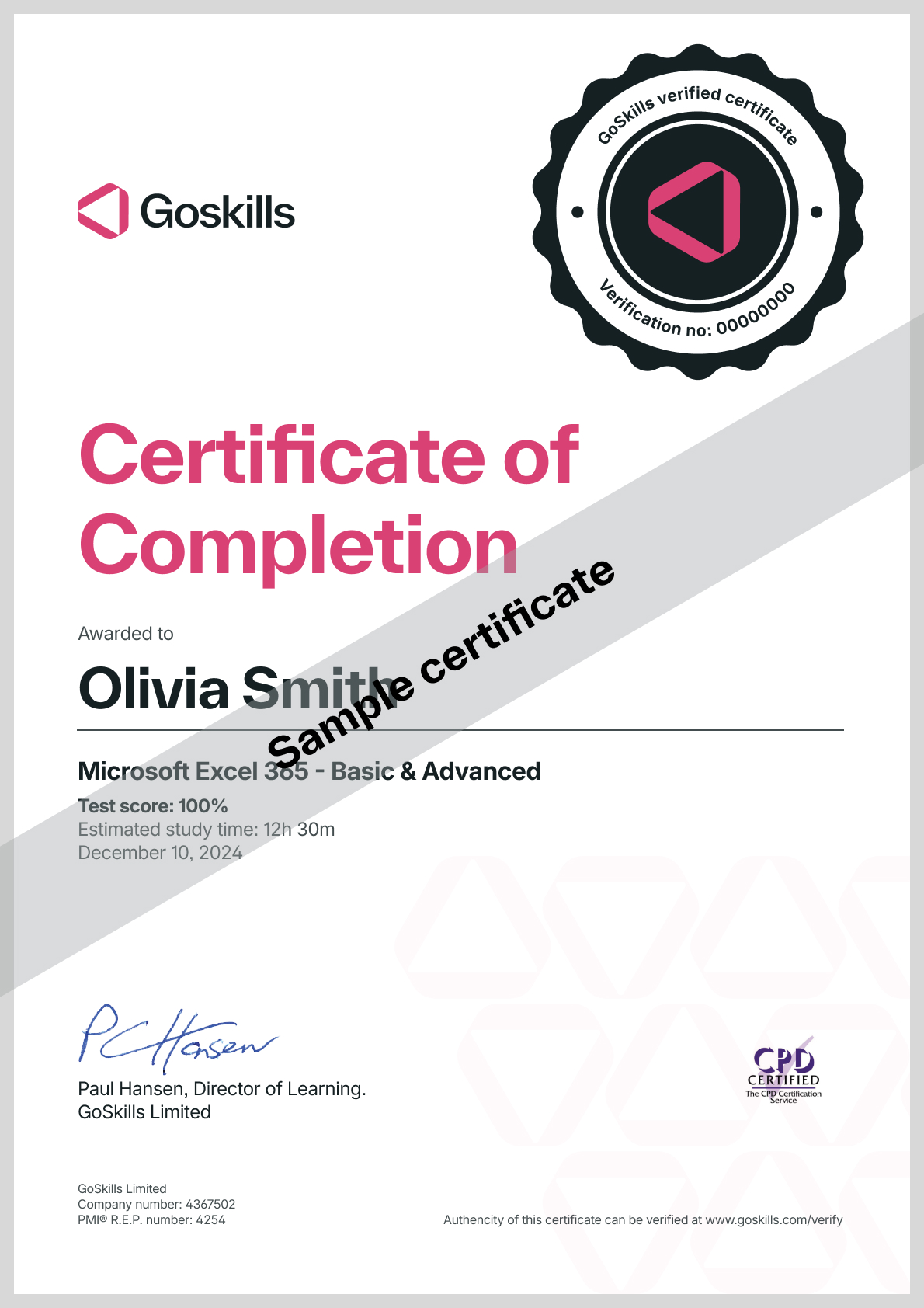
Certificate of Completion
Awarded upon successful completion of the course.
Instructor
Sarah Lawrence
Sarah Lawrence is a Principal Designer for the Design Emporium, a boutique design studio that works with small businesses and nonprofits. She is a tenured visual and graphic designer, and has shared her expertise with many as an online instructor and through her in-person and virtual workshops. Sarah’s portfolio includes projects where she specializes in branding, illustration, infographics, maps, print and web design. She has worked for clients that include Vox.com, Facebook, and the Atlanta Regional Commission. Sarah is passionate about giving back to fellow creatives and spends her spare time fueling her creativity with out-of-the-box projects, filming Skillshare tutorials on how to perfect your pasta recipes, and serving as the Creative Director for the Georgia Troublemakers.

Sarah Lawrence
Principal Designer at the Design Emporium
Accreditations
Link to awards
How GoSkills helped Chris
I got the promotion largely because of the skills I could develop, thanks to the GoSkills courses I took. I set aside at least 30 minutes daily to invest in myself and my professional growth. Seeing how much this has helped me become a more efficient employee is a big motivation.