A Beginner’s Guide to Writing User Stories
A Beginner’s Guide to Writing User Stories
What you’ll learn
Skills you’ll gain
Writing effective user stories is an important skill when working in product development and project management spaces. If you are not able to successfully write user stories, you’re missing an opportunity to use your time more efficiently to gather valuable information from your team and customers and deliver products that grow your organization. In this course, agile coach and consultant, Dylan Jensen, will share strategies and insights to help you write user stories that provide value for your team, organization, and most importantly, your customers. The course begins with Dylan walking you through the definition of a user story as well as its importance, effects, and typical layout. Then, he shares strategies to apply customer centricity to your user stories while following a specific framework. Finally, Dylan describes the importance of tying user stories to the bigger picture, and he provides strategies to help you avoid common pitfalls when writing user stories. Upon completion of this course, you’ll be able to write user stories that improve product clarity and effectiveness that will ultimately lead to increased value for your team and for your customers.
Syllabus
Download syllabus-
1
Importance of user stories User stories are critical to increasing product value for your customers. 3m
-
2
Effects of user stories User stories can have many positive effects within your business. 2m
-
3
User story layout Effective user stories include certain components that enhance the value of the user story. 3m
-
1
Applying customer centricity User stories are written in order to gain a better understanding of why the consumer would want a certain functionality. 2m
-
2
User story framework In order to maximize the value of user stories, it is important to follow a framework that focuses on the benefits offered to the consumer. 2m
-
1
Understanding the end goal Knowing where you are headed is essential to writing effective user stories. 2m
-
2
Writing the acceptance criteria Outlining specific outcomes of the product or service being created is needed to write a concise user story that aligns with the customer's expectations. 3m
-
3
Establishing team expectations If any one person was not part of the acceptance criteria creation process, you are missing out on valuable opinions and insights. 4m
-
1
Seeing the bigger picture Agile work should always be connected to a bigger picture. 2m
-
2
Updating user stories Continuously updating user stories is critical to improving your product. 3m
-
1
Lack of customer insight Communication with customers is your greatest asset. 3m
-
2
Lack of clarity Lack of clarity can lead to miscommunications with your consumers and your team. 3m
-
3
Focus on personal vision Creative problem solving is good so long as it has the customer's vision in mind. 3m
-
1
Time to write Now that you've watched this course, you'll be able to define User Stories, write descriptions and acceptance criteria, ensure your work fits into the bigger picture, and avoid common pitfalls of user stories. 1m
Certificate
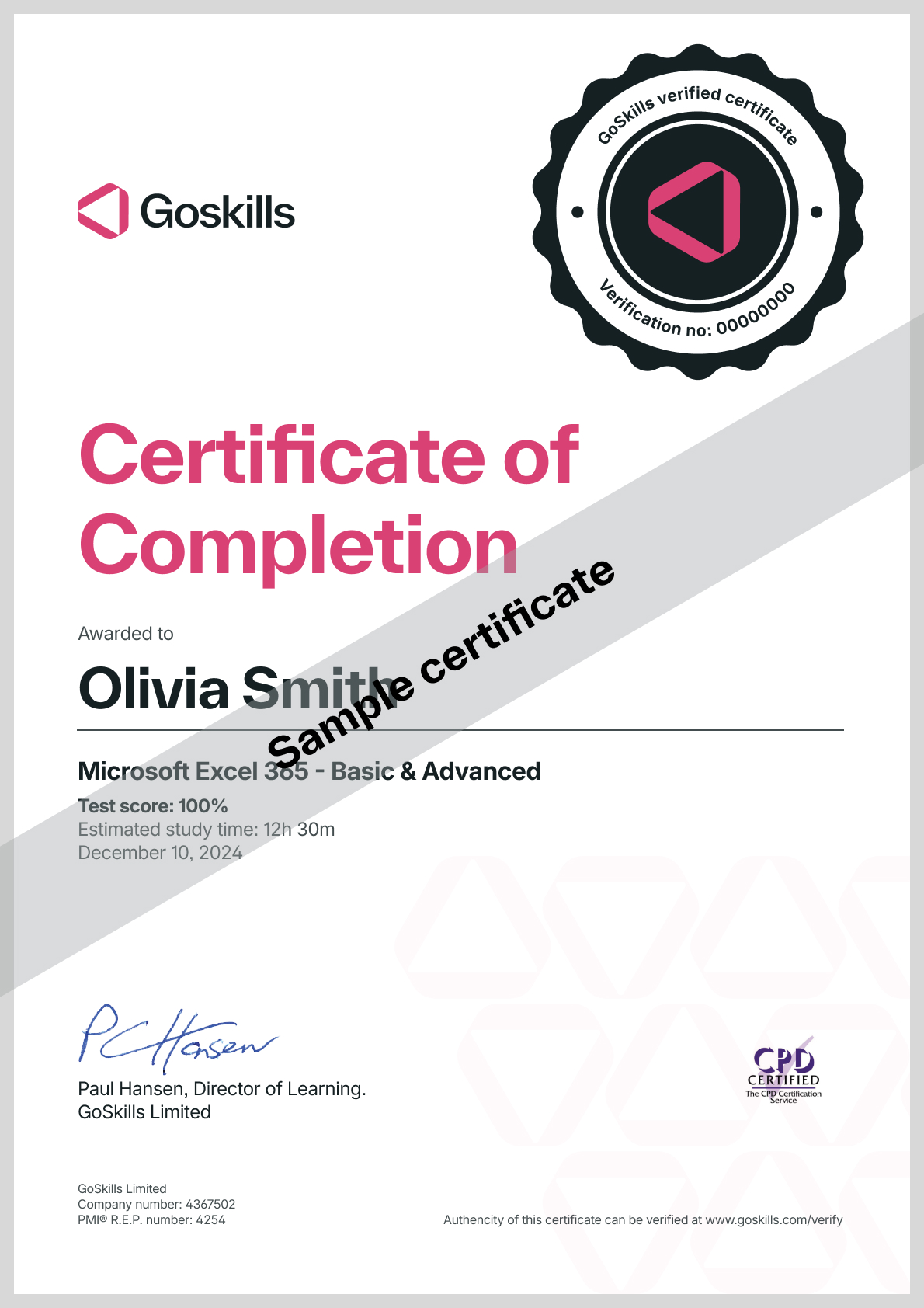
Certificate of Completion
Awarded upon successful completion of the course.
Instructor
Dylan Jensen
Dylan has worked as a consultant and coach for multiple Fortune 500 companies. His experience with agile implementation has equipped him with the skills and perspective to transform how organizations grow and succeed. Dylan believes that all agile transformations begin with building the right teams and fostering the right organizational mindset. He is certified as an Agile Coach, a SAFe 5 Agilist, and a Scrum Master, and holds both a Master of Business Administration and a Master’s in Human Resources from Utah State University.

Dylan Jensen
Certified Agile Coach and SCRUM Master
Accreditations
Link to awards
How GoSkills helped Chris
I got the promotion largely because of the skills I could develop, thanks to the GoSkills courses I took. I set aside at least 30 minutes daily to invest in myself and my professional growth. Seeing how much this has helped me become a more efficient employee is a big motivation.