How to Create a Successful Digital Marketing Strategy
How to Create a Successful Digital Marketing Strategy
What you’ll learn
Skills you’ll gain
Creating a Successful Digital Marketing Strategy is a course centered on understanding your customer needs and developing a keen understanding of how they actually buy your product. Marketing consultant and university professor Nels Henderson outlines how to map the customer journey as a sales funnel, implement appropriate digital strategy and tactics; and, how to track your marketing efforts. After taking this course, you’ll be able to understand strategy, how to make an action plan for your marketing campaign, but also how to identify best tactics and metrics for accomplishing your goals.
Syllabus
Download syllabus-
1
Identifying the marketing mix Knowing the components of a successful digital marketing strategy is the first step in creating the perfect strategy. 2m
-
2
Naming marketing objectives Being clear on your marketing campaign objectives makes sure your strategy is consistent with company goals. 2m
-
3
Clarifying value proposition Your value proposition is what your company does better than any other and what sets you apart from the competition. 2m
-
4
Focusing on segmentation Who are your typical customers? 1m
-
1
Positioning with marketing channels Where and how you can best market your company can be one or many channels, including search, paid search, social media or other forms of advertising. 2m
-
2
Defining awareness and impressions Awareness sits at the top of the sales funnel and is defined by how potential customers see your ad or search result. 2m
-
3
Connect consideration and web traffic Consideration is a part of the sales funnel where potential customers learn about your product or service. 1m
-
4
Optimizing conversion and sales Conversion happens when a sale is made. 1m
-
5
Retention and return customers What happens after a sale can be as important as the sale itself. 2m
-
1
Integrating SEO and SEM tactics Awareness isn't about everyone seeing your ad or SERP, it's about being at the right place at the right time. 2m
-
2
Using content marketing Using content marketing to address questions potential customers might have helps smooth out customer pain points. 2m
-
3
Conversion goals with web optimization The conversion part of the sales funnel signifies a sale or a goal that is successfully met. 2m
-
4
Encourage retention with email marketing After the sale, email marketing can play a huge role in creating a loyal fan base that buys from you again. 2m
-
1
Identifying key performance indicators Whether we are looking at awareness, consideration, conversion or retention we need ways to measure success. 2m
-
2
Preventing funnel drop off Fewer people take part in each part of the funnel as you move towards conversion. 2m
-
3
Maximizing return on investment Any marketing campaign we conduct should be evaluated versus the amount of money spent. 1m
-
1
Creating action plans Identifying sales funnels helps create action plans and creates a context for obtaining approval for your plans. 2m
-
1
Wrap up Thank you for watching this course! 1m
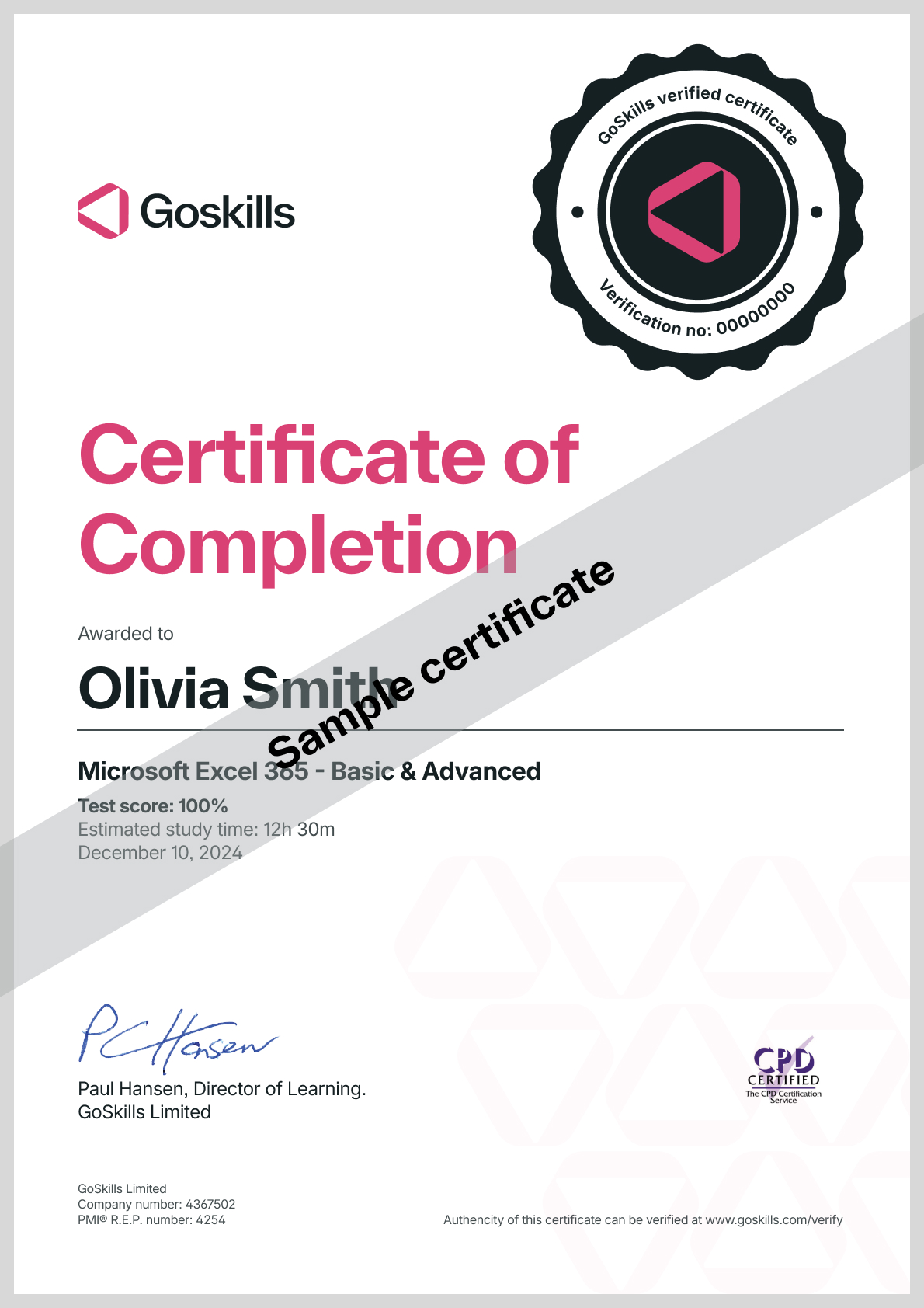
Certificate
Certificate of Completion
Awarded upon successful completion of the course.
Instructor
Nels Henderson
Nels Henderson has taught university-level marketing courses in strategy and web analytics for over two decades. He is a small business owner of a mobile notary practice and a marketing consultant, formerly managing websites for a Fortune 500 company. Highly trained in Agile methodology, leadership, and facilitation skills, Nels received his BA in Political Science from the University of California, Santa Barbara. He also holds a Master's Degree in Organizational Management from Antioch University, and is a Certified Digital Marketing Professional (CDMP) through the Digital Marketing Institute.

Nels Henderson
Digital Marketing Professor and Consultant
Accreditations
Link to awards
How GoSkills helped Chris
I got the promotion largely because of the skills I could develop, thanks to the GoSkills courses I took. I set aside at least 30 minutes daily to invest in myself and my professional growth. Seeing how much this has helped me become a more efficient employee is a big motivation.