Using Design Principles to Enhance Remote Trainings
Using Design Principles to Enhance Remote Trainings
What you’ll learn
Skills you’ll gain
You've established the structure of your remote training project along with its learning needs and goals, and you’re now ready to begin building the visual portion of the project. You're going to need impressive design principles to help enhance your remote training. Design principles guide people through your content and eliminate any potential learning barriers. In this course, Robin Lindblom, longtime graphic designer and instructor shares design principles by demonstrating how best to apply them to remote training projects. She discusses how design principles benefit the learner, and how they make your remote training successful. After this course, you'll have a design toolbox full of ways to engage your audience and make meaningful connections.
Syllabus
Download syllabus-
1
Defining visual design What your eLearning looks like is the result of visual design. 3m
-
2
Importance of visual design Learners ignore cluttered and boring design and instead gravitate towards the aesthetically pleasing. 3m
-
3
How to use visuals Applying design principles will separate good design from bad design. 3m
-
4
When to use visuals Determining the right time to use a visual is just as important as knowing the wrong time to use a visual. 3m
-
5
Combining text and visuals Learners who see strategic visual information combined with text are more likely to recall the information than when only presented text. 2m
-
1
Intro to visual hierarchy Displaying design elements in the order you want your learners to see them will affect how they engage with the information. 3m
-
2
Applying hierarchy techniques Using hierarchy will ensure that information is navigated and digested in the way it is intended. 3m
-
3
Arranging visual elements I'm sure you would agree that an organized lesson is one that is easier to comprehend than an unorganized one. 3m
-
1
Selecting fonts Selecting fonts for a project can be thought of as art for some. 3m
-
2
Formatting do’s and don'ts Bad typography, incorrect font size and poor alignment can make reading a real difficulty. 3m
-
3
Use of strokes You may be tempted to apply a stroke outline to a font, but there are ways to avoid this that will not overload your viewers. 2m
-
1
Creating contrast Contrast can determine whether or not your viewer will be able to read the information you are providing. 3m
-
2
Applying color So you've learned that you'll need to use colors with contrast, but knowing which colors to choose and how to apply them is another story. 3m
-
1
Embracing negative space You might view free space in your layout as space available for use, but there is significance to white space in design. 2m
-
1
Intro to visual balance Viewing your design as a scale, the goal is for both sides to be equally weighted. 3m
-
2
Creating visual balance There is more than one way to arrange a layout for optimum balance. 2m
-
1
Applying grouping techniques Grouping tells the viewer which individual parts go together, making a visual search speedier as a result. 2m
-
1
Creates consistency Consistency is the reason a style guide exists. 2m
-
1
Design and engage Thank you for watching this course! 1m
Certificate
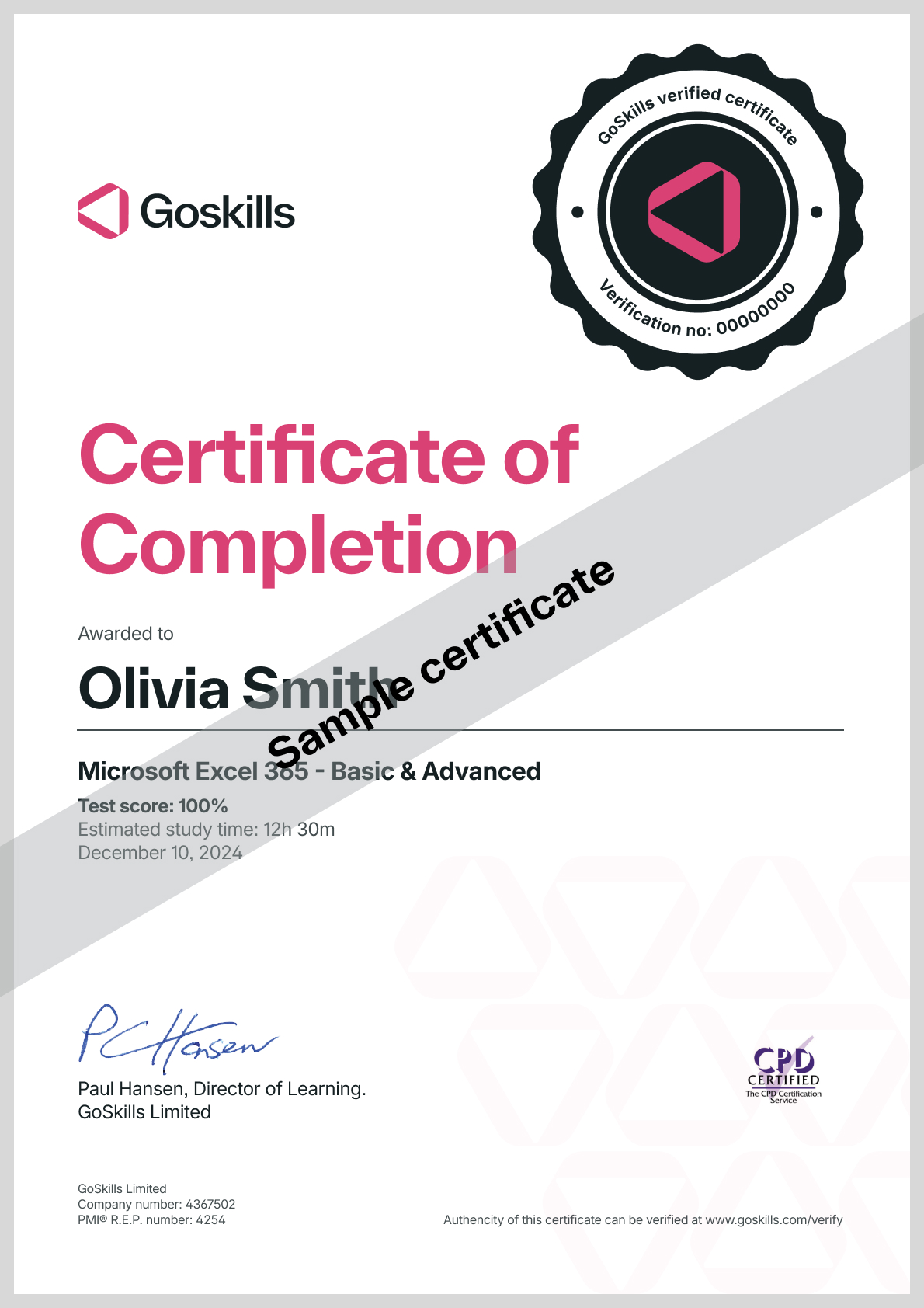
Certificate of Completion
Awarded upon successful completion of the course.
Instructor
Robin Lindblom
Robin Lindblom is an educator, designer for instructional design, and formally trained graphic designer who enjoys helping others elevate their design. Robin’s background in both graphic design and teaching, along with her experience with instructional design, has placed her in a position to mentor others in creating designs that work. Robin is currently interested in opportunities where design, instructional design, and teaching collide.

Robin Lindblom
Graphic Design Instructor and Instructional Designer
Accreditations
Link to awards
How GoSkills helped Chris
I got the promotion largely because of the skills I could develop, thanks to the GoSkills courses I took. I set aside at least 30 minutes daily to invest in myself and my professional growth. Seeing how much this has helped me become a more efficient employee is a big motivation.