Practical Ethics for Businesses and Individuals
Practical Ethics for Businesses and Individuals
What you’ll learn
Skills you’ll gain
As an individual, you have your own set of values that dictate your perspective of right and wrong. This is your own moral compass, but this may not always translate directly to the perspectives of others, such as your boss or your team members. In this course, philosophy professor Garrett Pendergraft shares his guide to ethics in the workplace. Garrett first shares his guidelines for encountering moral dilemmas and using moral principles to navigate them. He goes on to review how you can continue to refine your ethical skillset over time, and covers strategies to ensure you can consistently make ethical decisions in the workplace. Upon completion of this course, you'll feel confident in your ability to stay true to your morals while working with others and making decisions that may test your morality.
Syllabus
Download syllabus-
1
A difficult choice A moral dilemma is a situation in which it seems like all of your options involve doing the wrong thing. 3m
-
2
Supporting choices with reasons You’ve encountered a moral dilemma and rendered a judgment, but what if someone asks you to defend that judgment? 3m
-
3
Evaluating moral principles So you’ve come up with a moral principle; how do you know that it’s a good one? 3m
-
4
Revising moral principles What do you do if one of your moral principles appears to give you faulty guidance? 4m
-
5
Contemporary moral dilemmas You might be wondering whether this approach to moral dilemmas is applicable to your everyday life. 3m
-
1
Just the facts, please You may have learned in elementary school that facts are things you can prove, whereas opinions are things you merely believe. 4m
-
2
Categorizing actions You've likely been used to talking about actions and morality by distinguishing between right and wrong. 2m
-
3
Morality vs. the law It’s tempting to think of morality and legality as roughly the same thing, but thinking in that way can be dangerous. 2m
-
4
Consequences vs. duties While there are many key conflicts that can arise in moral reasoning, one of the most common is the conflict between consequences and duties. 3m
-
5
A deeper understanding As you may have already recognized, famous philosophers have been arguing about the conflict between consequences and duties for a long time. 2m
-
1
A system of obligations By focusing on a small number of important ethical concepts, you can improve your ability to make ethical decisions tremendously. 3m
-
2
Identifying obligations Difficult ethical decisions involve a host of different obligations. 3m
-
3
Exposing conflicts It’s not just that ethical dilemmas involve lots of obligations; the problem is that those obligations often compete with each other. 2m
-
4
Weighing obligations Unfortunately, recognizing conflicts isn’t enough—you'll need to weigh the different obligations to reach a decision. 2m
-
5
Determining viable options When you're armed with an awareness of your moral obligations, you can get very clear on the possible outcomes you'd be willing to move forward with. 2m
-
6
Making your decision You’ve narrowed down your options, and now it’s time to choose. 2m
-
1
Putting it into practice Thanks for watching this course! 1m
Certificate
Certificate of Completion
Awarded upon successful completion of the course.
Instructor
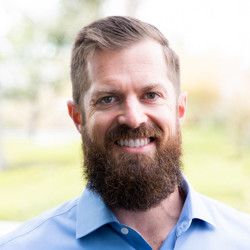
Garrett Pendergraft
Garrett Pendergraft, PhD is a Blanche E. Seaver Professor of Philosophy at Pepperdine University, where he teaches Logic, Business Ethics, and other courses. He has published case studies on free speech at Google, Uber’s business model, effective altruism, and gaming industry marketing practices, in addition to an award-winning case study on the rise and fall of WeWork. He earned an undergraduate degree in Computer Science at the University of Southern California and undertook a brief career in visual effects before returning to school to study philosophy. He holds an MA from Biola University, an MA from the University of Missouri, and a PhD from the University of California, Riverside.
Garrett Pendergraft
Associate Professor of Philosophy
Accreditations
Link to awards
How GoSkills helped Chris
I got the promotion largely because of the skills I could develop, thanks to the GoSkills courses I took. I set aside at least 30 minutes daily to invest in myself and my professional growth. Seeing how much this has helped me become a more efficient employee is a big motivation.