Search Intent and SEO: How to Attract the Ideal Customer
Search Intent and SEO: How to Attract the Ideal Customer
What you’ll learn
Skills you’ll gain
A sound search engine optimization strategy is one that is centered on giving your customers what they want, when they want it and means being at the right place at the right time. Understanding search intent and its relationship to search engine optimization is the key to presenting your product or service as a solution to your customer's problems. In this course, marketing consultant and university professor Nels Henderson outlines a simple process to mapping the keywords and phrases to target in your search engine optimization efforts so that you can attract and market to your ideal customer. You will learn how to discover your typical customer's search intent and match it to the customer journey, map your keyword research and find concrete ways you can meet your customers needs with your current marketing efforts.
Syllabus
Download syllabus-
1
Intro to search intent Potential customers search for solutions to their problems when they pick up their phone or open Google on their browser. 2m
-
2
Focus on ideal search terms Focusing on search terms that are too generic may not be the best strategy for optimizing your website and marketing campaigns. 2m
-
3
Narrowed search criteria It's the customer who knows a little more about what they want that you want to target. 2m
-
4
Identify hidden search phrases Soon, you will see how some customer search methods may have low search volumes but are incredibly important to your business. 1m
-
5
Anticipate search intent Once you know what people are searching for and the questions they might have, you can optimize your website and your marketing campaigns to be at the right place at the right time, making you the obvious solution to their problem. 2m
-
1
Build customer awareness The customer journey begins with awareness and involves being the solution that shows up at the right place at the right time. 1m
-
2
Match content to concerns Your website can serve as a way for potential customers to get all their questions answered and for figuring out what those questions are through understanding search intent, which will lead to more conversions. 2m
-
3
Increase sales in the conversion phase Answering the right questions, combined with your understanding of search intent and matching appropriate promotions to this part of the sales funnel, can ensure a successful sale. 2m
-
4
Drive customer retention Keeping a customer returning for future purchases can be as important as their first purchase. 2m
-
1
Identify common search terms Paying attention to search suggestions that appear when you enter what you think is a common search term on Google can form the baseline for your keyword research. 3m
-
2
Leverage Google Keyword Planner With tools from Google, you can see what people are searching for in real life to reach your website, and some findings may surprise you. 2m
-
3
Keyword phrases with AI Finding new ways to align search intent with your product can help increase traffic to your site and boost sales. 2m
-
1
Analyze search volume Your initial prioritization and mapping will focus on search volume and how keywords and phrases align with the search curve. 1m
-
2
Create and group keyword clusters As you conduct your keyword research, topics may emerge that warrant grouping, which can then inform your marketing campaigns, content, and SEO efforts. 1m
-
3
Prioritize keyword clusters Finalizing your list of keywords can yield a list of questions that a diverse group of consumers might have about your product from the start of their search. 2m
-
1
Optimize your website Now that you understand how people search for you, it's crucial to optimize your pages to reflect and position your product or company according to search intent. 3m
-
2
Integrate search intent Determining the questions your customers might have about your product can form the foundation of a content marketing campaign that enhances your SEO. 2m
-
3
Match keyword clusters to Google Ads Having improved your SEO, there's no reason not to use this work to enhance your Google Ads or other display advertising campaigns. 2m
-
4
Leverage social media Recent studies show that people often initiate their searches on social media apps. 2m
-
1
Next steps Thank you for watching this course! 1m
Certificate
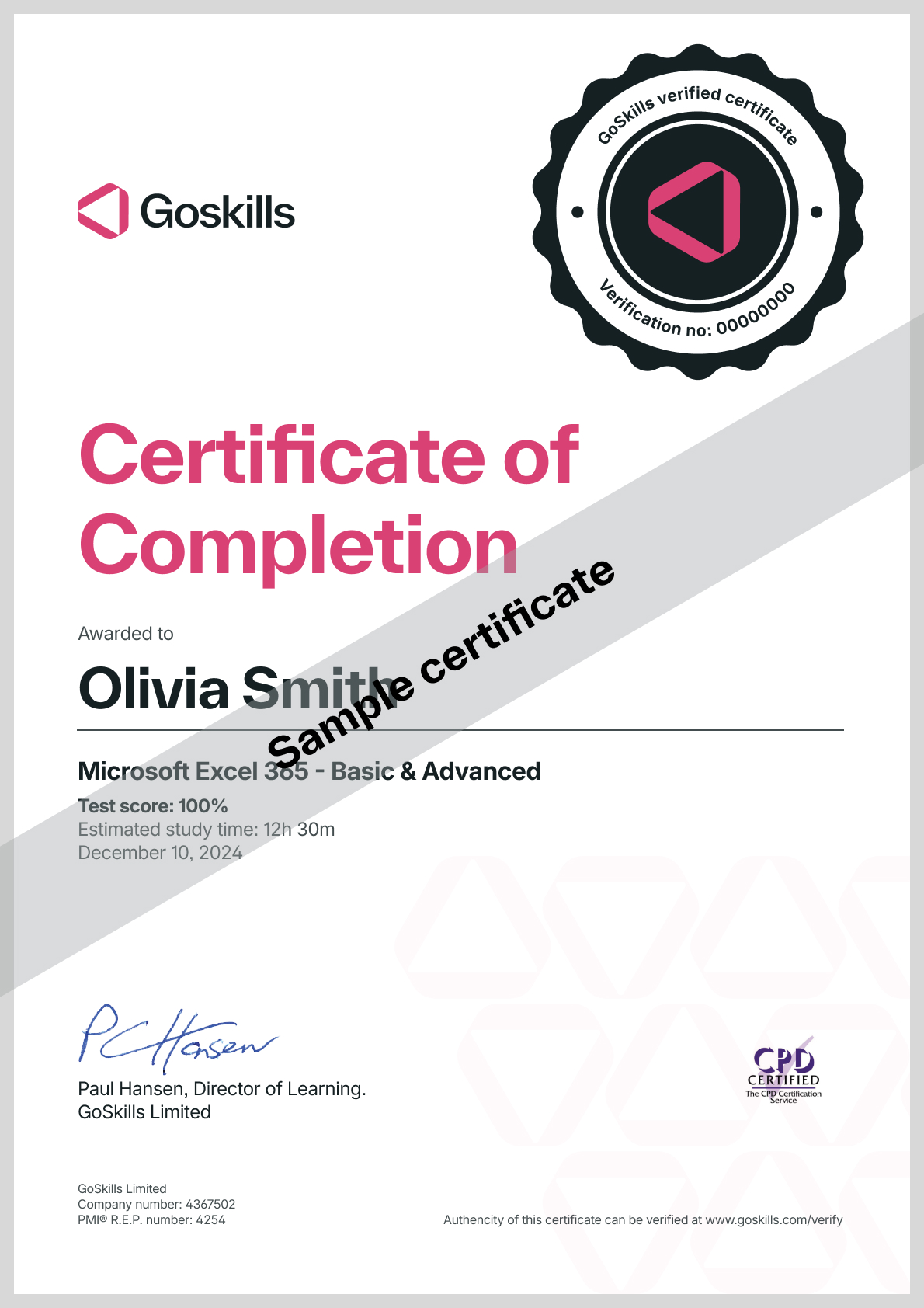
Certificate of Completion
Awarded upon successful completion of the course.
Instructor
Nels Henderson
Nels Henderson has taught university-level marketing courses in strategy and web analytics for over two decades. He is a small business owner of a mobile notary practice and a marketing consultant, formerly managing websites for a Fortune 500 company. Highly trained in Agile methodology, leadership, and facilitation skills, Nels received his BA in Political Science from the University of California, Santa Barbara. He also holds a Master's Degree in Organizational Management from Antioch University, and is a Certified Digital Marketing Professional (CDMP) through the Digital Marketing Institute.

Nels Henderson
Digital Marketing Professor and Consultant
Accreditations
Link to awards
How GoSkills helped Chris
I got the promotion largely because of the skills I could develop, thanks to the GoSkills courses I took. I set aside at least 30 minutes daily to invest in myself and my professional growth. Seeing how much this has helped me become a more efficient employee is a big motivation.