Transitioning Your Mindset to be Customer-Centric
Transitioning Your Mindset to be Customer-Centric
What you’ll learn
Skills you’ll gain
In today's world, the idea of being customer focused or customer centric is very trendy. Organizations are pivoting to a new way of how they engage and sell products to their customers. But what exactly does being customer centric mean and how can you ensure your organization is really living out this vision? In this course industry direct to consumer marketing veteran Phil Irvine will dive into how organizations can make a transition to truly be perceived as being customer centric. This course will briefly cover how you can go about getting buy-in from the top, tips for collecting customer data, how to act off the right types of data, and ultimately having a feedback loop to continually improve your actions. After this course, you'll have a playbook for how your organization can pursue this type of transition as well as tactical activities you can start to support this.
Syllabus
Download syllabus-
1
Pitfalls of product centricity Operating as a product centric organization has both positives and negatives. 2m
-
2
Customer centric organizations There are several determining factors that differentiate a product centric organization from a customer centric organization. 2m
-
1
Buy-in from leadership Having executive support is critical to make the transition to customer centricity. 2m
-
2
Building a roadmap Organizing projects and tactics into short and long term milestones is an effective strategy to guide the transition to becoming customer centric. 2m
-
3
Establishing quick wins It's important to break up milestones into small chunks while communicating progress along the way of the transition. 2m
-
1
Customer data overview Collecting and analyzing data is critical to develop a better understanding of your customers. 2m
-
2
Collecting data When collecting information about your customers, there are both active and passive mechanisms that can be implemented. 2m
-
3
Data trends vs. noise Collected customer data can sometimes illustrate meaningful trends, but other times it can illustrate outliers. 2m
-
1
Customer experience touchpoints Inbound and outbound customer experience touchpoints provide opportunities for an organization to become more profitable. 3m
-
2
Prioritizing tactics Factoring in scale and impact is essential to put ideas in motion. 1m
-
3
Test and learn Putting a test and learn plan in place on an ongoing basis is critical to ensuring you'll see the desired learnings to action off of in the future. 2m
-
1
Importance of KPIs Channel specific metrics and back end metrics are both important and should be balanced with one another. 2m
-
2
Customer focused measurement It is important to understand the cost to acquire customers and the projected lifetime value. 2m
-
3
Establishing a feedback loop Incorporation of customer focused measurements into future planning and investment activities is critical in maintaining customer centricity. 2m
-
1
The north star Congratulations on completing this course. 1m
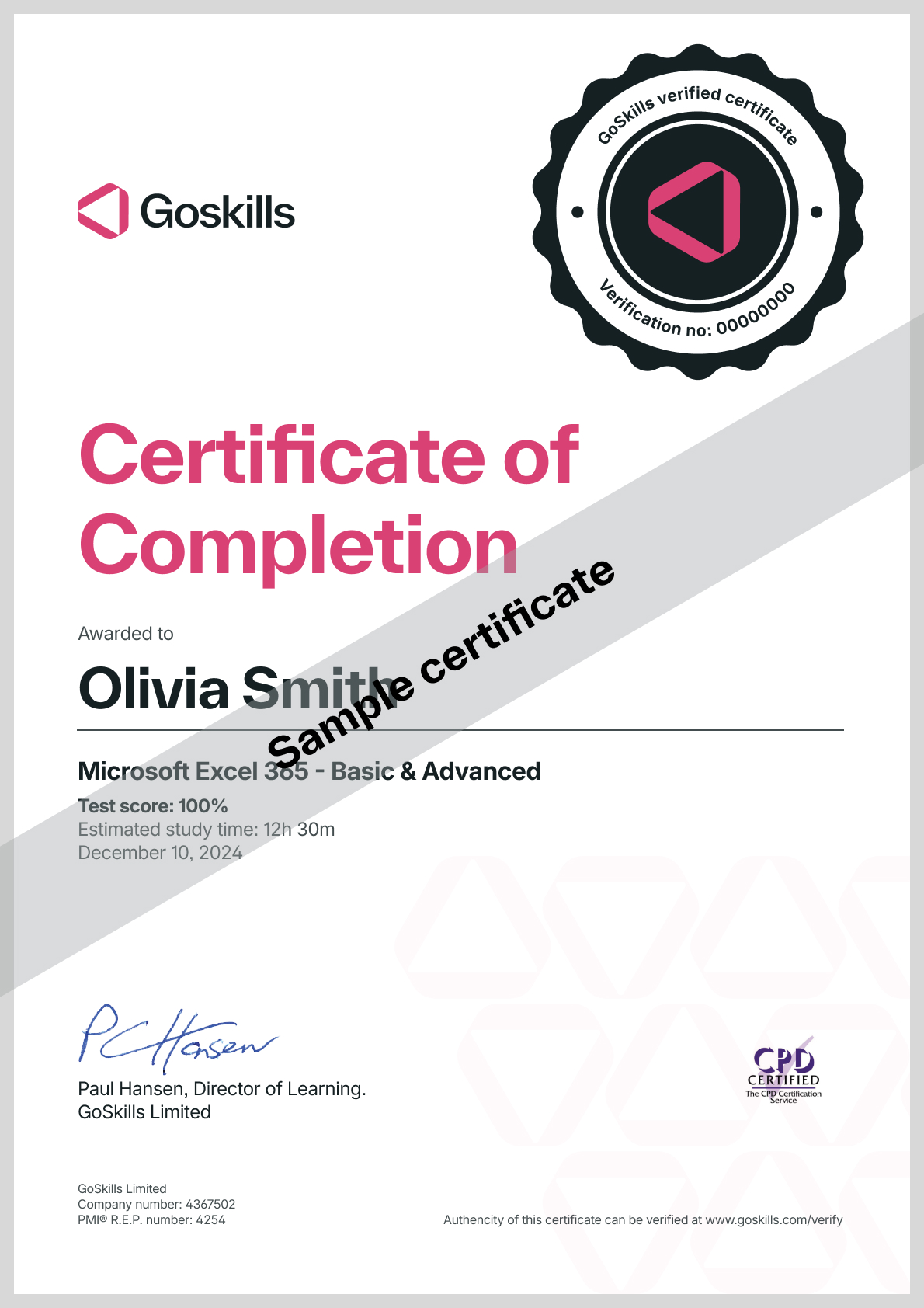
Certificate
Certificate of Completion
Awarded upon successful completion of the course.
Instructor
Phil Irvine
Phil Irvine is Vice President of Audience Intelligence at RPA—a full service independent advertising agency based in LA. He manages a team that is responsible for supporting audience insights, development, and activation to inform media planning and budgeting for clients in the automotive, quick service restaurants, home goods, and utilities industries. Phil also serves as Vice-Chair of RPA’s Policy and Action committee which is tasked with the development and implementation of policies, initiatives, and programs to enhance branding of the agency. Phil recently launched RPA’s first podcast, titled Clear the Air with RPA as part of this initiative.

Phil Irvine
Customer Experience Expert and CRM Leader
Accreditations
Link to awards
How GoSkills helped Chris
I got the promotion largely because of the skills I could develop, thanks to the GoSkills courses I took. I set aside at least 30 minutes daily to invest in myself and my professional growth. Seeing how much this has helped me become a more efficient employee is a big motivation.